Black Specks on Your Cat's Chin? Understanding Feline Chin Acne
Paris DeesingYou are scratching your cat under the chin, the way you have a thousand times, and this time your fingers find something gritty. Look closer and there they are: tiny black specks across the skin, as if someone dusted the chin with pepper. It is one of the most commonly misread things cat owners notice. Those specks are usually not dirt, and they are almost never fleas. In most cases, you are looking at feline chin acne.
What Feline Chin Acne Actually Is

Feline chin acne is a disorder of the hair follicles and the sebaceous glands that sit alongside them. Cats have a heavy concentration of those oil-producing glands on the chin and lower lip, and when the glands overproduce or the follicle openings become plugged, oil and dead skin build up into visible comedones — blackheads, essentially. That is why the specks look like dirt but will not brush away.
The mild version stops there: a peppery chin, a little roughness, and a cat who is entirely unbothered. The advanced version is where it matters. Plugged follicles can become inflamed and infected with bacteria or yeast, and the chin swells, reddens, and develops crusty bumps or draining sores. Because the pattern of flare-ups is what usually cracks the case, our My Pet Journal is a useful place to note when the specks appeared, what changed in the household, and how the chin looked at each check.
Why Cats Get Chin Acne
Veterinary dermatologists do not point to one single cause. Chin acne is best understood as a common endpoint that several different problems lead to: poor grooming of the chin area, abnormal sebum production, stress, an underlying allergy, and contact irritation from food bowls. Some cats have one episode as a youngster and never another. Others deal with it on and off for life.
What it is not is a hygiene failure on your part. Fastidious cats in immaculate homes get it. It is also not contagious — though several cats in one household sometimes develop it together, because they share the same bowls.
The Plastic Bowl Connection
If there is one change worth making the day you spot black specks, it is swapping the food and water dishes. Plastic bowls develop microscopic scratches with every wash, and those scratches hold bacteria and food residue that ordinary washing does not fully clear. Every meal, your cat presses her chin into that surface. Some cats also react to the plastic itself.
Switch to stainless steel, ceramic, or glass, choose a wide shallow dish so the chin is not dragging through the rim, and wash it daily rather than topping it up. Plenty of mild cases resolve on that change alone within a few weeks.
How to Care for an Affected Chin at Home

For mild cases, gentle and consistent beats aggressive. Wipe the chin once daily with a soft cloth dampened with warm water, working with the grain of the fur rather than scrubbing against it. Never squeeze or pick at the comedones — that ruptures the follicle and turns a cosmetic problem into an infected one. Keep the chin dry after meals, especially if your cat eats wet food.
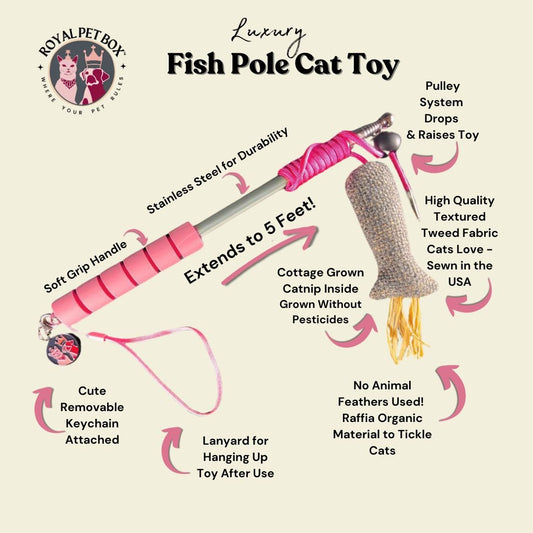
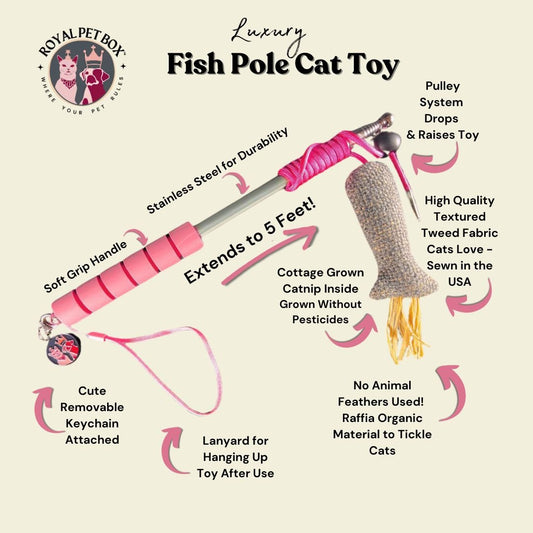
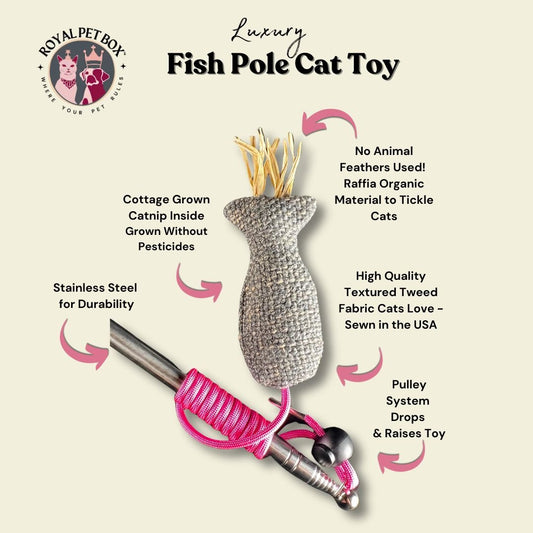
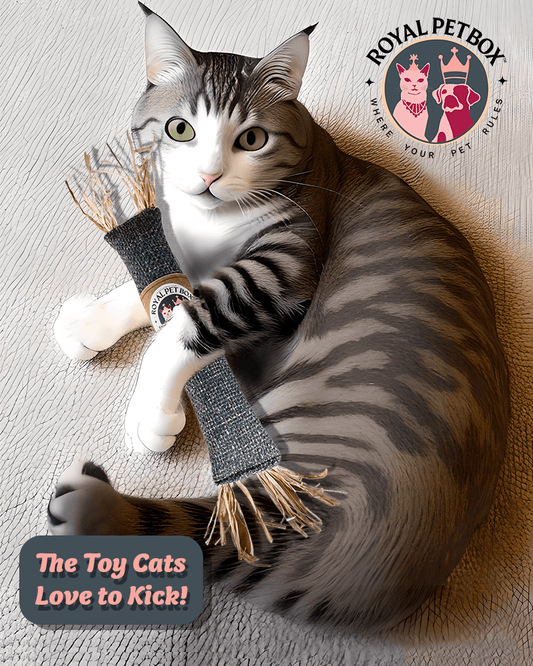
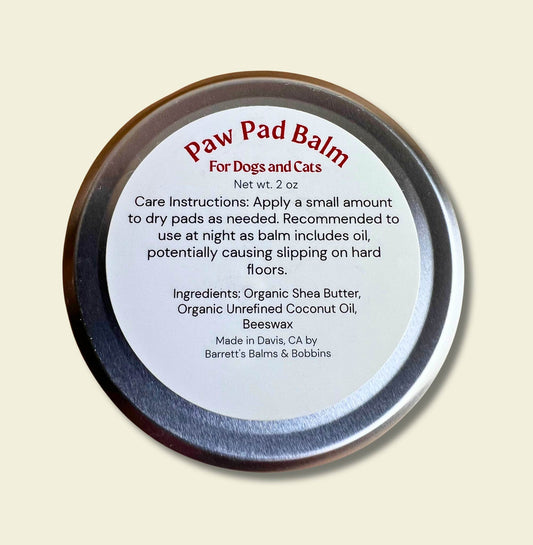
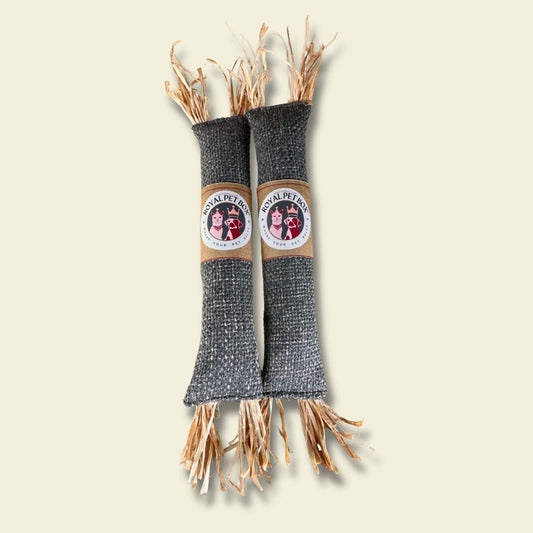
Handling helps here too. A cat who is used to being touched around the face lets you check the chin weekly instead of discovering a problem after it has been building for a month. Our Luxury Cat Box Gift Set pairs a kicker toy, an extendible fish pole toy, catnip, paw balm, and a brush — the sort of calm grooming-and-play routine that makes a weekly face check feel routine rather than like an ambush.
Skip the human acne products. Benzoyl peroxide, salicylic acid washes, and alcohol wipes are far too harsh for feline skin and some are toxic if your cat grooms them off. Any medicated chlorhexidine wash, antibiotic ointment, or degreasing shampoo should come from your vet, at a concentration chosen for cats.
When Chin Acne Needs a Veterinarian
Book a visit if the chin is swollen, red, warm, bleeding, or draining pus; if your cat is scratching at it or flinches when you touch it; if the bumps are spreading beyond the chin; or if a mild case has not improved after four to six weeks of clean bowls and gentle care. Recurrent or severe cases usually need a culture or a skin scraping, because a few conditions mimic chin acne closely — ringworm, mite infestations like demodex, and eosinophilic granuloma among them. Treatment for a confirmed case may involve medicated washes, oral or topical antibiotics, or, for stubborn recurrent cases, a longer course aimed at the underlying allergy.
Chin lesions that are firm, growing, or asymmetric deserve a prompt look rather than a wait-and-see period, since a small number of chin swellings are not acne at all.
The Realistic Outlook
Most cats with chin acne do well. Mild cases are frequently managed with nothing more than better bowls, a daily wipe, and patience, and many cats never have a second episode. Cats prone to recurrence settle into a manageable rhythm once you know their pattern.
So the next time your fingers find that gritty patch under the chin, do not panic and do not scrub. Look closely, swap the bowls, keep the area clean and dry, and watch it for a couple of weeks. If it stays mild, you have likely already solved it. If it does not, you will walk into the vet's office with a clear history and a much faster path to the right answer.
Check out our luxury pet products at reasonable prices. Visit our "Royal Pet Box Pet TV" Channel on both Roku and YouTube for fabulous pet-related education and entertainment.
Paris Deesing holds a degree in Biological Anthropology from UCLA and provides the editorial review behind each article, drawing on a long-held curiosity about the animals who share our lives.
This article was created using artificial intelligence with human editorial review and oversight.