Dog Separation Anxiety: Causes, Signs, and How to Help
Paris DeesingYou grab your keys, and your dog's tail stops wagging. You reach for your coat, and he presses himself against your legs. By the time you're out the door, the barking has already started — and doesn't stop for hours. Separation anxiety is one of the most common and heartbreaking behavioral challenges dog owners face, but with the right approach, it's also one of the most treatable.

What Is Dog Separation Anxiety?
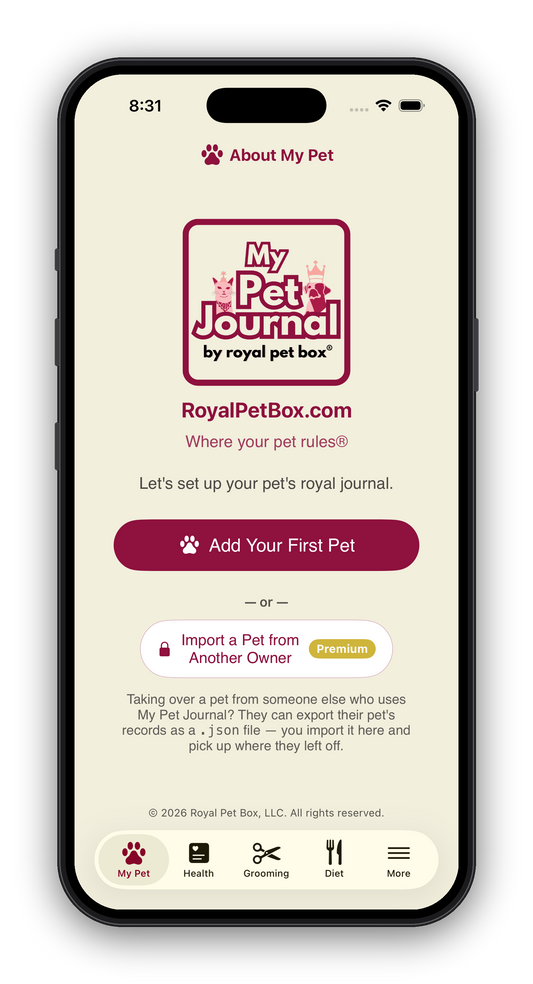
Keeping a detailed log of your dog's anxiety triggers, behavioral patterns, and progress through treatment is one of the most useful things you can do — our My Pet Journal gives you a dedicated space to track symptoms, training milestones, and vet notes all in one place. Separation anxiety is a genuine stress response, not disobedience. When a dog with separation anxiety is left alone, their brain interprets your departure as a threat, triggering the same fight-or-flight response that floods a human with panic. It's involuntary — your dog isn't acting out of spite or boredom. They are genuinely distressed.
True separation anxiety is distinct from boredom-driven mischief. A bored dog chews selectively and seems perfectly calm when you return. An anxious dog may be destructive, vocal, or even injure themselves trying to escape — and typically shows pre-departure anxiety before you've even left.
Signs Your Dog May Have Separation Anxiety
The most common signs include persistent barking, howling, or whining shortly after you leave; destructive chewing focused on exits like doors and windows; accidents in a house-trained dog; excessive drooling or panting; and frantic, over-the-top greetings when you return. Some dogs also refuse to eat when alone, even if food is freely available — a clear signal that the anxiety is overriding normal drives.
Pre-departure cues are an early warning sign worth noting. Dogs are perceptive; they quickly associate certain routines — putting on shoes, picking up a bag, reaching for keys — with being left. A dog with separation anxiety may start pacing, panting, or shadowing you the moment these rituals begin.

How to Treat Separation Anxiety in Dogs
Regular, calm grooming sessions can be a surprisingly effective part of an anxiety management routine — the repetitive, soothing motion of our Luxury Dog and Cat Brush helps many dogs settle into a relaxed state, building the kind of trust and calm association that carries over when you're away. The gold-standard treatment for separation anxiety is a gradual desensitization program. The goal is to teach your dog that short departures are safe — and to build tolerance slowly, one second at a time.
Start with micro-departures. Step outside for just a few seconds, then return before your dog has a chance to escalate. Gradually increase the time you're gone over days and weeks. This reconditions the anxiety response at the neurological level, not just the behavioral one.
Scramble your pre-departure cues. Pick up your keys and then sit back down. Put on your coat and watch TV for twenty minutes. Decoupling these rituals from actual departures reduces anticipatory anxiety before you even leave.
Create positive alone-time associations. Reserve a special treat or puzzle toy exclusively for when you leave. A frozen Kong stuffed with peanut butter can transform departure from a threat into something your dog actually looks forward to.
Avoid punishment. Scolding a dog for anxiety-driven behavior after the fact achieves nothing — dogs don't connect a punishment to something that happened minutes or hours ago. It only adds stress to an already anxious animal.
When to Involve a Veterinarian or Behaviorist
For mild cases, patient counter-conditioning at home is often enough. For moderate to severe anxiety — especially dogs that injure themselves, refuse food for days, or show no improvement after weeks of consistent work — a veterinary behaviorist can be a game-changer. In some cases, short-term anti-anxiety medication helps lower the dog's baseline stress enough to make behavior modification actually stick.
Ask your vet about a full behavioral assessment before starting any medication. Many general practitioners can prescribe options like fluoxetine or trazodone for dogs, and a certified applied animal behaviorist can design a tailored desensitization protocol for your specific situation.
Building Long-Term Confidence in Your Dog
Beyond formal treatment, daily habits make a real difference. Regular aerobic exercise burns off stress hormones and improves overall emotional resilience. Mental stimulation — training sessions, nose work, puzzle feeders — builds confidence and tires a dog out in a healthy way. And consistent, calm departures and arrivals signal to your dog that comings and goings are unremarkable, not cause for alarm.
Separation anxiety can feel overwhelming, but it responds well to patience and consistency. Small, steady steps — tracked and celebrated along the way — add up to a dog who can rest easily while you're gone, knowing you'll always come back.
Mild separation anxiety can often be managed with the gradual training and enrichment strategies described above, but moderate to severe cases may need professional support. Talk to your veterinarian or a certified veterinary behaviorist before trying calming supplements or anxiety medications — they can help you build a behavior-modification plan that actually addresses the root cause.
Check out our luxury pet products at reasonable prices. Visit our "Royal Pet Box Pet TV" Channel on both Roku and YouTube for fabulous pet-related education and entertainment.
Paris Deesing holds a degree in Biological Anthropology from UCLA and provides the editorial review behind each article, drawing on a long-held curiosity about the animals who share our lives.
This article was created using artificial intelligence with human editorial review and oversight.