How Big Do Goldfish Actually Get? Why the Bowl Is a Myth
Paris DeesingThat little goldfish you won at a fair or picked up for a few dollars may look like a low-maintenance "starter pet," but goldfish are one of the most misunderstood animals in the pet world. The truth is that a healthy goldfish is a long-lived, fast-growing fish that needs far more room than the classic bowl suggests. If you have ever wondered how big goldfish actually get and why tank size matters so much, here is what every owner should know.
How Big Do Goldfish Really Get?
Goldfish are not naturally small. Their adult size depends on the variety, but most home goldfish dramatically outgrow the bowl people imagine for them. Slim-bodied types such as common, comet, and shubunkin goldfish routinely reach 10 to 12 inches and can stretch past 14 inches in a pond, with their flowing tails adding even more length. Round-bodied "fancy" goldfish like orandas, ryukins, and fantails stay smaller but still commonly grow to 6 to 8 inches.
Size is only half the story. With good care, goldfish frequently live 10 to 15 years, and pond-kept fish can pass 20. The oldest goldfish on record reportedly lived to 43. A goldfish is a decade-plus commitment to a fish that keeps growing for the first few years of its life.
Why the Goldfish Bowl Is a Myth
The image of a goldfish circling a tiny round bowl is one of the most damaging ideas in pet care. Bowls hold very little water, offer almost no surface area for oxygen exchange, and cannot fit a filter. Goldfish are messy, high-waste fish that produce a lot of ammonia, and in an unfiltered bowl that waste builds up quickly into toxic levels.
There is also a stubborn myth that a goldfish will simply "grow to the size of its tank" and stop. It does not work that way. Cramped, poor-quality water can stunt a goldfish's visible growth, but the internal organs often keep developing. The result is a fish that looks small on the outside while its body is quietly struggling, which usually means a shorter, less comfortable life rather than a conveniently tiny pet.
How Much Tank Space Does One Goldfish Need?
Because goldfish grow large and produce so much waste, they need real volume and strong filtration. A widely used starting point for a single fancy goldfish is around 20 gallons, with roughly another 10 gallons added for each additional fancy goldfish. Slim-bodied common and comet goldfish need substantially more and are genuinely better suited to large tanks or outdoor ponds, where they have room to reach their full size and swim the way they are built to.
Filtration matters as much as gallons. A filter rated for your tank size, paired with regular partial water changes, keeps ammonia and nitrite near zero, which is what actually keeps a goldfish healthy. More water also means more stable temperature and chemistry, so the system is more forgiving of small mistakes.

How to Tell If Your Goldfish Has Outgrown Its Tank
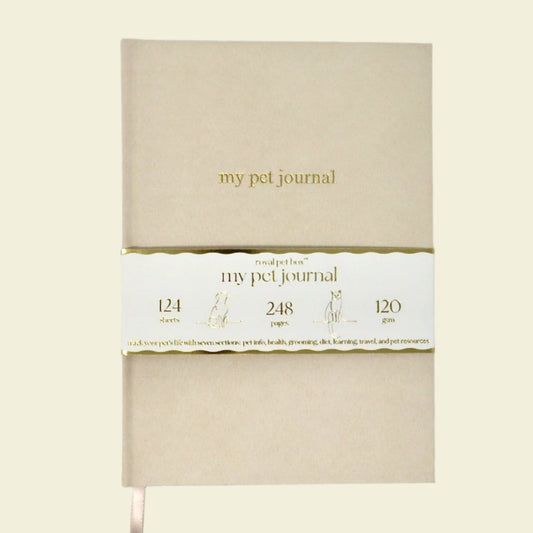
Even attentive owners can miss the early signs that a goldfish needs more space or cleaner water. Watch for fish that hang near the surface gasping for air, clamped or drooping fins, faded color, sluggish behavior, or a loss of appetite. These often point to crowding, poor water quality, or both. Keeping a simple log of feedings, water-change dates, and any changes you notice makes patterns far easier to spot. Our My Pet Journal gives you a dedicated place to track your goldfish's diet, tank maintenance, and health notes all in one spot.
Every goldfish is a little different, and the symptoms above can also signal disease rather than just a too-small tank. If your fish keeps gasping, stops eating, or develops spots, ulcers, or unusual swelling, please loop in a veterinarian who treats fish to rule out an infection or parasite that needs hands-on care.
Setting Your Goldfish Up for a Long, Healthy Life
Giving a goldfish a good life is mostly about getting the basics right from the start: an appropriately large tank, a properly cycled and filtered system, a varied diet fed in modest amounts, and consistent partial water changes. Add a few live or silk plants and some smooth decor for enrichment, and avoid overcrowding as your fish grow.
The takeaway is simple. Goldfish are not disposable bowl ornaments; they are hardy, social, surprisingly large fish that can share your home for a decade or more. Give them the space and clean water they were built for, and you will be rewarded with a bright, active companion who keeps growing right alongside the years you spend together.
Check out our luxury pet products at reasonable prices. Visit our "Royal Pet Box Pet TV" Channel on both Roku and YouTube for fabulous pet-related education and entertainment.
Paris Deesing holds a degree in Biological Anthropology from UCLA and provides the editorial review behind each article, drawing on a long-held curiosity about the animals who share our lives.
This article was created using artificial intelligence with human editorial review and oversight.