How Much Should You Feed Your Fish? Portions, Schedules, and Fasting Days
Paris DeesingAlmost every new aquarium owner does the same thing: they watch their fish dart eagerly to the surface, decide the little guys must be starving, and sprinkle in a second helping. It feels generous. It is, unfortunately, the single fastest way to crash a tank. Fish are opportunistic feeders — they will beg whether or not they need food — and the leftovers they don't eat become the ammonia that poisons them.
Getting it right isn't complicated, but it does mean unlearning the instinct to feed until the food is gone.
Why Overfeeding Fish Wrecks Water Quality
Uneaten food doesn't disappear. It sinks into the gravel, breaks down, and releases ammonia — the same waste product fish excrete through their gills. In a healthy cycled tank, beneficial bacteria convert that ammonia to nitrite and then to far less harmful nitrate. But those bacteria colonies are sized to the bioload they normally handle. Dump in twice the usual food and you overwhelm them.
The result is a familiar chain of problems: cloudy water, ammonia spikes, algae blooms feeding on the excess nutrients, and stressed fish with clamped fins. Overfeeding also causes direct health issues, including constipation, swim bladder trouble in fancy goldfish and bettas, and fatty liver disease over time. Most "mystery" tank problems trace back to the feeding lid.
How Much Food Your Fish Actually Need
The standard guideline is simple and holds up well: feed only what your fish can completely finish in about two to three minutes, with nothing left drifting to the substrate. For most community tanks, that is a startlingly small pinch of flakes — often less than what fits comfortably on a fingertip.
A useful mental picture is that a fish's stomach is roughly the size of its eye. That's the volume you're filling, not the whole fish. If you're using pellets, count them out rather than pouring: two to three small pellets per adult fish is a reasonable starting point for most community species. Bottom feeders like corydoras and plecos need sinking wafers, but the same rule applies — remove anything they haven't finished within a few hours.
These amounts are starting points for healthy adult community fish. Species, size, water temperature, and life stage all shift the math — growing fry and breeding fish need considerably more, while a cool-water tank slows metabolism and needs less. An aquatic veterinarian or an experienced local fish store can help you dial in numbers for your specific stock.

How Often Should You Feed Your Fish?
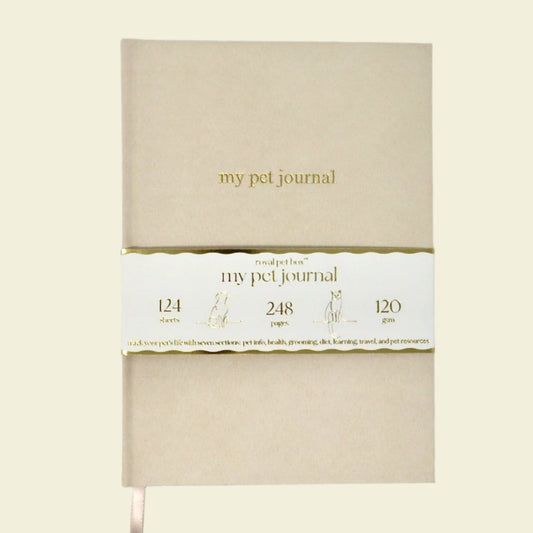
Once a day is enough for the vast majority of adult community fish. Two small feedings a day is also fine — and often better for very active species like tetras and danios — as long as the total daily amount stays the same, split between the two. What matters far more than frequency is consistency. Feeding at the same time each day helps you notice appetite changes, which are often the very first sign a fish is unwell. Our My Pet Journal gives you a place to log feeding times, water-change dates, and test results side by side, which makes it far easier to connect a cloudy week to something you changed.
Juveniles and fry are the exception. Growing fish have fast metabolisms and small stomachs, so they typically need three to four tiny feedings a day. Large predatory fish sit at the other extreme — many do best eating every two or three days.
Signs You're Feeding Too Much
Your tank will tell you before your fish do. Watch for food visible in the gravel hours after feeding, a greasy film on the water surface, water that turns cloudy within a day or two of a change, sudden algae growth on glass and decor, or nitrate readings that climb faster than your water-change schedule can bring them down. A sudden explosion of snails or detritus worms is another reliable tell — they're thriving on the surplus.
If you spot these, cut back rather than adding chemicals. Reduce portions by roughly half, siphon debris out of the substrate during your next water change, and give the tank a week to stabilize before judging the result.
Fasting Days, Vacations, and Species Differences
One fasting day per week is a common and generally healthy practice for adult community fish and especially for fancy goldfish and bettas, both of which are prone to digestive trouble. It gives the gut time to clear and lets the filter catch up. Skip fasting days for fry, for fish recovering from illness, and for any species with an unusually fast metabolism.
Short trips are less of a problem than most owners fear. Healthy adult fish handle three to five days without food easily — far better than they handle a well-meaning neighbor who overfeeds them. For longer absences, an automatic feeder with pre-measured portions beats leaving out a container of flakes.
If a fish stops eating for more than a day or two, is spitting food back out, or looks bloated with stringy white waste, that's worth a conversation with an aquatic vet rather than a feeding adjustment — appetite loss is a symptom, not a habit.
The honest summary: nearly everyone feeds too much, and almost no one feeds too little. Start smaller than feels right, watch the two-to-three-minute rule, and let your water test results — not your fish's begging — tell you whether you've got it right.
Check out our luxury pet products at reasonable prices. Visit our "Royal Pet Box Pet TV" Channel on both Roku and YouTube for fabulous pet-related education and entertainment.
Paris Deesing holds a degree in Biological Anthropology from UCLA and provides the editorial review behind each article, drawing on a long-held curiosity about the animals who share our lives.
This article was created using artificial intelligence with human editorial review and oversight.