How Often Should You Feed a Leopard Gecko? A Feeding Schedule by Age
Paris DeesingOne of the first questions new leopard gecko owners ask is deceptively simple: how often should you feed a leopard gecko? The honest answer is that it depends almost entirely on age. A tiny hatchling has very different needs from a full-grown adult, and getting the feeding schedule right is one of the biggest things you can do to keep your gecko lean, active, and healthy for the long haul. Here is a clear, age-based guide to leopard gecko feeding frequency, portion sizes, and the supplements that keep those bones strong.
How Leopard Gecko Feeding Frequency Changes With Age
Leopard geckos grow fast in their first year, and their feeding schedule should reflect that. As a general rule of thumb, hatchlings and juveniles up to about four months old should be fed every single day. From roughly four to twelve months, you can shift to feeding every other day as their growth begins to slow. Once your gecko crosses the one-year mark and reaches its adult size, feeding two to three times per week is usually plenty.
The logic is simple: young geckos are building bone, muscle, and fat reserves at a rapid pace, so they need frequent, protein-rich meals. Adults, on the other hand, burn energy much more slowly and are prone to obesity if they are offered a daily buffet. Matching the schedule to the life stage is the single most important habit to build.
What (and How Much) to Feed a Leopard Gecko
Leopard geckos are insectivores, so their entire diet is made up of appropriately sized live insects. Good staple feeders include crickets, dubia roaches, and the occasional mealworm, with waxworms reserved as a rare treat because of their high fat content. A useful portion guideline is to offer two insects for every inch of your gecko's length per feeding, and to only offer prey no wider than the space between your gecko's eyes to avoid choking or impaction.
A practical way to feed is the "ten-minute rule": put in the insects, let your gecko hunt for about ten minutes, and remove any uneaten crickets afterward so they do not stress or nibble on your pet overnight. Fresh, clean water should always be available in a shallow dish.
The Role of Calcium and Vitamin Dusting
Insects alone do not give a leopard gecko everything it needs, which is where supplement dusting comes in. Most keepers lightly dust feeders with a calcium powder at nearly every feeding, add a calcium-with-D3 supplement a couple of times a week, and provide a multivitamin roughly once a week. This routine helps prevent metabolic bone disease, one of the most common and preventable health problems in captive reptiles.
These dusting schedules are common starting points, but the exact balance of calcium, D3, and multivitamins depends on your gecko's age, your lighting setup, and its overall health. It is worth checking in with a reptile-experienced veterinarian before settling on a supplement routine, since too much D3 can be just as harmful as too little.
Signs You Are Feeding Too Much or Too Little
Your gecko's body is the best feedback you have. A healthy leopard gecko has a plump, well-rounded tail roughly as wide as its neck. A thin, pencil-like tail can signal underfeeding or illness, while a belly that looks bloated or armpit "fat pads" that bulge dramatically are classic signs of overfeeding. Weighing your gecko every couple of weeks on a small kitchen scale takes the guesswork out of it.
Appetite changes are also worth paying attention to. A gecko that suddenly refuses food, loses weight quickly, or looks lethargic may be dealing with an underlying issue rather than simple pickiness, so loop in your reptile vet if the change lasts more than a few days.

Building a Feeding Routine You Can Stick To
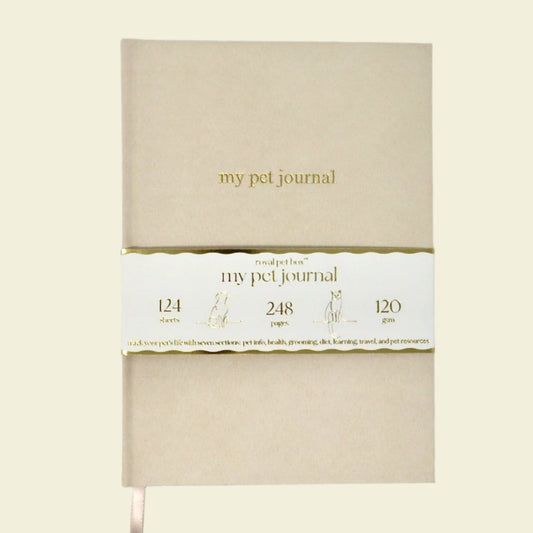
Consistency is what ties all of this together, and keeping a simple log makes it far easier. Our My Pet Journal gives you one dedicated place to record feeding days, insect counts, supplement dusting, weigh-ins, and shed cycles, so patterns and problems jump out long before they become emergencies. Many owners find that writing down "fed, dusted, weighed" turns a fuzzy routine into a reliable habit.
Pick feeding days that fit your week, dust as recommended for your gecko's age, watch that tail, and adjust as your pet grows. Get the schedule right and the rest of leopard gecko care becomes dramatically simpler, leaving you with a bright-eyed, well-fed little reptile that can thrive under your care for fifteen to twenty years.
Check out our luxury pet products at reasonable prices. Visit our "Royal Pet Box Pet TV" Channel on both Roku and YouTube for fabulous pet-related education and entertainment.
Paris Deesing holds a degree in Biological Anthropology from UCLA and provides the editorial review behind each article, drawing on a long-held curiosity about the animals who share our lives.
This article was created using artificial intelligence with human editorial review and oversight.