How to Stop Your Cat From Scratching the Furniture (Without Stress)
Paris DeesingFew things test a cat owner's patience like watching a beloved sofa slowly shred into ribbons. The good news: scratching is a normal, healthy feline behavior, and with the right setup you can redirect it away from your furniture without a single squirt bottle or raised voice. Here's how to stop your cat from scratching the furniture while keeping both of you happy.
Why Cats Scratch in the First Place
Before you can redirect scratching, it helps to understand why cats do it. Scratching is not spite or bad manners. Cats scratch to shed the worn outer layers of their claws, to stretch the muscles of their shoulders and back, and to leave both visible marks and scent signals from glands in their paws. In other words, your couch is being used as a manicure station, a yoga mat, and a message board all at once. Because the urge is hardwired, the goal is never to eliminate scratching but to give it a better target.

Set Up Scratching Posts Your Cat Will Actually Use
The single most effective way to stop furniture scratching is to offer something better. A good scratching post should be tall enough for your cat to stretch fully, sturdy enough that it won't wobble or tip, and wrapped in a texture cats love, such as sisal rope or rough cardboard. To make the new post irresistible, sprinkle or rub a little dried catnip into it — a pinch of our Organically Grown Catnip on a fresh post is one of the simplest ways to draw your cat toward the right surface. Offer both vertical posts and horizontal scratchers, since cats have individual preferences, and place at least one near the furniture they currently target.
Make the Targeted Furniture Less Appealing
While you build enthusiasm for the new posts, gently discourage the old habit. Cats dislike certain textures underfoot and on their claws, so temporary deterrents work well: double-sided sticky tape, a smooth furniture protector, or a loose cover over the favored corner all make the spot far less satisfying to scratch. The trick is to make the furniture boring at the same time you make the post exciting. Once your cat has happily switched over for a few weeks, you can usually remove the deterrents without the scratching returning.

Keep Claws Trimmed and Track What Works
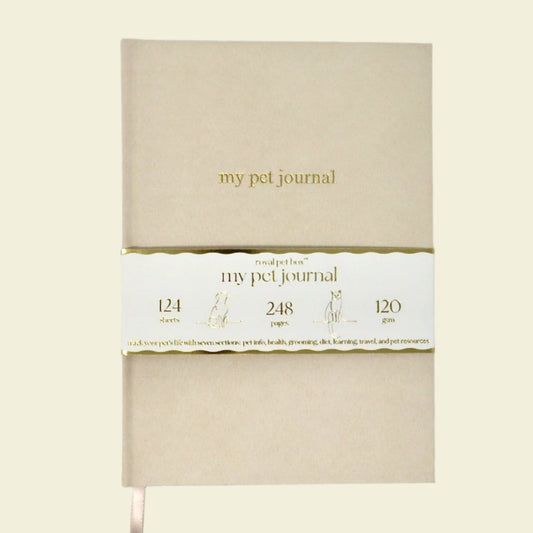
Regular nail trims reduce the damage scratching can do and make the urge a little less intense. Every few weeks, clip just the sharp tips of the claws, taking care to avoid the pink quick inside. If trimming feels daunting, your vet or groomer can demonstrate the technique or do it for you. It also helps to keep notes on what's working — which posts your cat prefers, where they like to scratch, and how they respond to each change. Our My Pet Journal gives you a tidy place to log these details so you can spot patterns and fine-tune your approach over time.
What Not to Do
Punishment is the fastest way to make this problem worse. Yelling, spraying water, or startling your cat teaches them to fear you, not to love their post, and stress can actually increase scratching. Declawing is not a humane fix either — it removes part of each toe bone and can lead to lasting pain and behavior problems. Patience, the right surfaces, and a little catnip will get you far better results than any confrontation.
Putting It All Together
Stopping furniture scratching comes down to a simple formula: understand the instinct, offer better scratching options, make the furniture less inviting, and stay consistent. Give your cat an appealing post, sweeten the deal with catnip, trim those claws, and skip the punishment. Within a few weeks most cats happily migrate to their new spot, leaving your sofa to recover in peace.
Check out our luxury pet products at reasonable prices. Visit our "Royal Pet Box Pet TV" Channel on both Roku and YouTube for fabulous pet-related education and entertainment.
Paris Deesing holds a degree in Biological Anthropology from UCLA and provides the editorial review behind each article, drawing on a long-held curiosity about the animals who share our lives.
This article was created using artificial intelligence with human editorial review and oversight.