How to Stop Your Cat From Waking You Up at Night
Paris DeesingIf your cat turns into a tiny tornado the moment you switch off the light, you are not alone. Predawn meowing, pouncing on your feet, and racing across the bed are some of the most common complaints from cat owners. The good news is that nighttime activity is rarely random, and with a few simple adjustments you can help your cat settle into a rhythm that lets everyone sleep.
Why Cats Are So Active at Night
Cats are crepuscular, which means they are naturally wired to be most active at dawn and dusk. In the wild, these low-light hours are prime hunting time, and even a well-fed house cat carries that instinct. If your cat spends the day sleeping while you are out, all of that stored-up energy has nowhere to go until you are trying to rest. Understanding this hunting clock is the first step to gently shifting it.
Tire Your Cat Out With Evening Play

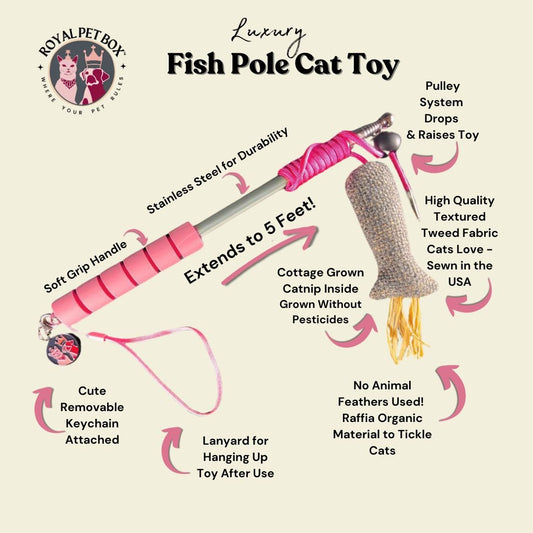
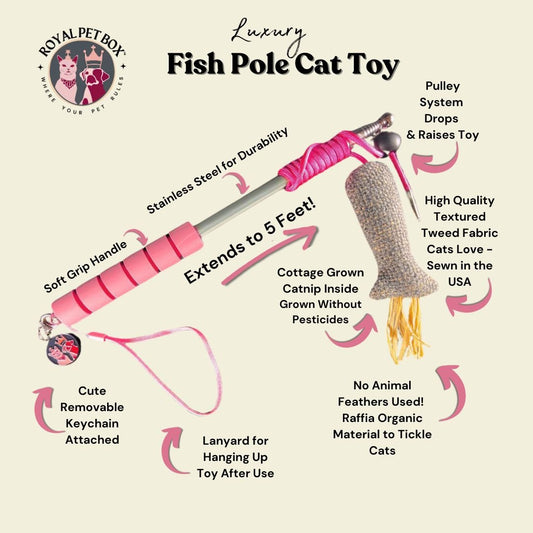
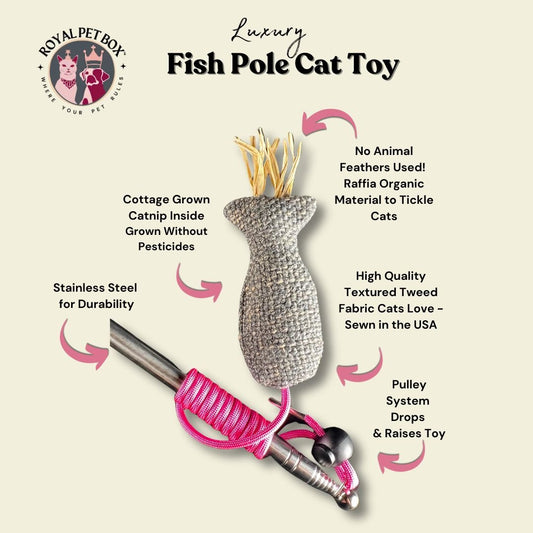
The single most effective way to stop a cat from waking you up at night is to wear them out before bed with active, interactive play. A wand-style toy that lets you mimic darting prey is perfect for this — our Luxury Extendible Fish Pole Cat Toy extends to keep your cat chasing, leaping, and stalking until they are genuinely tired. Aim for a focused 10 to 15 minute session in the evening, letting your cat "catch" the toy a few times so the hunt ends in a satisfying win rather than frustration.
Follow Play With Food to Trigger the Sleep Cycle
In nature, a cat hunts, eats, grooms, and then sleeps. You can borrow that exact sequence to your advantage. After your evening play session, offer a small meal or a portion of your cat's dinner. A full belly after a satisfying "hunt" naturally nudges your cat toward a longer, deeper sleep — often lasting right through the hours you want to be resting.
Give Your Cat Something to Do While You Sleep

Even a tired cat may wake for a stretch in the small hours, so it helps to leave out safe, self-directed enrichment for those moments. A kickable plush toy lets your cat wrestle, bunny-kick, and burn off a burst of energy without needing you — our Luxury Cat Kicker Toy is filled with silver vine and catnip to keep solo play interesting. Food puzzles and treat balls are another great option, giving your cat a quiet job to do that keeps them out of your face.
Keep a Consistent Routine (and Don't Reward the Wake-Ups)
Cats thrive on predictability, so try to keep playtime, feeding, and lights-out at roughly the same time each night. The hardest part is the middle-of-the-night meowing: if you get up to feed or pet your cat every time they wake you, you are teaching them that noise works. As long as your cat's needs are met, it is usually best to calmly ignore the 4 a.m. concert so the behavior fades over a week or two.
When Nighttime Restlessness Signals Something Else
Most night waking is simple boredom or habit, but a sudden change deserves a closer look. Excessive nighttime yowling, especially in an older cat, can point to issues like hyperthyroidism, high blood pressure, or cognitive changes.
If your cat's nighttime behavior shifts abruptly or comes with weight loss, increased thirst, or disorientation, it is worth a visit to your vet to rule out an underlying medical cause.
Track the Pattern to Find What Works

Every cat is different, and finding the right combination of play, feeding, and routine often takes a little experimentation. Jotting down when your cat wakes, how long you played, and when you fed them makes patterns easy to spot — our My Pet Journal gives you a dedicated place to log meals, activity, and behavior so you can fine-tune the schedule that finally earns you a full night's sleep.
With a tired-out cat, a well-timed evening meal, and a steady routine, those 3 a.m. wake-up calls can become a thing of the past. A few patient weeks of consistency is usually all it takes to help your cat — and you — sleep soundly through the night.
Check out our luxury pet products at reasonable prices. Visit our "Royal Pet Box Pet TV" Channel on both Roku and YouTube for fabulous pet-related education and entertainment.
Paris Deesing holds a degree in Biological Anthropology from UCLA and provides the editorial review behind each article, drawing on a long-held curiosity about the animals who share our lives.
This article was created using artificial intelligence with human editorial review and oversight.