Microchips and ID Tags: The Two-Layer System That Brings Lost Pets Home
Paris DeesingRoughly one in three pets will go missing at some point in their lives. The ones who make it home almost always have something in common: a way for a stranger to figure out who they belong to. That usually comes down to two things working together — a microchip under the skin and a readable tag on the collar. Neither one is a complete answer on its own, and understanding why is the difference between a scary afternoon and a permanent loss.
What a Pet Microchip Actually Does (and What It Doesn't)
A microchip is a passive RFID transponder about the size of a grain of rice, implanted between the shoulder blades with a needle during a routine visit. It has no battery, no GPS, and no ability to broadcast anything. When a scanner passes over it, the chip powers up just long enough to return a single number.
That number is not your name. It is a key that points to a record in a registry database, and the record is only as good as the information you put in it. A chip is permanent identification — it cannot fall off, fade, or be removed by someone who wants to keep your pet — but it only helps once your animal reaches a shelter, clinic, or rescue with a scanner on hand.
Chips occasionally migrate from the implant site or, rarely, stop reading altogether. Ask your vet to scan your pet at each annual exam — it takes about ten seconds and confirms the chip is still where it should be and still responding.
Why an ID Tag Still Does the Heavy Lifting
Most lost pets are not found by animal control. They are found by a neighbor two streets over who sees a loose dog in the yard or a strange cat on the porch. That person has no scanner, and the fastest resolution is a phone number they can read and dial on the spot.
A good tag carries your cell number, a second contact number, and the word “MICROCHIPPED” so a finder knows a vet can pull up more. You do not need your pet's name on it — some owners deliberately leave it off so a stranger cannot call the dog away. Check the engraving twice a year; rivet-style tags and stamped letters wear smooth faster than people expect, and a blurred number is the same as no tag at all.

The Step Most Owners Skip: Registering and Updating the Chip
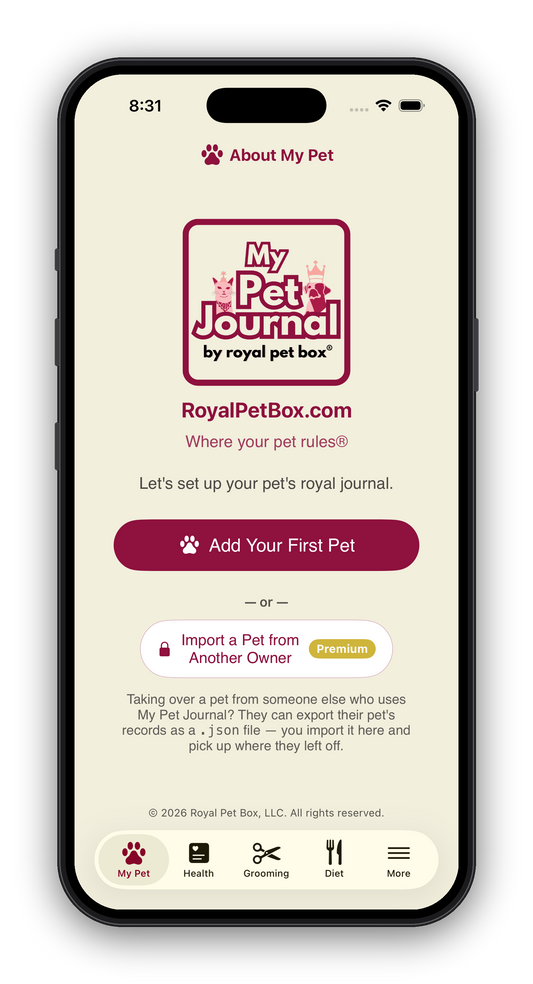
This is where the system quietly fails. Implanting the chip and registering it are two separate actions, and plenty of pets adopted from shelters or bought from breeders carry a chip that still lists the previous owner — or nobody at all. Keeping your pet's chip number, registry name, and login details in one place makes this easy to stay on top of, and our My Pet Journal gives you a dedicated pet-info section for exactly that kind of record alongside vet visits and vaccination dates.
Do three things today. Look up your chip number and confirm which registry holds it. Log in and verify your current phone number and address. Then add a backup contact — a family member or friend who will answer if you are traveling or unreachable. Repeat the check any time you move or change carriers.

Build Your Lost-Pet Kit Before You Need It
When a pet goes missing, the clock matters and panic makes people slow. Having the essentials assembled in advance saves the twenty minutes you would otherwise spend hunting through your phone for a decent photo. Our recommended Pet ID Clear Sleeves keep a printed card with your pet's chip number, description, and emergency contacts in your wallet, glovebox, or pet carrier — readable by anyone who needs it, even if your phone is dead.
Round out the kit with a current, well-lit photo showing your pet's face and any distinctive markings, a second photo of you together (shelters may ask for proof of ownership), a written description including weight and any scars or unusual coloring, and your vet's phone number. Store copies both on your phone and on paper.
If Your Pet Goes Missing: The First 24 Hours
Search close to home first. Frightened cats rarely travel far and typically hide within a few houses of where they slipped out — check under decks, in sheds, and behind appliances in garages. Dogs cover far more ground, so widen your radius quickly and ask anyone walking the neighborhood.
Then work the phones: call every shelter within a reasonable drive, file a found-pet alert with your microchip registry, and notify nearby veterinary clinics, since a good samaritan's first stop is often the closest vet. Post the photo to neighborhood apps and local lost-pet groups, and visit the shelters in person every couple of days — staff descriptions and yours often do not match.
Two Layers, One Job
The tag gets your pet home in an hour. The chip gets your pet home in a month, or from three states away. They cover different failure modes, which is why the pets who make it back tend to have both. Spend fifteen minutes this weekend confirming your registry details are current and your tag is still legible — it only works if you do it before you need it.
Check out our luxury pet products at reasonable prices. Visit our "Royal Pet Box Pet TV" Channel on both Roku and YouTube for fabulous pet-related education and entertainment.
Paris Deesing holds a degree in Biological Anthropology from UCLA and provides the editorial review behind each article, drawing on a long-held curiosity about the animals who share our lives.
This article was created using artificial intelligence with human editorial review and oversight.