Senior Cat Care: How to Keep Your Aging Cat Comfortable and Healthy
Paris DeesingMost people know cats are long-lived animals — but what's less obvious is how much changes once they cross into their senior years. Whether your cat is just turning 10 or already well into their teens, the right care adjustments can make an enormous difference in how comfortable, healthy, and happy they feel every day.

Keeping a detailed record of your cat's changing habits, appetite, weight, and vet visits is one of the most useful things you can do once they enter their senior years. Our My Pet Journal gives you a dedicated space to log meals, medications, health notes, and more — all in one beautifully organized 248-page hardcover.
When Does a Cat Become a Senior?
Most veterinarians consider cats "senior" starting around age 10–11, with cats over 15 classified as "super seniors" or sometimes geriatric. In rough human-equivalent terms, a 10-year-old cat is somewhere in their mid-50s. This milestone varies by genetics and lifestyle — indoor cats typically live longer than outdoor cats — but the shift in care needs begins to appear in the early double digits regardless.
By around 10–12, many cats begin to show subtle changes in mobility, sleep patterns, and appetite. The goal isn't to treat aging as a disease — it's to understand what's normal for your individual cat so you can recognize what isn't.
Health Changes to Watch for as Your Cat Ages
Cats are famously good at masking discomfort, which means health changes often show up as behavioral shifts before any obvious physical symptoms. Some of the most important things to track:
- Weight changes: Unintended weight loss combined with increased appetite can signal hyperthyroidism — extremely common in cats over 10. Unexplained weight gain may point to reduced activity or metabolic changes.
- Thirst and litter box habits: Drinking more water and urinating more frequently are early signs of chronic kidney disease (CKD), one of the most prevalent conditions in older cats. Changes in litter box use — going outside the box, straining, or reduced output — all warrant a veterinary conversation.
- Coat quality and grooming: Senior cats often groom less efficiently as flexibility decreases. A dull, matted, or greasy coat can reflect pain, dental disease, or systemic illness.
- Mobility and posture: Reluctance to jump, hesitation at stairs, or changes in how your cat sits can be signs of arthritis. Many older cats develop joint pain that goes undiagnosed simply because the signs are so gradual and subtle.
Every cat ages differently — if you notice a change that feels "off" even if you can't quite name it, that instinct is worth following up on. A vet who knows your cat's baseline is your best resource for distinguishing normal aging from something that needs hands-on care.
Keeping Senior Cats Active With Gentle Play

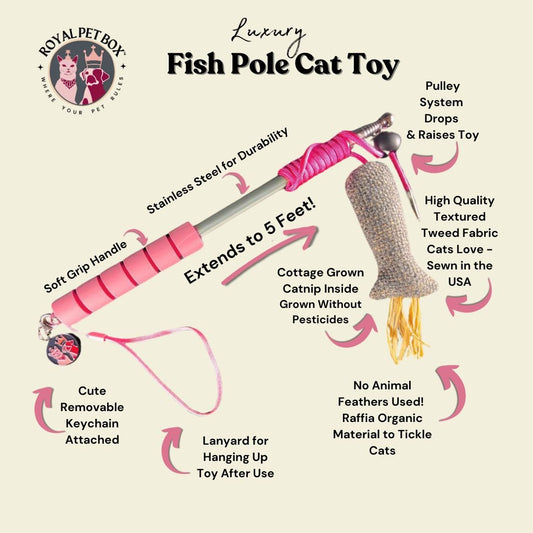
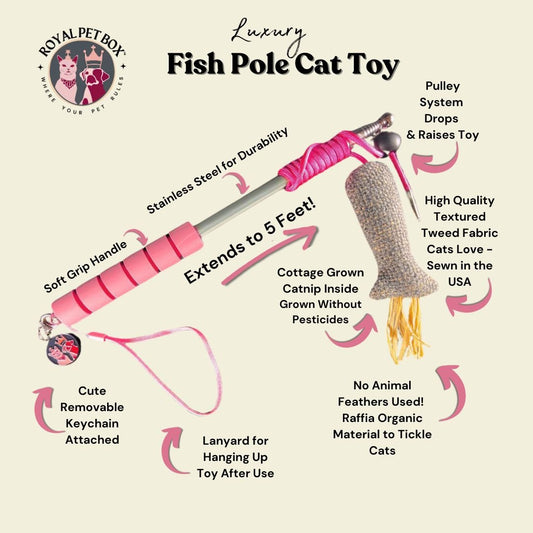
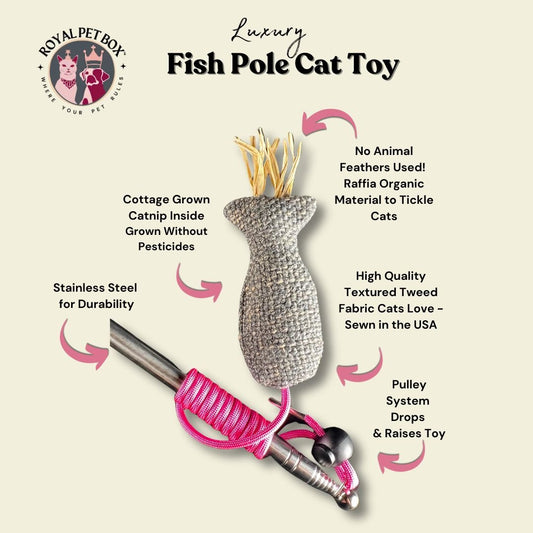
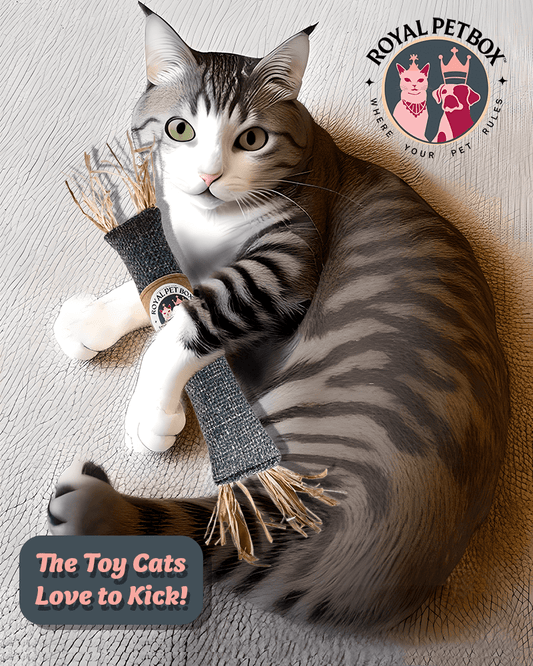
Play doesn't stop mattering just because a cat has slowed down a little. Even senior cats benefit enormously from daily interactive sessions — they keep joints mobile, minds engaged, and the human-cat bond strong. The key is adjusting pace and intensity. Our Luxury Fish Pole Cat Toy is well-suited for older cats: the extendable wand lets you bring the action down to your cat's level, so they can stalk, bat, and pounce without the high-impact jumping that harder toys can demand.
Short sessions — five to ten minutes, two or three times a day — tend to work better than longer ones for senior cats. Watch for signs of fatigue like open-mouth breathing or abruptly flopping down mid-session, and always let your cat end play on their own terms rather than pushing past their comfort level.
Diet, Comfort, and the Twice-Yearly Vet Visit
Senior cats have different nutritional requirements than younger adults. Most veterinarians recommend transitioning to a senior-formulated food around age 10–11, which is typically adjusted for protein levels, added joint support, and controlled phosphorus to protect kidney function. Wet food becomes especially valuable as cats age, since it contributes meaningful daily hydration at a time when adequate water intake matters more than ever.
Talk to your vet before switching your senior cat's diet — the right food depends on your cat's weight, kidney function, dental health, and any existing conditions. A food that works beautifully for one aging cat may not be the right fit for another.
Physical comfort is equally important and often underestimated. Senior cats with stiff joints benefit from lower-sided litter boxes, soft bedding placed at floor level, and heated beds that ease morning stiffness. Small ramps or steps to favorite perches can extend the years a senior cat can still enjoy their usual spots without strain.
Vet visit frequency should increase with age. Many vets recommend twice-yearly wellness exams for cats over 10, even when nothing seems obviously wrong — bloodwork and urinalysis at those visits can catch kidney disease, thyroid changes, and diabetes in their earliest and most treatable stages. The observations you make at home between visits are just as valuable as the exam itself, which is why careful record-keeping pays off over time.
Senior cats ask for relatively little: warmth, gentle engagement, food that suits their changing bodies, and someone paying close attention. Those small adjustments, made consistently and started before problems appear, are the real foundation of a long and comfortable life together.
Check out our luxury pet products at reasonable prices. Visit our "Royal Pet Box Pet TV" Channel on both Roku and YouTube for fabulous pet-related education and entertainment.
Paris Deesing holds a degree in Biological Anthropology from UCLA and provides the editorial review behind each article, drawing on a long-held curiosity about the animals who share our lives.
This article was created using artificial intelligence with human editorial review and oversight.