Snake Shedding Explained: What's Normal and How to Help a Stuck Shed
Paris DeesingFew things startle a new snake owner quite like finding a complete, ghostly replica of their pet draped over a branch one morning. Shedding, known scientifically as ecdysis, is one of the most fascinating and important parts of keeping a snake. Done well, it leaves your snake with a fresh, vivid coat of scales and bright, clear eyes. Done poorly, it can leave behind stubborn patches that cause real trouble. Here is what healthy snake shedding looks like, and how to help your snake through every cycle.

What Is Snake Shedding, and Why Does It Happen?
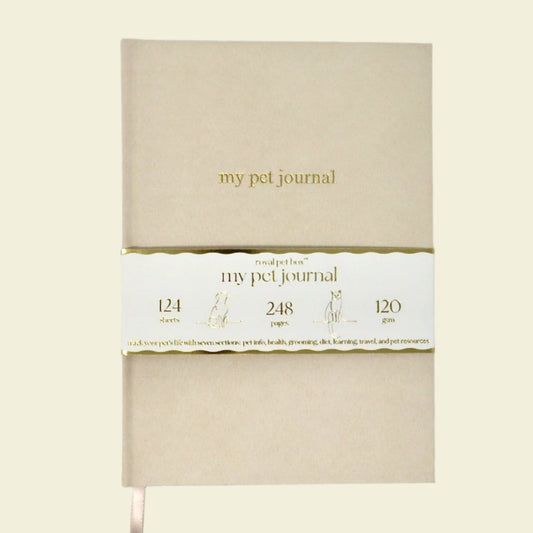
Keeping a simple record of each shed makes it far easier to notice when something is off, and our My Pet Journal gives you a dedicated place to log shed dates, enclosure humidity, and how cleanly each one came off, so patterns jump out over time.
Unlike mammals, who shed skin cells constantly and invisibly, snakes replace their entire outer layer in one coordinated event. A snake's skin does not stretch to keep pace with its body, so as the animal grows, it periodically forms a fresh layer of skin underneath the old one, then works the worn outer layer off, ideally in a single unbroken piece. That discarded layer, turned inside out like a sock, is the shed you find in the enclosure. Because growth drives the process, fast-growing young snakes shed much more often than mature adults.
Signs Your Snake Is About to Shed
Snakes give clear warning that a shed is coming, and learning to read the signs helps you adjust their care in time. The most obvious clue is the "blue" or "opaque" phase: the eyes turn a cloudy, milky blue-gray as fluid builds up beneath the old eye caps, and the skin looks dull, dusty, and faded. Your snake's belly may take on a pinkish tone. Many snakes also become more withdrawn during this window, hiding more, refusing food, soaking in the water bowl, and acting a little defensive because their vision is temporarily clouded. After roughly a week, the eyes clear again for a day or two, and the shed itself usually follows shortly after.
How Often Do Snakes Shed?
Shed frequency depends mostly on age, species, growth rate, and overall health. Hatchlings and fast-growing juveniles may shed every few weeks, while a full-grown adult often sheds only once every four to eight weeks, and some slow-growing or older snakes stretch it even longer. A well-fed snake that is putting on size will shed more often than one at a stable adult weight. What matters more than the exact calendar is consistency: a sudden change in your snake's normal rhythm, or several rough, patchy sheds in a row, can point to issues like low humidity, parasites, or a skin infection worth investigating.
How to Help Your Snake Shed Successfully
The single biggest factor in a clean shed is humidity. Each species has its own target range, and letting the enclosure drift too dry is the most common reason sheds come off in frustrating little flakes. Adding a humid hide, a covered box with damp sphagnum moss or a moist paper towel inside, gives your snake a spot to boost moisture on its own terms. A water bowl large enough for the snake to soak in helps too, as does a rough surface like a branch or piece of cork bark to rub against and start the peel. It is best to avoid handling during the blue phase, when your snake feels vulnerable and its skin is fragile.
Humidity targets vary a lot from a desert-dwelling species to a tropical one, so check the specific range your snake needs rather than aiming for a single number, and have your reptile vet weigh in if you are unsure what is right for your setup.
What to Do About a Stuck Shed (Dysecdysis)
Sometimes pieces of old skin cling on after the main shed, a condition called dysecdysis. The two spots to watch most closely are the eye caps and the very tip of the tail. Retained eye caps can build up over successive sheds and interfere with vision, while a ring of stuck skin on the tail tip can slowly tighten, cut off circulation, and cause the snake to lose the end of its tail. If you spot retained skin, raise the enclosure humidity and offer a shallow, lukewarm soak for ten to fifteen minutes, then gently coax loose skin off with a damp, soft cloth in the direction of the tail.
Never try to pick or peel a stuck eye cap off yourself, and if retained skin does not come away easily or keeps happening shed after shed, please loop in a reptile-experienced veterinarian who can remove it safely and check for an underlying cause.
Shedding is one of the clearest signs of a growing, healthy snake. Once you learn your own snake's rhythm and keep humidity in the right range, the vast majority of sheds take care of themselves. Track each one, stay alert to stuck patches around the eyes and tail, and you will quickly know the difference between a normal shed and one that needs a closer look.
Check out our luxury pet products at reasonable prices. Visit our "Royal Pet Box Pet TV" Channel on both Roku and YouTube for fabulous pet-related education and entertainment.
Paris Deesing holds a degree in Biological Anthropology from UCLA and provides the editorial review behind each article, drawing on a long-held curiosity about the animals who share our lives.
This article was created using artificial intelligence with human editorial review and oversight.