Traveling With Your Dog by Car: A Road Trip Safety Guide
Paris DeesingA dog with its ears flapping in the breeze is one of summer's happiest images, but getting your pup safely from driveway to destination takes more planning than just rolling down the window. Whether you're headed to the lake for the weekend or across the state to visit family, a few smart habits keep your four-legged co-pilot secure and comfortable for every mile.
Why an Unrestrained Dog Is a Real Car-Trip Risk
A loose dog in a moving car is more than a cute passenger; it's a genuine safety hazard. An unbuckled dog can climb into your lap, block your view, or become a dangerous projectile in a sudden stop or collision. Even the calmest dog can panic at a slammed door and bolt into traffic the instant you open the door at a rest stop. Securing your dog protects your pet, your passengers, and every other driver on the road.

How to Choose the Right Car Restraint for Your Dog
The best restraint depends on your dog's size and temperament. For small and medium dogs, a padded booster seat such as our recommended Dog Car Seat lifts your pup high enough to watch the world go by while a built-in tether keeps them safely anchored. Larger dogs often ride best in a crash-tested harness clipped to the seatbelt or a well-ventilated crate secured in the cargo area. Whatever you choose, look for something sturdy, washable, and correctly sized.

Buckling In and Loading Up the Safe Way
How you attach the restraint matters as much as the restraint itself. Always tether your dog by a body harness, never by the collar; a hard stop can cause a serious neck injury if the force lands on your dog's throat. A properly fitted set like our recommended Dog Harness Collar and Leash distributes pressure across the chest and shoulders, and the matching leash makes leashed potty breaks quick and controlled. Keep the tether short enough that your dog can sit, stand, and lie down but can't wander into the front seat, and keep the windows up past a small crack no matter how much your dog loves the wind.

Packing a Canine Travel Kit
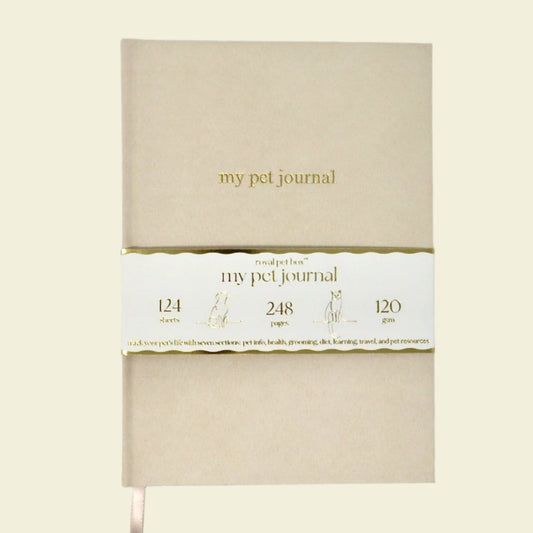
A little prep prevents most roadside headaches. Pack fresh water and a collapsible bowl, your dog's regular food, waste bags, a favorite blanket or toy, and any medications your dog takes. It's also wise to bring a basic pet first aid kit and a copy of your dog's vaccination records in case you need an unfamiliar vet along the way. Our My Pet Journal has a dedicated Travel section that keeps vaccination dates, your vet's phone number, and medication notes in one grab-and-go place, so the details you need in an emergency are never buried in your phone.
Easing Car Anxiety and Motion Sickness
Not every dog is a natural road-tripper. If your dog associates the car only with vet visits, build a happier connection first: start with the engine off and treats in the back seat, then work up to short drives around the block before attempting a long haul. Watch for signs of motion sickness such as drooling, excessive lip-licking, whining, or vomiting, which are more common in puppies whose inner ears are still developing. Feeding a light meal three to four hours before departure and keeping the cabin cool and well-ventilated helps many dogs settle.
If your dog struggles badly with nausea or anxiety on the road, talk with your vet before reaching for any anti-nausea medication or calming aid; the right choice and dose depend on your dog's weight, age, and anything else they're already taking.
Heat, Rest Stops, and the One Rule You Never Break
The single most important rule of summer travel: never leave your dog alone in a parked car, not even for a few minutes with the windows cracked. On a warm day the interior can climb to deadly temperatures faster than most people expect. Plan a rest stop every two to three hours so your dog can stretch, drink, and relieve themselves on a secure leash. If you have to run an errand where your dog can't come inside, it's better to skip it than to risk it.
With the right restraint, a well-packed kit, and a few calm practice runs, car travel becomes one more adventure you and your dog get to share. A little planning up front turns a stressful drive into the easy, tail-wagging ride you both pictured.
Check out our luxury pet products at reasonable prices. Visit our "Royal Pet Box Pet TV" Channel on both Roku and YouTube for fabulous pet-related education and entertainment.
Paris Deesing holds a degree in Biological Anthropology from UCLA and provides the editorial review behind each article, drawing on a long-held curiosity about the animals who share our lives.
This article was created using artificial intelligence with human editorial review and oversight.