What Your Cat's Tail Is Telling You: A Guide to Feline Tail Language
Paris DeesingYour cat's tail is one of the most expressive parts of their body — a living antenna that broadcasts mood, confidence, and intention in real time. Cats are famously subtle communicators, but the tail rarely lies. Learn to read it, and you'll understand how your cat feels long before a meow or a swat gives it away. Here's how to decode feline tail language, position by position and flick by flick.
Why the Tail Is a Cat's Most Honest Messenger
Cats evolved as both predator and prey, so much of their communication is quiet and physical rather than loud. The tail, packed with muscles and nerves, shifts almost involuntarily with a cat's emotional state, which makes it a remarkably reliable signal. Unlike a practiced meow aimed squarely at getting your attention, tail movements happen in the background — giving you an honest window into how your cat truly feels from one moment to the next.

Cat Tail Positions and What They Mean
Start with the overall position of the tail, which sets the baseline for everything else. A tail held straight up, sometimes with a little question-mark curl at the tip, is the feline equivalent of a warm hello — it usually means your cat is confident, friendly, and glad to see you. A tail carried low or tucked between the legs signals worry or submission, while a puffed-up, bottle-brush tail means your cat is startled or frightened and instinctively trying to look bigger. Keeping a log of your cat's moods and body language over time is one of the best ways to learn their personal dialect — our My Pet Journal gives you a dedicated place to note behaviors, triggers, and vet visits so patterns become easy to spot.
Tail Movements: Flicks, Swishes, and Twitches
Motion adds a second layer of meaning on top of position. A slow, lazy swish often shows focused interest — your cat is watching something intently. A fast, thrashing tail that whips from side to side is the near-opposite of a happy dog's wag: it signals irritation or agitation and is a clear "give me some space" warning. A gentle twitch at just the tip can mean mild curiosity or playful concentration, while a tail held upright and quivering is a sign of pure excitement, often reserved for a favorite person or a long-awaited meal.

Reading Your Cat's Tail During Play and Hunting
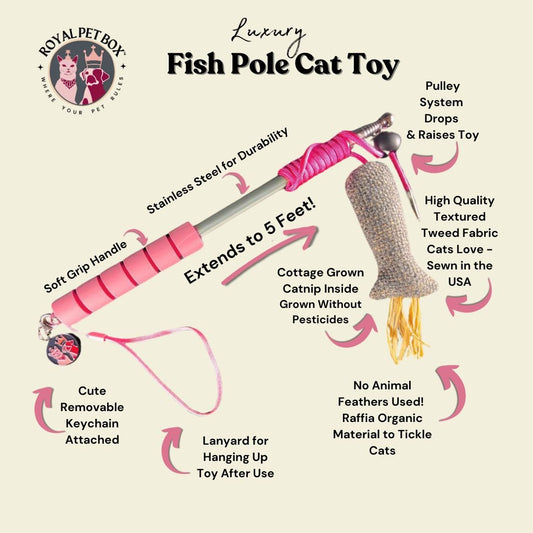
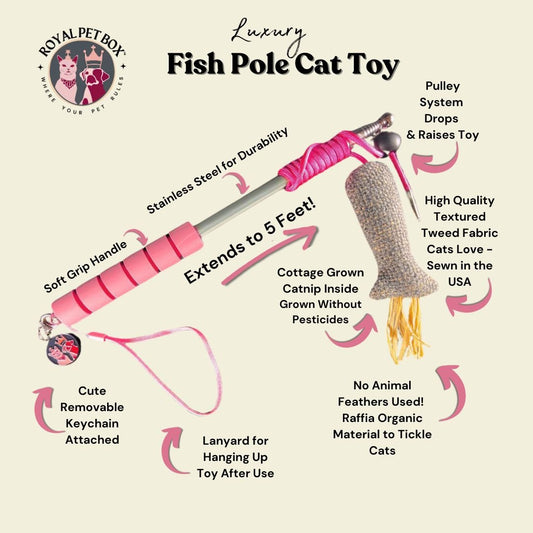
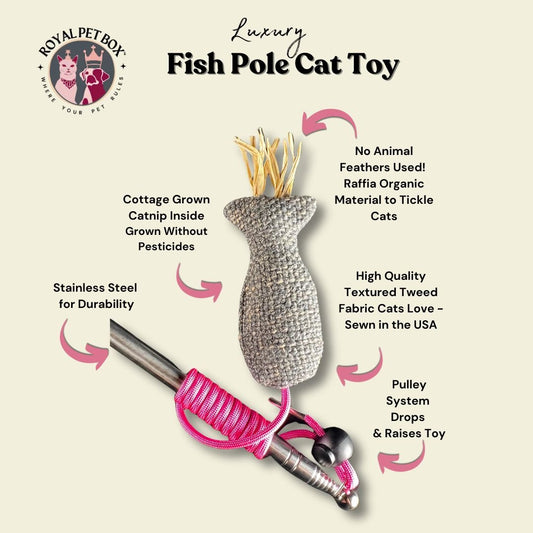
Play is where feline tail language truly comes alive. As your cat stalks a toy, watch for that low, twitching tail tip and the telltale wiggle of the hindquarters right before a pounce — classic predator focus. An interactive toy like our Luxury Extendible Fish Pole Cat Toy is perfect for drawing out these natural hunting sequences, letting your cat chase, ambush, and "catch" in a way that satisfies deep instincts. A tail flicking with excitement during a good game is a healthy sign; a tail that suddenly puffs or lashes hard may mean the fun has tipped over into overstimulation.

When a Cat's Tail Signals Overstimulation or Pain
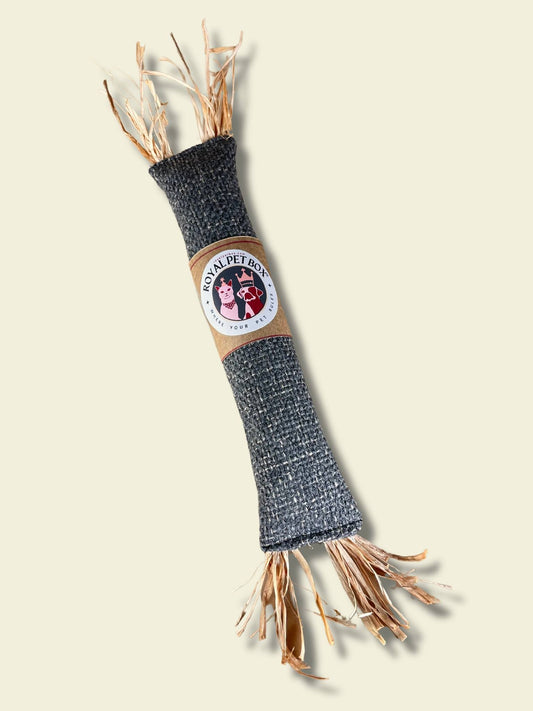
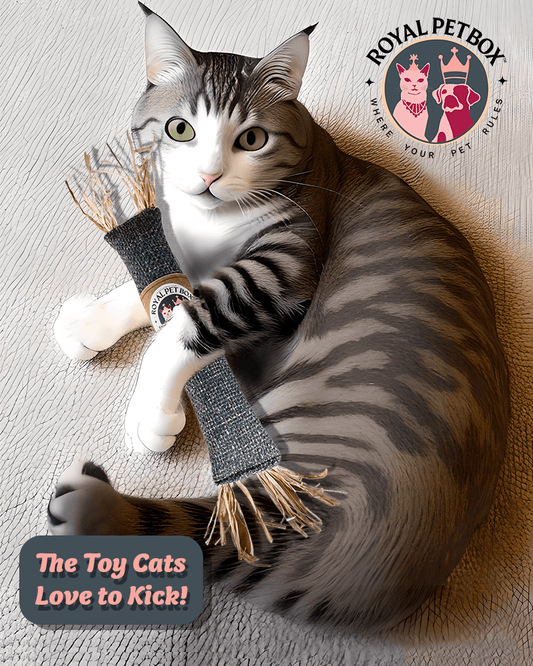
Not every tail signal is playful. A tail that thrashes during petting is often your cat's way of saying they've had enough contact, and pushing past that point can earn you a quick nip or swat. Giving your cat something to redirect that energy toward — like our Luxury Cat Kicker Toy, which invites satisfying bunny-kicks and bite-and-wrestle play — can channel overstimulation into a healthy outlet rather than frustration. Watch, too, for a tail your cat suddenly won't move normally, holds at an odd angle, or seems to guard as painful, since the tail contains sensitive nerves that connect to the spine.
Sudden changes in tail carriage — a limp, droopy, or clearly tender tail — can point to nerve or spinal issues, so it's worth having your vet take a look to rule out anything that needs hands-on care.
Once you start watching the tail, your cat becomes far easier to read. Pair tail position with the ears, eyes, and overall posture, and you'll have a full picture of what your cat is feeling — whether that's "I adore you," "I'm on the hunt," or "please give me a minute." The more you observe, the more fluent you'll become in your cat's silent language, and the deeper the bond you share will grow.
Check out our luxury pet products at reasonable prices. Visit our "Royal Pet Box Pet TV" Channel on both Roku and YouTube for fabulous pet-related education and entertainment.
Paris Deesing holds a degree in Biological Anthropology from UCLA and provides the editorial review behind each article, drawing on a long-held curiosity about the animals who share our lives.
This article was created using artificial intelligence with human editorial review and oversight.