Why Does My Cat Headbutt Me? The Sweet Science Behind Feline Bunting
Paris DeesingYou're sitting on the couch, minding your own business, when suddenly your cat marches up and presses the top of their head firmly against your chin. Maybe they slide their cheek along your jaw, or bump their forehead into your hand. It's such a deliberate little gesture — and once you know what it means, it might just be the sweetest thing your cat does all day.
This behavior is called bunting, and it's one of the highest compliments a cat can pay you. Bunting is part scent-marking, part social bonding, and part "you are officially family now." Let's break down what's really happening behind those affectionate head bumps.

It's Called Bunting — and It's a Compliment
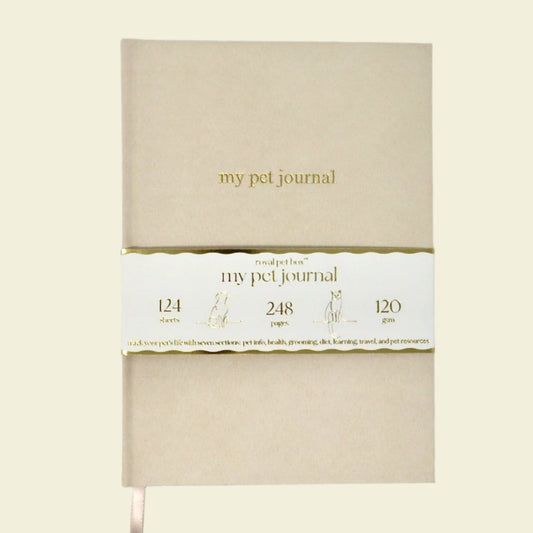
In feline behavior science, bunting refers to the way cats deliberately press and rub the top of their head, cheeks, chin, or forehead against a person, another animal, or an object. It's slow, intentional, and almost always directed at someone the cat trusts. Cats don't bunt strangers, predators, or anything that makes them uneasy — bunting is reserved for the inner circle. Logging little bonding moments like these is part of the fun of cat ownership, and our My Pet Journal gives you a dedicated 248-page space to track behaviors, favorite spots, vet visits, and the funny rituals that make your cat uniquely theirs.
Researchers studying domestic cats consider bunting an "affiliative behavior," which is the polite scientific way of saying it's a friendliness display. If your cat bunts you regularly, you've earned a permanent slot in their social world.
The Secret Scent Glands Behind the Bunt
Here's where it gets fascinating: cats have specialized scent glands clustered on their cheeks, chin, lips, forehead, and at the base of their ears. When a cat bunts, they're depositing a unique cocktail of pheromones onto you — invisible chemical messages other cats can read like a name tag.
The most famous of these is the F3 facial pheromone, which carries a "this is safe and familiar" signal. By transferring it to you, your cat is essentially marking you as part of their secure territory — somewhere between roommate and beloved piece of furniture, in the best possible way. Cats also use these same glands to mark doorways, table corners, and the legs of their favorite chairs, which is why some kitties will bunt the same spot repeatedly each day.

What Headbutting Means in Cat Society
To understand why your cat bunts you specifically, it helps to know what bunting looks like in feline society. Cats who live together — whether siblings in a colony, bonded pairs in a home, or feral cat communities — engage in something called allorubbing: a back-and-forth ritual of cheek rubs and head bumps that blends their individual scents into one unified "group scent." This communal smell signals belonging. Anyone who carries it is family. Speaking of cheek glands, this is also exactly why so many cats go wild face-rubbing on catnip — those same facial scent receptors get a delightful little workout. A small pouch of Organically Grown Catnip is a perfect way to see this behavior up close: sprinkle a pinch on a favorite blanket and watch the cheek-rubbing show begin.
When your cat bunts you, they're inviting you into that scent-family. You're not just being greeted — you're being woven into their social fabric. It's worth pausing the next time it happens to actually appreciate the gesture. Many cats reserve full-body bunting for one or two people in the entire household.
When Bunting Means Something Else
While most bunting is pure affection, context matters. A few variations to watch for:
- Excited greeting: If your cat bunts you the moment you walk through the door, it's their version of a hello hug — equal parts re-marking you with their scent after you've been away picking up "outside smells" and signaling pure relief that you're home.
- Attention-seeking: A firm head-bump followed by sustained eye contact often translates to "feed me," "open this door," or "the cat is empty, please refill." It's still affectionate, but it has an agenda.
- Catnip-induced face-rubbing: When a cat goes face-first into a catnip toy or a fresh pouch, the cheek-rubbing looks similar to bunting but is driven by the plant's compound nepetalactone activating receptors near those same scent glands. Related, but a different show.
There's also one variation that is not bunting and is worth knowing about: head pressing, where a cat stands still and pushes their head firmly into a wall, floor, or furniture corner — often for long stretches and without the usual social cues. Head pressing is a neurological warning sign, not affection.
Bunting is relaxed, brief, and social — head pressing is rigid, prolonged, and often paired with disorientation, vocalizing, or a wobbly walk. If you ever notice your cat pressing their head against a hard surface and staying there, please call your veterinarian the same day; it can indicate anything from toxicity to a neurological condition that needs prompt care.

How to Bunt Back
You can absolutely return the gesture — your cat will notice. Slow, gentle pets along the cheeks, chin, and the base of the ears (right where those scent glands are) tend to feel especially good and reinforce the trust loop. Avoid grabbing the top of the head or going straight for the back, which feels different and less invitational. If your cat closes their eyes, leans in, or starts up a slow, low purr, you've nailed it. A gentle grooming session with our Luxury Dog and Cat Brush works on the same principle — soft strokes along the cheeks and jawline mimic the social grooming cats do for each other, often turning into a bonding ritual your cat looks forward to.
The other way to "bunt back" is consistency. Cats build trust through predictable routines: the same gentle voice in the morning, food at the same times, the same quiet rituals at night. Bunting deepens when a cat feels safe, and safety is built day by ordinary day.
The Takeaway
The next time your cat presses their forehead into your hand or slides a soft cheek along your chin, you're not just witnessing a cute moment — you're being marked as theirs, welcomed into their scent-family, and told in the most cat-fluent way possible that you are safe, loved, and part of the colony. Bunt back, and watch the bond keep growing.
Check out our luxury pet products at reasonable prices. Visit our "Royal Pet Box Pet TV" Channel on both Roku and YouTube for fabulous pet-related education and entertainment.
Paris Deesing holds a degree in Biological Anthropology from UCLA. Her articles draw on careful research and a long-held curiosity about the animals who share our lives.