Why Does My Dog Do the Play Bow? Decoding This Classic Canine Invitation
Paris DeesingIf you've ever watched your dog drop their chest low, stretch their front paws forward, and stick their wagging back end straight up in the air, you've witnessed one of the most universally understood gestures in the canine world. This pose — called the play bow — is your dog's way of saying, "Whatever I do next is just for fun." Here's what your dog is telling you and how to respond.
What Is the Play Bow, Exactly?
The play bow has a very specific shape: front legs extended forward, elbows near the ground, chest low, hindquarters raised high, and a tail that's almost always wagging. The mouth is usually slightly open in a relaxed expression — often what people read as a "dog smile." Ears are forward, eyes are soft and engaged, and the whole posture is loose. No stiffness, no growl, no hackles raised. Everything about it telegraphs friendliness.
Puppies start performing play bows as early as three weeks old, before they've had any real social training. It's hardwired — dogs invent the signal on their own because it works so well.

The Universal Language of "Let's Play"
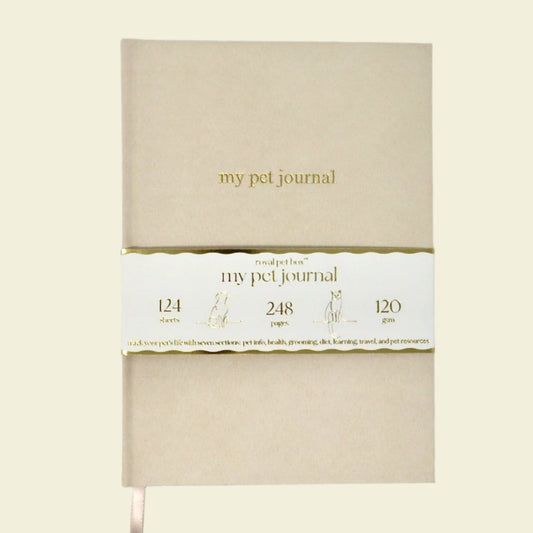
Animal behaviorists call the play bow a "meta-signal" — a gesture that puts a frame around everything that follows. When your dog play-bows at another dog (or at you), they're effectively saying, "The chasing, nipping, body-slamming, and growling I'm about to do is play, not a fight." It's the canine equivalent of a wink before a joke. A nice way to learn your own dog's individual play style is to keep simple notes on what they enjoy and who they enjoy it with — our My Pet Journal gives you a dedicated 248-page space to log play sessions, favorite toys, dog-park friends, and any quirks worth remembering.
This framing matters because dog play often involves behaviors that, out of context, would look like aggression — hard chases, wrestling lunges, mouthing grabs. A play bow flips the meaning, letting the other dog know it's still a game. What's even more striking: dogs almost never use play bows deceptively. When researchers have looked closely, the bow turns out to be one of the most honest signals in the canine repertoire.
Why Dogs Use the Play Bow With Humans, Too
Plenty of dog signals are reserved for other dogs, but the play bow is one your dog actively uses on you. When your dog bows at you with a toy in their mouth, drops it at your feet, and bounces back into the pose, they're inviting you into the same "this is play" frame they'd offer another dog. They're treating you like a social partner.
That's a meaningful compliment. Dogs are selective about who they invite into play. If your dog regularly bows at you, it's a sign of trust, a strong bond, and a comfortable read on your behavior — they've decided you'll match their energy and not turn the game into something that scares them.
When the Play Bow Means Something Else
The vast majority of play bows are exactly what they look like: an invitation to romp. Once in a while, though, a bow shows up in a different context. A dog might bow to defuse tension with another dog who's being too intense — almost a "let's not fight, let's just play instead" offering. Some dogs also do a stretching motion that resembles a play bow but is actually just a wake-up stretch, often paired with a yawn.
You can usually tell the difference by the rest of the body. A play bow has bounce, a soft face, and a wagging tail. A stretch is slow and deliberate, with no bouncy hindquarters. A tension-defusing bow tends to be quick, sometimes followed by the dog turning and walking away rather than launching into a romp.

How to Respond When Your Dog Bows to You
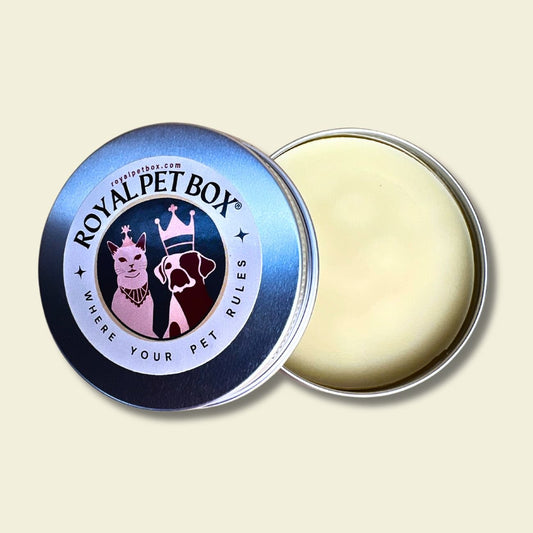
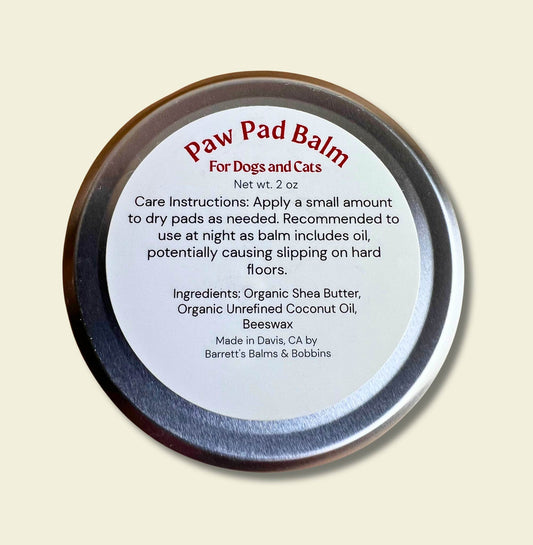
The simplest, kindest response is to play. You don't have to mirror the bow yourself, though plenty of owners do — and dogs love it. You can grab a toy, start a low-key tug session, toss a ball, or just gently chase your dog around the yard for a minute. Enthusiastic play is also hard on paws — dogs who sprint, slide, and pivot during fetch or zoomies put their paw pads through a lot, especially on hot pavement, frozen sidewalks, or rough lawn surfaces. A swipe of our All Natural Paw Pad Balm after a big play session helps keep their pads soft, conditioned, and free of cracks.
If you can't play right then, a calm "Not right now, buddy" paired with a soft pat is enough to let your dog know you saw the offer. Dogs whose play invitations are regularly noticed tend to grow up more confident and more engaged with the humans in their life.
The Takeaway
The play bow is one of the clearest, most generous things your dog can say to you. It means they trust you, they're feeling good, and they want to share that feeling. The next time you see those elbows hit the floor and that tail go up, take a beat to enjoy it — your dog has just paid you a very specific compliment, and the kindest reply is almost always to bow back, grab the toy, and play.
Check out our luxury pet products at reasonable prices. Visit our "Royal Pet Box Pet TV" Channel on both Roku and YouTube for fabulous pet-related education and entertainment.
Paris Deesing holds a degree in Biological Anthropology from UCLA and provides the editorial review behind each article, drawing on a long-held curiosity about the animals who share our lives.
This article was created using artificial intelligence with human editorial review and oversight.