Why Does My Dog Kick the Ground After Pooping? The Surprising Science Behind This Habit
Paris DeesingYou've probably seen it dozens of times. Your dog finishes their business, then suddenly launches into a vigorous kicking motion with their back legs, scattering grass, dirt, or leaves in every direction. It looks dramatic, a little goofy, and weirdly satisfying to watch. But it isn't random, and contrary to what most pet parents assume, your dog isn't trying to bury anything.
Post-elimination ground scratching is one of the most misunderstood behaviors in the canine world. It's actually a sophisticated form of communication that your dog inherited from wild ancestors, and the science behind it is fascinating.

The Real Reason Dogs Kick the Ground (Hint: It's Not About Hiding)
For years, the popular theory was that dogs kick after pooping to cover up their waste, the way a cat might bury its business in a litter box. It's an intuitive guess, but it doesn't hold up to observation. If you've ever watched a dog kick, you'll notice they almost never actually cover the poop. The motion sends debris flying outward, often away from the spot entirely. If you'd like to track patterns in your dog's elimination habits, our My Pet Journal gives you a dedicated place to log walks, bathroom routines, and any behavioral shifts worth flagging to your vet.
What your dog is actually doing is broadcasting a message. The kick is a deliberate communication signal, and it works on two channels at once: scent and sight. Both male and female dogs do it, though intact males and some highly social breeds tend to be the most enthusiastic ground-scratchers.
The Science of Scent: Your Dog's Interdigital Glands
Tucked between the toes of every dog are specialized scent glands called interdigital glands. These tiny pheromone factories produce a unique chemical signature that's as individual to your dog as a fingerprint. When your dog kicks the ground, they're not just throwing dirt around for fun. They're pressing those glands into the earth and depositing a fresh layer of personal scent right next to the visual and olfactory marker they just left.
The result is a layered, three-dimensional message that other dogs can read like a community bulletin board. The pheromones tell the next dog who passed through, roughly how big they are, their reproductive status, and how recently they were there. It's a remarkably efficient communication system, and it has been honed by millions of years of canine evolution.

The Visual Mark: A Message Other Dogs Can See
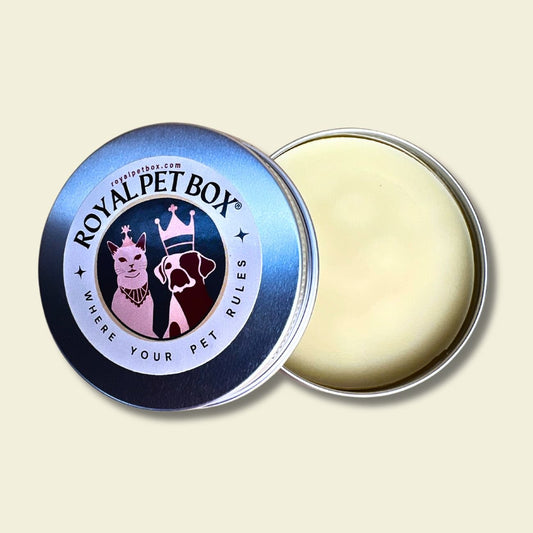
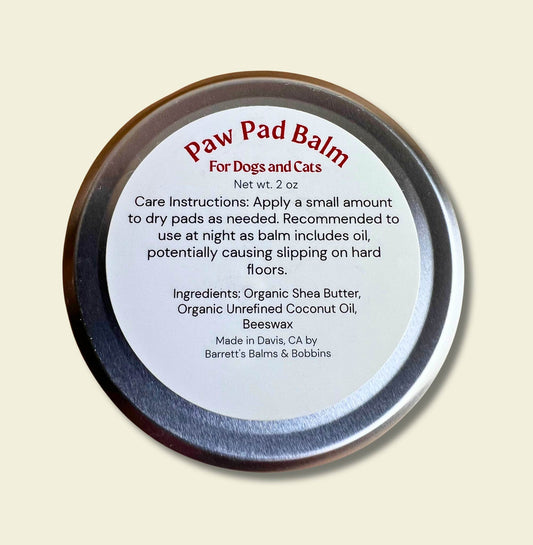
Scent is only half the story. Those torn-up patches of grass and scattered debris are intentional visual markers, too. Dogs have surprisingly sharp eyes for environmental disturbances, and a freshly scratched patch of earth catches their attention from a distance, drawing them in for a closer sniff. It's the canine equivalent of putting a flag on top of a message so nobody walks past without noticing. Because all that kicking happens on grass, gravel, asphalt, and sometimes rough trail surfaces, it's worth keeping your dog's pads in good shape, and our All Natural Paw Pad Balm is designed to soothe, condition, and protect the very paws doing all that communicating.
This visual signaling explains why dogs often choose elevated spots, edges of trails, or visible patches of grass to do their business. They're not being picky for the sake of it. They're optimizing the location for maximum readability by the next dog who passes through. The kicking just amplifies an already strategic choice.
Should You Stop Your Dog From Kicking? (Plus Paw Care Tips)
In most cases, there's no reason to discourage this behavior. It's a healthy, normal expression of canine communication, and stopping it can actually be a source of subtle stress for some dogs. Let them have their moment of broadcasting.
That said, the ground-kicking habit can occasionally lead to wear and tear on the paw pads, especially in dogs who kick on rough surfaces like concrete, hot pavement, gravel, or icy ground. Check your dog's pads regularly for cuts, cracks, or signs of irritation. A gentle paw balm can go a long way toward keeping those pads supple year-round, and a quick post-walk paw inspection is one of the easiest preventive habits you can build.
If your dog suddenly starts kicking far more than usual, kicking obsessively, or kicking with apparent discomfort, it's worth a quick chat with your vet to rule out anything from anal gland issues to skin irritation. Otherwise, that little burst of theatrical scratching is just your dog being a dog, leaving a tiny message for the neighborhood to find.
So the next time you watch your pup put on a post-poop performance, you'll know exactly what's happening. It's not a hygiene effort, and it's certainly not random. It's an ancient, elegant form of canine signaling, and your dog is simply telling the world they were here.
Check out our luxury pet products at reasonable prices. Visit our "Royal Pet Box Pet TV" Channel on both Roku and YouTube for fabulous pet-related education and entertainment.
Paris Deesing holds a degree in Biological Anthropology from UCLA and provides the editorial review behind each article, drawing on a long-held curiosity about the animals who share our lives.
This article was created using artificial intelligence with human editorial review and oversight.