Why Does My Rabbit Binky? The Joyful Leap That Means Pure Happiness
Paris DeesingIf you've ever caught your rabbit launching themselves into the air, twisting mid-leap, and kicking their back feet out sideways, you've just witnessed one of the purest expressions of happiness in the animal kingdom. This delightful aerial maneuver has a name: the binky. It's part acrobatic stunt, part full-body laugh, and it's one of the surest signs that your bunny feels safe, content, and completely at home with you.
Understanding why rabbits binky helps you recognize when your pet is genuinely thriving — and gives you clues about how to encourage more of these joyful moments. Let's hop into what binkying really means.

What Exactly Is a Rabbit Binky?
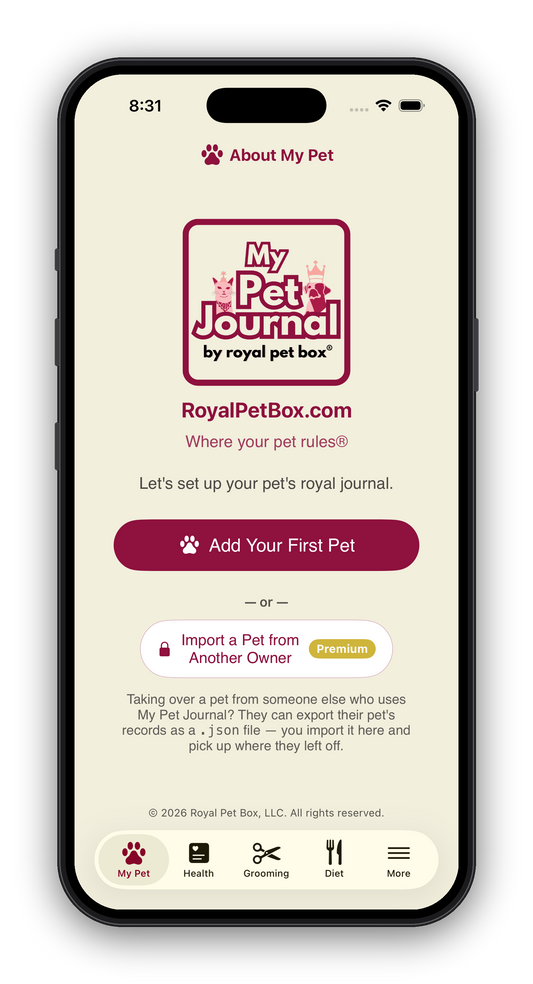
A binky is a spontaneous, full-body jump where a rabbit launches into the air, twists their body and head in opposite directions, and kicks out their hind legs — often landing and immediately taking off again in a different direction. Some rabbits perform what enthusiasts call a "half binky," where they just kick out their back legs mid-hop without the full twist. Others go for the full theatrical version, spinning 180 degrees in midair. Tracking these little quirks alongside daily care notes in a journal like our My Pet Journal can help you spot patterns in your rabbit's mood, energy, and overall wellbeing over time.
Binkies almost always happen during a period of activity called a "zoomies" run, technically known as a Frenetic Random Activity Period. Your rabbit will dash in unpredictable circles or figure-eights, occasionally punctuating the sprint with a binky for emphasis. It's chaotic, athletic, and absolutely adorable.
Why Rabbits Binky: The Science of Pure Joy
Rabbits are prey animals, which makes their behavior especially telling. In the wild, an animal that broadcasts vulnerability — by leaping wildly, exposing its belly, and making itself an easy target — would not last long. So when your domestic rabbit binkies, they're essentially announcing to the world that they feel completely, profoundly safe. Predator awareness is switched off. Survival mode is dormant. What remains is the rabbit equivalent of unrestrained delight.
Researchers who study lagomorph behavior generally agree that binkying is an expression of positive emotional states — joy, anticipation, excitement, or the satisfaction of pent-up energy finally getting released. You'll most often see binkies after a stressful event ends (a vet visit wraps up, the vacuum gets put away), at feeding time, after a long nap, or simply when a rabbit has enough space to really let loose.
When Binkies Happen Most
Pay attention to the patterns and you'll start to see the rhythm of your rabbit's happiness. Common binky triggers include the dawn and dusk hours (rabbits are crepuscular, most active at twilight), the moment you open a familiar treat bag, the first few minutes of free-roam time outside their enclosure, and right after a successful grooming or bonding session.
Bonded rabbit pairs will sometimes binky in tandem, almost like they're cheering each other on. Solo rabbits often binky right after you enter the room — a kind of "you're back!" celebration that's hard not to take personally in the best way.
How to Encourage More Binkies at Home
You can't force a binky any more than you can force a laugh. But you can absolutely set the stage. Give your rabbit enough room to run — a minimum of a few hours of free-roam time daily in a rabbit-proofed space, ideally on a non-slippery surface that gives their back feet traction. Slick hardwood or tile can suppress binkies because rabbits instinctively know they might slip on the landing.
Keep their environment predictable, quiet, and low-stress. Loud noises, unfamiliar people, the smell of dogs, or sudden movements can all put a rabbit into hyper-vigilance mode where binkying feels too risky. Build trust with slow, gentle handling, plenty of forage-based enrichment (hay, willow balls, untreated apple branches), and a consistent daily routine. A well-socialized, well-exercised, properly housed rabbit is a rabbit who binkies often.
When a Rabbit Stops Binkying
If your rabbit was a frequent binkier and suddenly stops, take note. A drop in binkying — paired with reduced appetite, less movement, hunched posture, or changes in droppings — can be one of the earliest signs that something is off. Rabbits are masters at hiding illness, and a quieter, less expressive bunny is sometimes the only outward signal of pain, GI stasis, or dental problems.
Rabbits are subtle communicators, and a sudden change in playful behavior is worth taking seriously — if your bunny goes quiet for more than a day or two, please loop in a rabbit-savvy exotic vet to rule out anything that needs hands-on care.
That said, individual rabbits also have very different personalities. Some are natural athletes who binky a dozen times a day; others are dignified observers who reserve binkies for truly special occasions. Get to know your rabbit's baseline, and you'll be able to tell the difference between a personality quirk and a meaningful change.
The Bigger Picture: Binkies as a Quality-of-Life Indicator
For house rabbits, binkies aren't just cute — they're one of the clearest, most observable indicators that the life you've built for your pet is genuinely working. A binkying rabbit has enough space, enough safety, enough enrichment, and enough emotional connection to feel free. That's a high bar, and meeting it is one of the quiet joys of sharing your home with a bunny.
So the next time your rabbit launches themselves sideways across the living room with a triple twist and a back-kick finale, take a moment. You're watching a small, fluffy creature tell you — in the only language they have — that everything is exactly right.
Check out our luxury pet products at reasonable prices. Visit our "Royal Pet Box Pet TV" Channel on both Roku and YouTube for fabulous pet-related education and entertainment.
Paris Deesing holds a degree in Biological Anthropology from UCLA. Her articles draw on careful research and a long-held curiosity about the animals who share our lives.