5 Signs Your Fish Has Ich (and How to Treat It Fast)
Paris DeesingIf you've spotted tiny white dots peppering your fish's fins or body, don't wait to see if they disappear on their own. Ich (short for Ichthyophthirius multifiliis, and often called "ick" or white spot disease) is the most common parasitic infection in freshwater aquariums, and it moves fast. Catching it early, and treating it correctly, is often the difference between a quick recovery and losing an entire tank.
What Is Ich? Understanding White Spot Disease in Fish
Ich is caused by a single-celled protozoan parasite that burrows into a fish's skin, gills, and fins. Once embedded, it's protected from most medications until it matures, breaks free, and releases hundreds of new parasites into the water. That reproductive cycle is why ich can go from "a spot or two" to a full-blown outbreak within days, especially in a tank under stress from poor water quality, sudden temperature swings, or overcrowding.

5 Signs Your Fish Has Ich
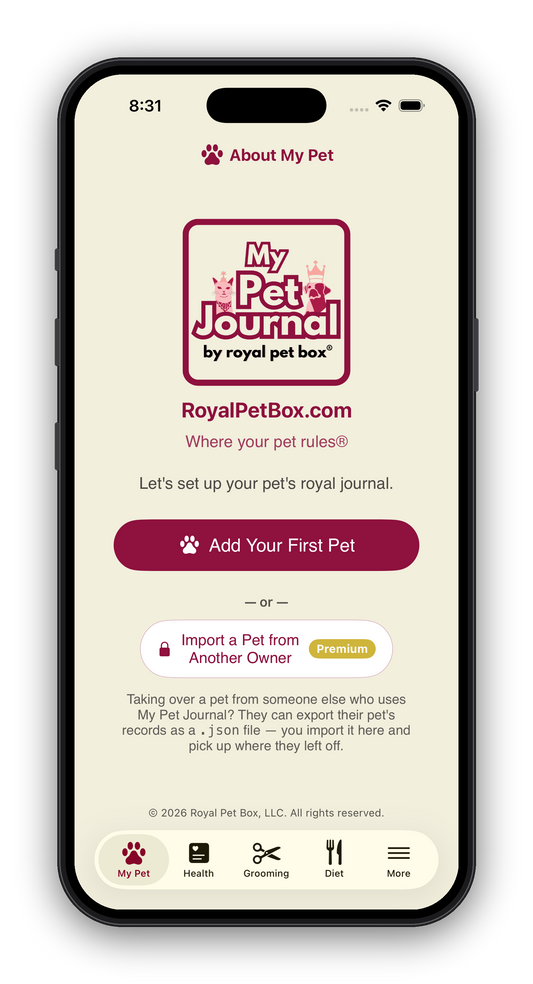
Fish keeping rewards close observation, and logging what's normal for your tank makes it much easier to catch trouble early. Jotting down temperature, feeding habits, and any odd behavior in something like our My Pet Journal gives you a baseline to compare against when a fish suddenly seems "off," whether that pet is finned, feathered, or four-legged.
Here's what to watch for:
1. Small white spots resembling grains of salt or sugar. These typically appear first on the fins and tail before spreading to the body and gills.
2. Flashing or scraping against decorations. Fish will rub against gravel, rocks, or filter intakes to try to relieve the irritation the parasites cause.
3. Clamped fins. Fins held tightly against the body, rather than spread naturally, are a classic stress signal.
4. Rapid or labored gill movement. Because ich attacks gill tissue, infected fish often breathe faster or gasp near the surface.
5. Lethargy and appetite loss. A normally active fish that hides, sits at the bottom, or stops eating is telling you something is wrong.
What Causes an Ich Outbreak in Your Tank
Ich parasites are often already present in aquariums at low, harmless levels, or they arrive on new fish, plants, or decorations that weren't quarantined first. An outbreak happens when a fish's immune system is compromised, usually by a stressor: a temperature swing from an unheated room, a recent move or rehoming, aggressive tankmates, or ammonia and nitrite spikes from an overstocked or under-cycled tank. Reducing that underlying stress is just as important as treating the parasite itself.
How to Treat Ich: Temperature, Salt, and Medication
Because ich's free-swimming stage is the only phase medication can reach, treatment focuses on speeding up its life cycle so it's exposed sooner, while making the water less hospitable to it overall.
Gradually raise the tank temperature to around 82–86°F (28–30°C) over a day or two, which shortens the parasite's life cycle and can be enough on its own for mild cases in fish that tolerate warmer water well. Adding aquarium salt at roughly 1 tablespoon per 5 gallons can help many freshwater species, though it's not safe for scaleless fish, snails, or live plants. For a confirmed or advancing infection, a dedicated ich medication containing malachite green or formalin, dosed exactly per the product label, is usually the most reliable option. Keep up gravel vacuuming and partial water changes throughout treatment, and continue for several days after the visible spots disappear, since the parasite's resistant cyst stage can still be lurking in the substrate.
Dosing above reflects general starting points for a healthy community tank — species like bettas, scaleless catfish, and invertebrates react very differently to salt and medication, so it's worth confirming compatibility for your specific setup before treating.
Preventing Ich From Coming Back
The best defense against ich is a stable tank and a cautious approach to anything new. Quarantine new fish for two to three weeks before introducing them to your main aquarium, rinse (never wash with soap) new plants and decor, and keep an eye on temperature consistency, especially during seasonal swings when a room's ambient temperature shifts. Regular water testing catches the ammonia and nitrite spikes that often set off an outbreak before they become a crisis.
Ich is unnerving to see, but it's also one of the more treatable aquarium diseases when you catch it early and stick with the full treatment course. A little vigilance, a stable tank, and a willingness to act at the first white spot will keep your fish, and the rest of your tank, healthy for the long run.
Check out our luxury pet products at reasonable prices. Visit our "Royal Pet Box Pet TV" Channel on both Roku and YouTube for fabulous pet-related education and entertainment.
Paris Deesing holds a degree in Biological Anthropology from UCLA and provides the editorial review behind each article, drawing on a long-held curiosity about the animals who share our lives.
This article was created using artificial intelligence with human editorial review and oversight.