Aquarium Filter Cleaning: What to Rinse, What to Replace, and How Often
Paris DeesingYour aquarium filter is the hardest-working piece of equipment in the tank, and the one most likely to be cleaned wrong. Scrub it too thoroughly and you can wipe out the invisible bacteria colony keeping your fish alive. Ignore it and flow drops and water quality slides. The good news: aquarium filter cleaning is simple once you know which parts to rinse, which to replace, and which to leave alone.
What Your Aquarium Filter Actually Does
Mechanical filtration traps the visible stuff — uneaten food, plant fragments, fish waste — in sponges, floss, or pads. Chemical filtration uses activated carbon or resins to adsorb dissolved compounds, tannins, and odors. Biological filtration matters most: colonies of nitrifying bacteria living on your filter media convert toxic ammonia into nitrite, then nitrite into far less harmful nitrate.
That bacterial colony is not floating in your water. It is anchored to surfaces — and the porous media inside your filter is the largest surface area in the tank. Treat it accordingly.
The Biggest Aquarium Filter Cleaning Mistake
Two habits cause most post-cleaning disasters. The first is rinsing filter media under the tap. Municipal water contains chlorine or chloramine specifically to kill bacteria, and it does not distinguish between the bacteria you want gone and the ones running your nitrogen cycle. A thirty-second rinse under the faucet can set your tank back weeks.
The second is replacing everything at once. Cartridge-style filters are often sold on a tidy monthly replacement schedule — excellent for the manufacturer, terrible for your fish, since you throw away your mature biofilter each time. If your filter uses disposable cartridges, add a separate sponge or a bag of ceramic biomedia that never gets discarded, so the colony always has a permanent home.
What to Rinse, What to Replace, and What to Leave Alone
Rinse gently, reuse: sponges, foam blocks, and ceramic rings or bio-balls. Swish them in a bucket of water you just siphoned out of the tank during a water change — it is already dechlorinated and at the right temperature. You want the heavy sludge gone, not a factory-fresh look; a rinsed sponge should still be stained.
Replace on a schedule: activated carbon, which exhausts in roughly three to four weeks and then simply takes up space. Filter floss and polishing pads break down too — just do not swap them the same week you clean everything else.
Leave alone: any media that looks intact, even if it is deeply discolored. Discoloration is not clogging. And resist boiling, bleaching, or soaping any part of the filter.

How Often Should You Clean an Aquarium Filter?
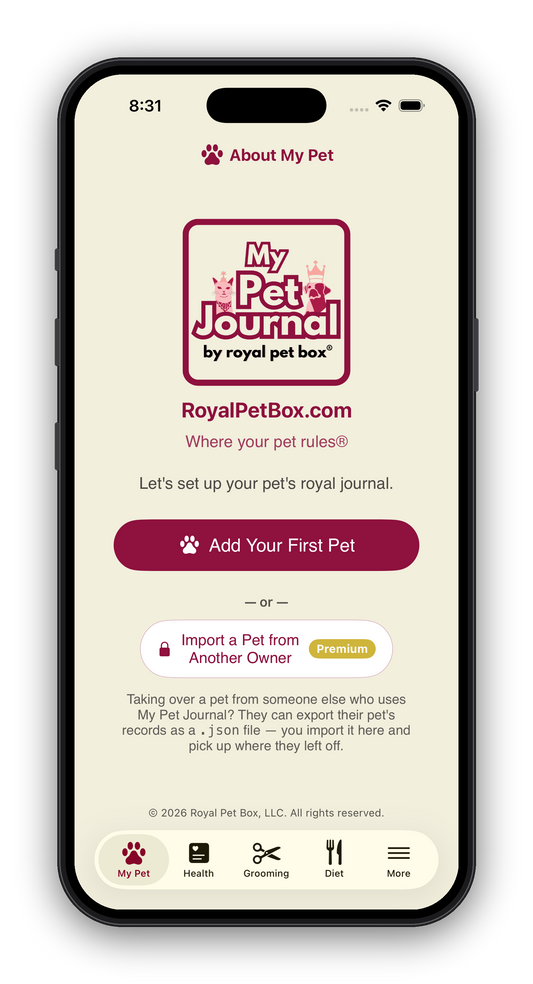
Aquarium maintenance is far easier to keep straight on paper than in memory — our My Pet Journal gives you one place to log filter cleanings, media swaps, water-change dates, and test results, so you can see patterns instead of guessing when you last opened the thing.
There is no universal number — the right interval depends on stocking level, feeding habits, and filter type. Useful starting points:
- Hang-on-back and internal filters: rinse the mechanical media roughly every three to four weeks.
- Canister filters: every three to six months, since the larger media volume clogs far more slowly.
- Sponge filters: a squeeze in tank water monthly, or whenever bubble output looks sluggish.
Better than any calendar is watching the flow. When output weakens, water starts bypassing the media, or the motor develops a new rattle, the filter is telling you it is time.
Cleaning Your Filter Without Crashing the Tank
- Unplug the filter first. Running a pump dry damages the impeller.
- Siphon out your water-change water into a clean bucket and set some aside for rinsing.
- Remove the media and swish it in that bucket. Squeeze sponges a few times; shake ceramic media loose. Do not wring anything dry.
- Clean the housing, intake tube, and impeller with an old toothbrush or a filter brush. Slime buildup on the impeller is a common and overlooked cause of weak flow.
- Reassemble and restart promptly. Nitrifying bacteria are aerobic, and media sitting in still water for hours begins to die off.
One sequencing tip: do not clean the filter, vacuum the whole gravel bed, and replace the carbon on the same day. Each disturbs part of your biological capacity. Stagger them across separate weekends and the tank never notices.
Signs Your Filter Needs Attention Sooner
Watch for weakening flow, a grinding motor, water channeling around the media instead of through it, or sudden cloudiness in a previously clear tank. The most important signal is chemical: any detectable ammonia or nitrite on a test kit means your biological filtration is not keeping up, and that is a water-quality emergency rather than a cleaning chore.
If your fish are gasping at the surface, clamping their fins, or sitting listlessly on the bottom while your test kit reads high, treat it as urgent — an aquatic veterinarian or an experienced local fish store can help you sort out whether you are dealing with a cycling problem, an overstocked tank, or something else entirely.
Think of your filter as a living system with a housekeeping problem, not a machine that needs sterilizing. Rinse the mechanical media in old tank water, replace carbon on its own schedule, never touch the biomedia with tap water, and let declining flow set your timing. Do that, and the colony you cannot see will keep doing the work that keeps your fish healthy.
Check out our luxury pet products at reasonable prices. Visit our "Royal Pet Box Pet TV" Channel on both Roku and YouTube for fabulous pet-related education and entertainment.
Paris Deesing holds a degree in Biological Anthropology from UCLA and provides the editorial review behind each article, drawing on a long-held curiosity about the animals who share our lives.
This article was created using artificial intelligence with human editorial review and oversight.