Cat Carrier Training: How to Make Vet Visits Less Stressful
Paris DeesingFor a lot of cats, the carrier comes out of the closet on exactly one kind of day: the day something unpleasant is about to happen. It appears, the cat vanishes under the bed, and the next twenty minutes become a wrestling match neither of you enjoys. Cat carrier training fixes this, and it doesn't take special equipment or a naturally mellow cat — just a shift from once-a-year ambush to ordinary furniture your cat already knows.
Why Cats Hate the Carrier (It's Not the Box)
Cats are extraordinary at pattern recognition, and the pattern is simple: carrier equals confinement, car noise, strange smells, and a stranger touching them. The box itself is neutral — your cat is reacting to the chain of events it reliably predicts.
That's encouraging, because predictions can be rewritten. If the carrier starts appearing on ordinary Tuesdays when nothing happens at all, the association weakens. Most cats need several weeks of low-pressure exposure before the carrier stops working as an alarm bell, but the change tends to stick.
Choosing a Carrier That Works With Your Cat
Hard-sided carriers that open from the top are the single biggest upgrade most owners can make. A cat who has frozen at the vet's office can be lifted straight out — or examined in the bottom half of the carrier — instead of being tugged backward through a small front door. Look for a top half that unclips from the base with simple latches.
Size matters too. Your cat should be able to stand, turn, and lie down comfortably, but bigger isn't better — cats feel safer in snug, den-like spaces, and an oversized carrier lets them slide around during the drive. Soft-sided carriers suit calm travelers and airline cabins, though they're harder to clean and to open in an emergency.

Cat Carrier Training, Step by Step
One rule underpins the whole method: never push further than your cat is comfortable going. If they leave, the step was too big. A small pinch of our Organically Grown Catnip on the bedding can help a hesitant cat make that first voluntary trip through the door, turning the carrier into somewhere worth investigating rather than somewhere to avoid.
- Leave it out permanently. Park it in a room your cat already likes, door removed or latched open, with a familiar-smelling blanket inside.
- Feed near it, then in it. Start meals a few feet away, then move the bowl to the threshold, then just inside.
- Make it a treat dispenser. Drop a favorite treat inside at random moments so it occasionally pays out for no reason.
- Close the door for two seconds. Open, treat, repeat. Build to a few minutes, always ending before your cat gets restless.
- Lift and set down. Pick it up, walk a few steps, come back — many cats find being lifted more alarming than being enclosed.
- Add the car. Sit in the parked car, then start the engine without driving, then drive around the block and come home.
Catnip is safe for most cats but doesn't work on all of them, and a small number get overstimulated rather than mellow — if your cat has a history of aggression or a medical condition, check with your vet before using it as a training aid.

Making the Carrier Somewhere Your Cat Actually Wants to Be
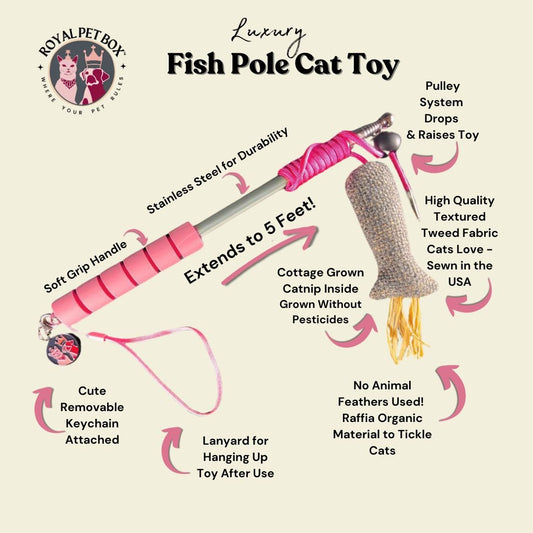
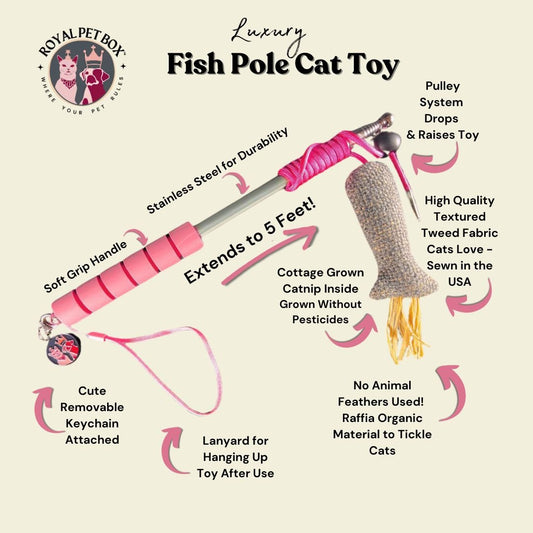
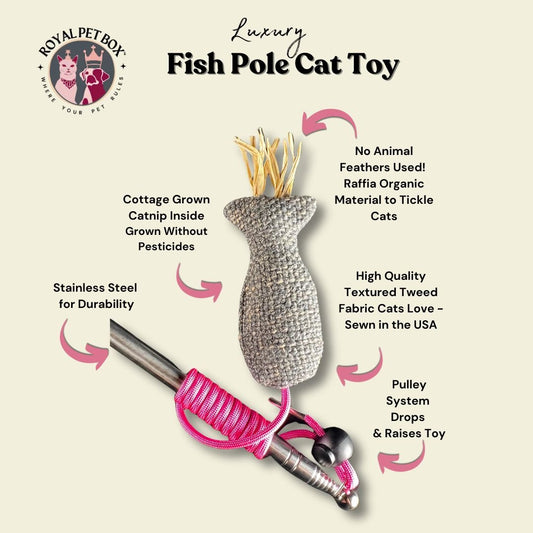
Scent does most of the heavy lifting. A blanket from your cat's favorite napping spot, or a worn t-shirt of yours, makes the carrier read as familiar territory rather than neutral plastic. Wash that bedding as rarely as you can — the goal is accumulated smell, not freshness. Our Luxury Cat Box Gift Set bundles a kicker toy, an extendible fish pole toy, a catnip pouch, paw balm, and a brush — a rotating supply of things to leave inside during the training weeks.
Vet Day: Getting There Without Undoing Your Work
Load the carrier before your cat notices anything is different, and carry it against your body with both arms rather than swinging it at your side. In the car, set it on the floor behind a front seat or belt it in so it can't slide, and drape a light towel over three sides — less to look at, still plenty of airflow.
At the clinic, keep the carrier off the floor and away from dog noses — a chair or your lap beats the waiting-room tile. If your cat is frightened, ask the staff to examine them in the base of the carrier; most feline-friendly practices are happy to, and it spares your cat the worst moment of the visit.

When to Ask Your Vet for Extra Help
Some cats stay genuinely panicked no matter how patiently you work — panting, drooling, vocalizing, or soiling the carrier every trip. That isn't stubbornness, and more treats won't fix it. Vets can prescribe pre-visit anti-anxiety medication such as gabapentin or trazodone, given at home an hour or two before you leave, which takes the edge off enough for training to get traction. Logging which trips went well and which didn't in our My Pet Journal gives your vet something concrete to work from instead of a vague "she hates the car."
Pre-visit medications are prescription-only and dosed by weight, age, and kidney and liver function — never share medication between pets or reach for a leftover prescription, and let your vet make the call.
Carrier training returns far more than it costs. A few weeks of leaving a box in the living room and dropping treats in it can turn the worst day of your cat's year into an ordinary errand — and cats who travel without a fight get to the vet sooner, which is where the real benefit lies.
Check out our luxury pet products at reasonable prices. Visit our "Royal Pet Box Pet TV" Channel on both Roku and YouTube for fabulous pet-related education and entertainment.
Paris Deesing holds a degree in Biological Anthropology from UCLA and provides the editorial review behind each article, drawing on a long-held curiosity about the animals who share our lives.
This article was created using artificial intelligence with human editorial review and oversight.