How to Keep Your Cat Calm When Holiday Guests Visit
Paris DeesingThe holidays bring a happy blur of doorbells, suitcases, unfamiliar voices, and the smell of a dozen new coats piled on the bed. For a cat, it can feel like strangers have taken over the territory overnight. The good news: with a little planning, you can keep your cat calm when holiday guests visit — and maybe even coax a curious nose out to say hello.
Why Holiday Guests Stress Out Cats
Cats are territorial creatures of habit. Their sense of security comes from predictable routines, familiar scents, and knowing where every escape route is. A house full of visitors scrambles all three at once: new smells, loud laughter, moved furniture, and doors opening and closing all day.
Some cats handle it with a shrug. Others show their discomfort in quieter ways, such as:
- Hiding for long stretches under beds or in closets
- Eating less or skipping meals
- Over-grooming, or urinating outside the litter box
- Hissing, swatting, or flattened ears and a puffed tail when approached
Hiding on its own isn't a problem — it's a healthy coping strategy. Your job is to make sure your cat has good places to hide and that the stress doesn't spill over into eating and litter habits.

Set Up a Cat Safe Room Before Guests Arrive
A few days before company comes, choose a quiet room — a spare bedroom, home office, or even a large bathroom — and turn it into your cat's private retreat. A light sprinkle of our Organically Grown Catnip on a favorite blanket or scratcher can help the space feel like a reward rather than a banishment (just know that roughly a third of cats don't react to catnip at all, and a few get more wound-up than mellow).
Stock the safe room with everything your cat needs so there's no reason to brave the crowd:
- A litter box, fresh water, and food
- A covered bed, cardboard box, or carrier with the door off for hiding
- Something to climb or perch on, ideally near a window
- An item that smells like you, such as a worn T-shirt
Let your cat explore the room before the big day, so it already feels familiar. When guests arrive, close the door and put a simple sign on it so no one wanders in.

Calm Your Cat With Play Before the Doorbell Rings
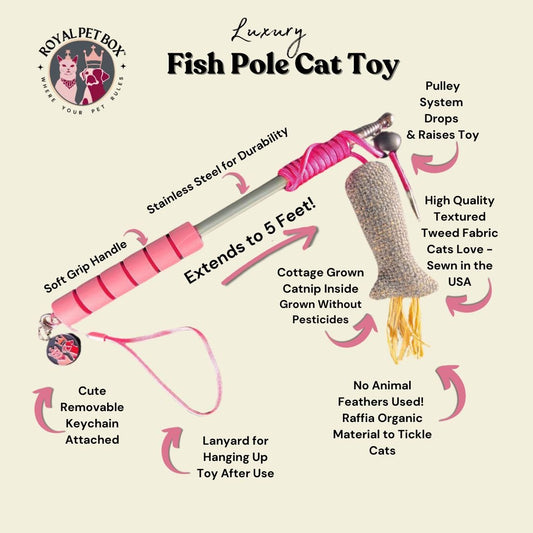
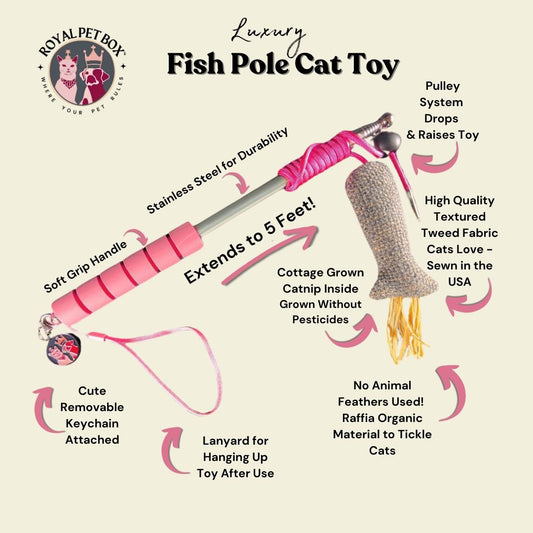
A tired cat is a calmer cat. An interactive session with our Luxury Extendible Fish Pole Cat Toy lets your cat stalk, chase, and pounce — burning off nervous energy right before the house fills up.
Aim for a play session shortly before guests are due, then follow it with a meal. That "hunt, catch, eat" sequence mirrors a cat's natural rhythm and often ends in a long, contented nap — the perfect state for riding out a noisy afternoon.
Teach Holiday Guests a Little Cat Etiquette
Most visitors mean well but don't know how to read a cat. A quick, friendly briefing goes a long way:
- Let the cat make the first move. Ask guests to ignore the cat and let it approach on its own terms.
- Offer a hand, not a hug. A slow, extended finger at nose height is a polite cat greeting. No picking up, chasing, or reaching under the bed.
- Keep kids gentle. Give children a calm job, like tossing a treat a few feet away, instead of trying to pet.
- Respect the closed door. The safe room is off-limits, no exceptions.
Shy cats often grow braver once they realize the strangers aren't interested in them.
Keep Your Cat's Routine — and the Doors — Under Control
Try to feed, play, and clean the litter box at the usual times, even on the busiest day. Predictability is one of the most soothing things you can offer.
Holidays are also prime time for escapes. With guests coming and going, an open front door is an easy exit. Make sure your cat wears a breakaway collar with an ID tag and that the microchip registration has your current phone number. Keep the cat in the safe room during arrivals and departures, and keep tinsel, ribbon, lilies, and party food out of reach.

Watching for Signs of Lingering Holiday Stress in Cats
When the house gets busy, small changes are easy to miss. Jotting a few quick notes in our My Pet Journal — how much your cat ate, litter box visits, and how long it stayed hidden — makes it easy to spot a pattern instead of relying on a foggy memory after a long weekend.
Most cats bounce back within a day or two of the last guest leaving, especially if the safe room stays available while the house settles.
A cat that stops eating for more than a day, strains in the litter box, or stays hidden long after the house is quiet again deserves a call to your veterinarian — cats can develop serious problems quickly when they don't eat, and stress can also trigger urinary issues that need prompt care.
With a quiet hideaway, a good play session, and guests who know the house rules, your cat can enjoy the holidays in its own way — whether that's greeting everyone at the door or napping through the whole party behind a closed door.
Check out our luxury pet products at reasonable prices. Visit our "Royal Pet Box Pet TV" Channel on both Roku and YouTube for fabulous pet-related education and entertainment.
Paris Deesing holds a degree in Biological Anthropology from UCLA and provides the editorial review behind each article, drawing on a long-held curiosity about the animals who share our lives.
This article was created using artificial intelligence with human editorial review and oversight.