How to Potty Train a Puppy: A Simple Schedule That Actually Works
Paris DeesingBringing home a puppy is pure joy — right up until you step in the third puddle of the morning. The good news: potty training a puppy isn't about luck or a "smart" breed. It's about timing, consistency, and a simple schedule your puppy can learn to trust. Here's how to house train a puppy calmly, quickly, and without punishment.

How Long Does It Take to Potty Train a Puppy?
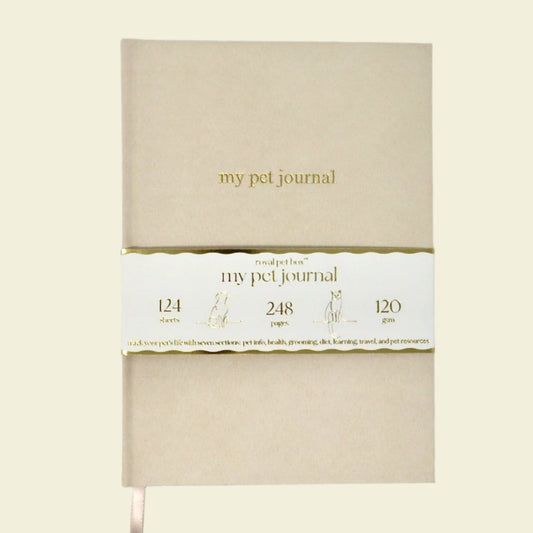
Most puppies become reasonably reliable somewhere between four and six months of age, though some — especially toy and small breeds — can take closer to a year to be fully accident-free. Progress is rarely a straight line, and the first week or two is all about pattern-spotting. Jotting down when your puppy eats, naps, and goes in our My Pet Journal makes those patterns jump off the page, so you can stay one step ahead of accidents instead of cleaning up after them.
A handy rule of thumb: a young puppy can hold their bladder for roughly one hour per month of age, plus one. A two-month-old puppy may manage about three hours during calm stretches — and far less when awake, playing, or excited.
Build a Puppy Potty Training Schedule
Puppies need to go at predictable moments. Take your puppy outside:
- First thing in the morning and last thing at night
- Right after waking from any nap
- Within about 5–30 minutes after eating or drinking
- During and right after active play
- Every one to two hours in between while they're young
Feeding meals at the same times each day helps the bathroom schedule settle into a rhythm, too. Pick up the water bowl an hour or two before bedtime, and expect very young puppies to need one quiet middle-of-the-night trip for a while.
Puppies grow and develop at different rates, and these timings are a starting point rather than a rule — if your puppy suddenly needs to go far more often, strains, or has blood in their urine, a quick vet check can rule out a urinary tract infection before you assume it's a training setback.

Choose a Potty Spot and Use a Cue Word
Always walk your puppy to the same spot on a leash, so they learn that outside trips are for business, not exploring. A comfortable setup like our recommended Dog Harness Collar and Leash keeps a wiggly puppy close and focused without pressure on their neck. Stand quietly, stay boring, and wait a few minutes.
As your puppy starts to go, say a short cue such as "go potty" in a calm voice. Over time, that word becomes a helpful prompt — handy on rainy nights or road trips when you need things to happen quickly.
Reward Success Immediately
Timing is everything in puppy house training. Praise and offer a small, tasty treat within a couple of seconds of your puppy finishing — right there on the spot, not after you walk back inside. Puppies connect rewards with whatever just happened, so a delayed treat teaches them that coming indoors is the good part.
After a successful trip, a little supervised free time is a great bonus reward. If nothing happens after about five minutes, head back in, keep your puppy close, and try again in 10–15 minutes.
Handling Potty Training Accidents the Right Way
Accidents are part of the process, and how you respond matters. Never scold, yell, or rub your puppy's nose in a mess — it teaches them to hide from you when they need to go, which makes training slower. If you catch them mid-accident, calmly interrupt with a neutral sound, scoop them up, and finish outside with praise.
Clean every indoor spot with an enzymatic cleaner designed for pet urine. Regular household cleaners can leave behind scent traces that draw your puppy back to the same place. Avoid ammonia-based products, which can smell a bit like urine to a dog.
Supervision, Confinement, and Crate Training
Most accidents happen when no one is watching. While you're home, keep your puppy in the same room — a baby gate or a light leash tethered to you works wonders. When you can't supervise, a properly sized crate or small puppy-proofed pen helps, since most dogs naturally avoid soiling their sleeping area. Just keep crate time age-appropriate and always pair it with plenty of outdoor trips.
If you'd rather use puppy pads for apartment living, that's fine — just know that moving from pads to outdoors later is an extra step, so be consistent about whichever system you choose.
The Takeaway
Potty training a puppy comes down to three things: a predictable schedule, immediate rewards, and calm patience when accidents happen. Stick with it for a few consistent weeks and you'll see the puddles fade — and a confident, happy puppy who knows exactly where to go.
Check out our luxury pet products at reasonable prices. Visit our "Royal Pet Box Pet TV" Channel on both Roku and YouTube for fabulous pet-related education and entertainment.
Paris Deesing holds a degree in Biological Anthropology from UCLA and provides the editorial review behind each article, drawing on a long-held curiosity about the animals who share our lives.
This article was created using artificial intelligence with human editorial review and oversight.