How to Set Up a Ball Python Enclosure: A Beginner's Guide to Heat, Humidity, and Hides
Paris DeesingBringing home your first ball python is exciting, but these calm, beginner-friendly snakes depend entirely on the enclosure you build for them. Get the ball python habitat right and you'll have a hardy, low-stress pet that can live 20 to 30 years. This beginner's guide walks through the essentials of a healthy ball python setup: enclosure size, the temperature gradient, humidity, hides, and those crucial first feedings.
Choosing the Right Ball Python Enclosure Size
A common beginner myth is that ball pythons need a tiny tank to feel secure. In reality, they need appropriate space with plenty of clutter to feel hidden. A single adult does well in a 40-gallon breeder tank or a 36" x 18" x 18" enclosure, while hatchlings can start in something smaller so the space doesn't feel overwhelming. Front-opening terrariums or PVC reptile enclosures hold heat and humidity far better than a screen-topped aquarium, which lets both escape quickly. Whatever you choose, a secure, tight-fitting lid is non-negotiable, because ball pythons are surprisingly strong and persistent escape artists.
Getting the Temperature Gradient Right
Ball pythons are ectotherms, so they rely on a warm-to-cool temperature gradient to regulate their body and digest their food. Aim for a warm-side basking spot of roughly 88 to 92°F, a cool side around 75 to 80°F, and a nighttime low that stays above about 72°F. An under-tank heat mat or a radiant heat panel controlled by a thermostat is the safest way to hit these numbers, and a thermostat is essential to prevent burns. Skip heat rocks entirely, as they routinely cause serious burns. Use a digital probe thermometer on each side of the enclosure rather than guessing, so you always know the real surface temperatures.
These target ranges suit a healthy ball python, but every snake and every room is a little different. If your enclosure struggles to hold temperature or your snake stops eating for weeks, loop in a reptile-experienced (exotic) veterinarian who can help you rule out an underlying issue.
Humidity and Why It Matters for Healthy Sheds
Humidity is where many new keepers run into trouble. Ball pythons do best at around 55 to 60% humidity day to day, rising to roughly 70% when they're in shed. Too little humidity leads to incomplete, patchy sheds and retained eye caps; too much invites scale rot and respiratory infection. A moisture-holding substrate, a large water bowl placed on the warm side, and partial coverage of a screen top all help stabilize the reading. Keep a digital hygrometer inside the enclosure and adjust with light misting as needed, and always aim for a clean, complete shed in one piece as your sign that humidity is dialed in.
Hides, Substrate, and Enrichment
A ball python that feels exposed is a stressed ball python, and stress is the number-one reason these snakes refuse food. Provide at least two snug hides, one on the warm side and one on the cool side, so your snake never has to choose between feeling safe and being the right temperature. Good substrate choices include cypress mulch or coconut husk, which hold humidity well and let your snake burrow. Add fake foliage, cork bark, and a climbing branch to break up sightlines and give a sense of cover; this "clutter" turns a bare box into a habitat where your snake will actually explore instead of hiding all day.

Feeding and Settling Your New Snake In
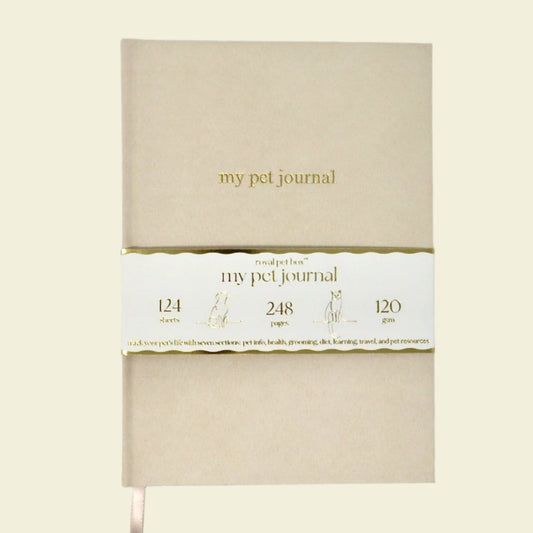
Feed a prey item roughly the same girth as the thickest part of your snake, offering thawed frozen rodents rather than live prey, which can injure your snake. Hatchlings typically eat once a week, while grown ball pythons do well every 10 to 14 days. Give a newly homed snake a week or two of quiet before the first feeding, and don't panic over an occasional refusal, since ball pythons are famous for the odd hunger strike. Tracking every feeding, shed, and weigh-in makes patterns obvious long before they become problems, and our My Pet Journal gives you one dedicated place to log meals, shed dates, and vet notes so nothing slips through the cracks.
Weigh your snake regularly rather than eyeballing its condition. Steady, gradual growth in a young snake and a stable weight in an adult are good signs, and any sudden drop is worth a conversation with your exotic vet.
The Takeaway
A thriving ball python comes down to a few fundamentals done consistently: enough space, a proper warm-to-cool gradient, steady humidity, two secure hides, and patient feeding. Set the habitat up thoughtfully from day one, keep an eye on your temperatures and humidity, and your ball python will reward you with decades of calm, curious companionship.
Check out our luxury pet products at reasonable prices. Visit our "Royal Pet Box Pet TV" Channel on both Roku and YouTube for fabulous pet-related education and entertainment.
Paris Deesing holds a degree in Biological Anthropology from UCLA and provides the editorial review behind each article, drawing on a long-held curiosity about the animals who share our lives.
This article was created using artificial intelligence with human editorial review and oversight.