Is Your Cat Meowing Too Much? What Excessive Vocalization Really Means
Paris DeesingIf your cat has suddenly turned into a nonstop talker, you are not imagining it — excessive meowing is one of the most common feline behaviors that leaves owners puzzled. Cats meow almost exclusively to communicate with people, so a chatty cat is trying to tell you something. The trick is learning to read what that something is, because the same insistent meow can mean "feed me," "play with me," or occasionally "I don't feel well." Here is how to decode excessive cat meowing and gently bring the volume back down.
What Counts as "Too Much" Meowing?
There is no universal number of meows that qualifies as excessive. Some breeds — Siamese, Bengals, and other Oriental types — are naturally vocal and will happily narrate their entire day. What matters is a change from your cat's normal baseline. If a typically quiet cat starts meowing constantly, or the meowing becomes louder, more urgent, or happens at new times like the middle of the night, that shift is the real signal worth paying attention to.
Context matters too. Meowing that stops the moment you fill the food bowl is very different from meowing that continues no matter what you do. The first is a learned request; the second may point to discomfort, confusion, or an underlying health change.

Common Reasons for Excessive Cat Meowing
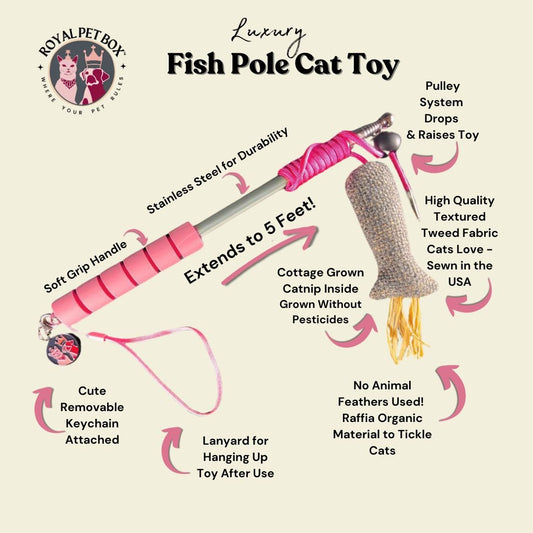
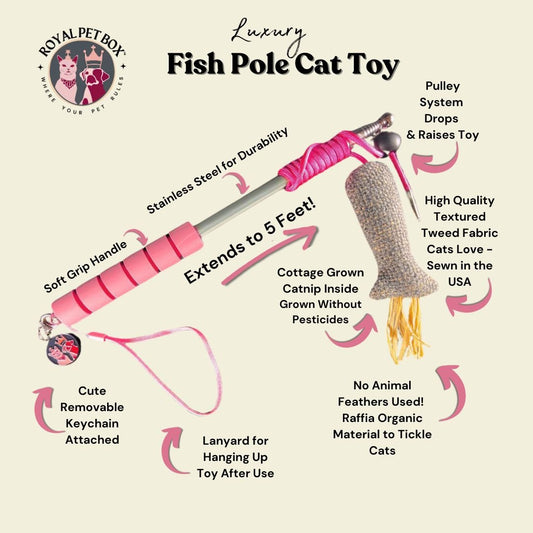
Most everyday meowing comes down to a handful of familiar motivations. Hunger and mealtime anticipation top the list — many cats learn that vocalizing brings food, and they will refine that strategy relentlessly. Attention-seeking is close behind: if meowing has ever earned a pet, a treat, or even eye contact, your cat has learned it works. Boredom is another big driver, especially for indoor cats who lack enough stimulation to burn off their natural hunting energy. A structured play session with an interactive toy like our Fish Pole Cat Toy gives that pent-up energy a proper outlet, and a well-exercised cat is usually a quieter one.
Greeting behavior is normal and harmless — plenty of cats meow simply to say hello when you walk in the door. Stress and change can also loosen a cat's tongue: a new pet, a move, rearranged furniture, or a disrupted routine can all trigger a wave of extra vocalizing until your cat settles.

When Excessive Meowing Signals a Health Problem
Sometimes a sudden increase in vocalizing is your cat's way of flagging that something feels off. In older cats especially, new and persistent meowing can be linked to hyperthyroidism, high blood pressure, or age-related cognitive decline, which often causes loud, disoriented calling at night. Pain, dental trouble, and urinary issues can all provoke extra vocalizing too. Keeping a simple record of when the meowing happens, what preceded it, and any other changes in appetite, litter box habits, or energy makes it far easier to spot a pattern — our My Pet Journal gives you one dedicated place to log those notes and share them with your vet.
Every cat is different, and a genuine shift in vocalizing — particularly in a senior cat or one showing other changes — is worth having your veterinarian check to rule out a treatable medical cause.

How to Reduce Attention-Seeking Meowing
Once you have ruled out hunger and health concerns, the most effective tool for attention-driven meowing is consistency. The hardest but most important rule: do not reward the meowing. Wait for a pause, even a brief one, before offering food, play, or affection, so your cat learns that quiet — not noise — is what earns your attention. Reacting to every meow, even with a frustrated "no," teaches your cat that vocalizing gets a response.
Give your cat plenty of independent enrichment so it is not relying on you for every scrap of stimulation. A solo toy like our Cat Kicker Toy lets your cat wrestle, bunny-kick, and hunt on its own, redirecting the energy that might otherwise come out as demanding meows. Puzzle feeders, window perches, and rotating toys all help fill the quiet hours.
Building a Routine That Keeps Your Cat Content
Cats thrive on predictability, and a steady daily rhythm quiets a lot of unnecessary vocalizing. Feed at consistent times so your cat is not left guessing and campaigning for the next meal. Schedule one or two dedicated play sessions each day — a good "hunt, catch, eat, sleep" cycle before mealtime mimics your cat's natural pattern and leads to calmer, quieter downtime afterward. If nighttime meowing is the issue, a vigorous play session and a small meal before bed can help your cat settle through the night.
Excessive meowing is rarely random — it is communication, and it usually responds well to a mix of ruling out medical causes, meeting your cat's needs on a reliable schedule, and rewarding calm rather than noise. Listen closely, stay consistent, and most chatty cats will find their quieter, more contented voice.
Check out our luxury pet products at reasonable prices. Visit our "Royal Pet Box Pet TV" Channel on both Roku and YouTube for fabulous pet-related education and entertainment.
Paris Deesing holds a degree in Biological Anthropology from UCLA and provides the editorial review behind each article, drawing on a long-held curiosity about the animals who share our lives.
This article was created using artificial intelligence with human editorial review and oversight.