Reading Your Dog's Tail: What Every Wag, Position, and Speed Really Means
Paris DeesingA dog's tail is one of the most expressive parts of its body — a living, moving signal that broadcasts mood, intent, and emotional state in real time. Most owners read a wagging tail as a simple "happy dog," but the truth is far richer. Tail position, wag speed, and even the direction of the wag all carry distinct meanings, and learning to read them turns everyday interactions into a much deeper conversation with your dog.

The Tail as a Communication Tool
Dogs evolved alongside humans for tens of thousands of years, and their body language became one of their most important social tools. A tail isn't just for balance — it's a flag, an antenna, and a feeling-meter all rolled into one. Because tails are so visible from a distance, dogs use them to signal other dogs (and us) long before any other body part comes into play. If you want a single reliable habit to build into your routine, jot a quick note about your dog's tail behavior alongside meals, walks, and vet visits in your My Pet Journal — over time, patterns emerge that no single day can show you.
Tail Position: How Height Tells the Story
The vertical position of your dog's tail is the first thing to read. A tail held high above the back signals confidence, alertness, or arousal — your dog has noticed something and feels in charge of the moment. A tail held at a relaxed mid-level, in line with the spine, is the picture of a calm, comfortable dog. A tail lowered below the spine usually signals uncertainty or submission, and a tail tucked tightly against the belly is a clear stress or fear signal. Breed matters here: huskies and beagles naturally carry their tails higher than greyhounds or whippets, so always compare to your dog's own baseline, not a generic standard.
Wag Speed and Direction: It's Not Just "Yes"
A wag is not automatically a friendly greeting. Researchers at the University of Trento and elsewhere have shown that dogs wag asymmetrically: when a dog feels positive emotion (like seeing a beloved owner), the tail tends to wag more to the right; when a dog feels negative emotion or wants to retreat, it tends to wag more to the left. Other dogs notice this — left-biased wags raise nearby dogs' heart rates, while right-biased wags keep them relaxed. Speed matters too. A loose, sweeping wag that involves the whole rear end is genuine joy. A fast, narrow, high-held wag with a stiff body is often arousal or warning, not happiness — and it's the most commonly misread signal in dogs.

The Helicopter Wag and Other Happy Signals
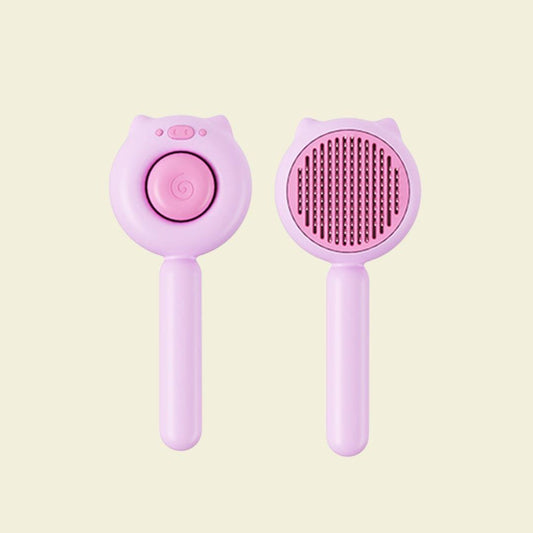
The gold standard of a happy dog is the "helicopter wag" — a full, circular motion where the tail spins almost like a propeller, usually paired with wiggling hips, loose body posture, and soft eyes. This is the body language of unmistakable joy and welcome. Calm, mid-level swishing tells you your dog is content and interested. Regular brushing of the tail base and surrounding coat with our Luxury Dog and Cat Brush not only keeps the area healthy and tangle-free but also gives you a weekly chance to watch how your dog holds and moves the tail — a great early-detection habit for any subtle changes.
When a Wag Isn't Friendly: Stress and Warning Signs
A stiff, high tail with rapid, tight wags can be a warning, especially if paired with a closed mouth, forward-leaning posture, or hard stare. A slow wag with a tense body often means the dog is unsure — neither friendly nor hostile, just deciding. Tucked tails accompanied by lip licking, yawning, or whale-eye (showing the whites) are stress signals; the dog is asking for space. Reading these signals correctly can prevent misread greetings and snap reactions, especially with unfamiliar dogs or children.
When to Worry About Tail Changes
Sudden changes in how your dog carries the tail deserve attention. A normally upright tail that suddenly hangs limp — a condition sometimes called "limp tail" or "swimmer's tail" — can indicate overexertion, cold-water exposure, or injury at the base of the tail. Persistent tucking outside of stressful contexts, swelling, or sensitivity when touched can also point to medical issues.
If your dog's tail position changes suddenly and stays that way, or if you notice swelling, pain, or trouble moving the tail, please loop in your veterinarian — tail injuries and nerve issues are easier to address early, and your vet can rule out anything that needs hands-on care.
The more time you spend watching your dog's tail with fresh eyes, the more fluent you become in their language. What looks like "happy wagging" from across the room may be excitement, anxiety, or full-body joy — and learning the difference deepens the trust on both ends of the leash.
Check out our luxury pet products at reasonable prices. Visit our "Royal Pet Box Pet TV" Channel on both Roku and YouTube for fabulous pet-related education and entertainment.
Paris Deesing holds a degree in Biological Anthropology from UCLA and provides the editorial review behind each article, drawing on a long-held curiosity about the animals who share our lives.
This article was created using artificial intelligence with human editorial review and oversight.