What Every Dog Owner Should Know Before Their First Dog Park Visit
Paris DeesingThe dog park can be one of the best things you do for a social, energetic dog — off-leash space to run, sniff, and play with new friends is hard to replicate anywhere else. But a first visit that goes wrong (a scuffle, an overwhelmed puppy, a bolt toward the gate) can set your dog back on trust for months. A little preparation turns a chaotic first trip into a genuinely good one.

Is Your Dog Ready for the Dog Park?
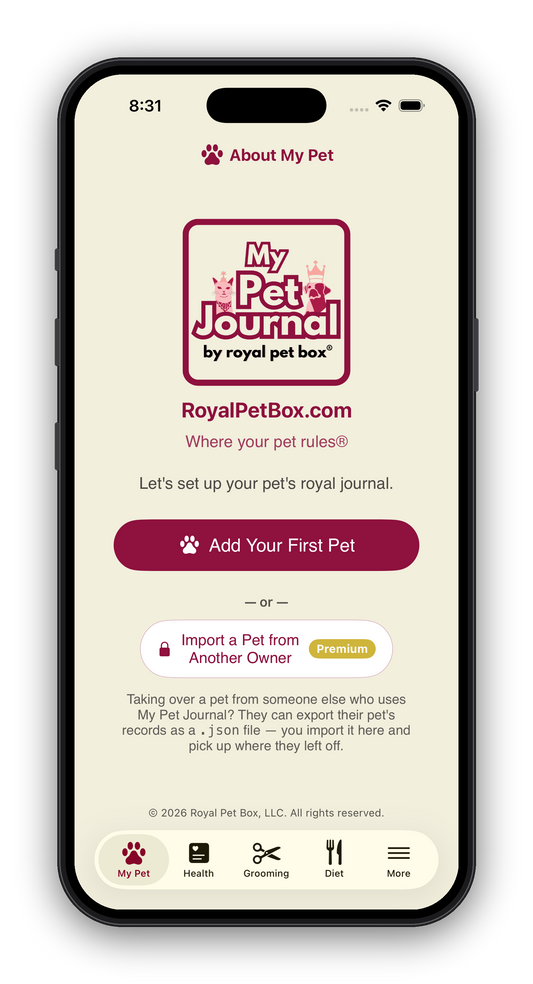
Not every dog is a dog-park dog, and that's completely fine. Before your first visit, your dog should be reliably up to date on vaccinations, comfortable meeting new dogs on leash without lunging or freezing, and able to come back to you when called even with distractions around. Puppies under about four to five months, dogs still finishing their vaccine series, and dogs with a history of fear or aggression toward other animals are usually better served by structured playdates or a fenced yard first. It's also worth keeping a running log of your dog's socialization milestones, reactions to new environments, and any vet visits — our My Pet Journal gives you one dedicated place to track that progress instead of trying to remember it all.
Vaccine schedules and the right age for off-leash socializing vary by individual dog, especially for breeds prone to joint issues or dogs with an incomplete puppy vaccine series — your vet can tell you when your specific dog is actually ready.
Dog Park Etiquette Every First-Timer Should Follow
Good dog park etiquette keeps everyone's visit pleasant and, more importantly, safe. Watch your dog rather than your phone — you're the first line of defense if an interaction turns tense. Remove tug toys, balls, and high-value treats from your pockets before entering the main play area, since resource guarding is one of the most common triggers for fights between dogs who don't know each other. If your dog is a puppy, a senior, or small-breed, look for a separate small-dog or puppy section if the park offers one; size and play-style mismatches cause more injuries than genuine aggression. And always clean up after your dog immediately — it's basic courtesy and keeps the shared space usable for everyone.

Gear and Safety Essentials for a Stress-Free Visit
The right gear makes the walk to and from the park just as safe as the time spent inside it. A secure, well-fitted harness and leash matter most in the parking lot and at the entry gate, where dogs are most likely to slip a collar in the excitement of arriving — a snug-fitting option like our recommended Dog Harness & Leash gives you a firmer, more controlled hold during that transition before you unclip for off-leash play. Bring fresh water and a collapsible bowl, since shared water sources at parks can spread parasites and illness between dogs. Double-check that your dog's ID tag and microchip information are current — busy, gated dog parks are exactly the kind of place a startled dog can slip through a gap and get separated from you in seconds.
What to Do If a Scuffle Breaks Out
Most dog park disagreements are loud, brief, and over before anyone gets hurt, but it helps to have a plan anyway. If two dogs tense up — stiff bodies, hard stares, raised hackles — call your dog away calmly rather than yelling or reaching into the middle of it, which can redirect a bite toward you. Never grab a dog by the collar during an active fight; if separation is truly necessary, use the "wheelbarrow" method of lifting hind legs to pull dogs apart from behind. Minor scrapes and punctures are common enough in active play that it's worth keeping basic wound-care supplies in the car. A compact kit like our recommended Pet First Aid Kit means you're not scrambling for gauze or antiseptic if a rough play session leaves a small scratch.

Reading Play vs. Trouble: Body Language That Actually Matters
Healthy play looks bouncy and loose — relaxed, wiggly bodies, play bows, mouths open and soft, and dogs taking turns chasing rather than one dog constantly pinning another. Trouble looks stiff: a dog frozen with weight forward, tail held high and rigid, lips curled, or one dog repeatedly cornering another who's trying to disengage. Pay attention to your own dog's signals too — tucked tail, whale eye, lip licking, or trying to hide behind your legs all mean it's time for a break, not a push to "get used to it." A short pause outside the fence to decompress is often all it takes for a good visit to stay good.
Your first dog park trip doesn't need to be perfect — it just needs to be safe, short, and ended on a positive note. Start with off-peak hours when the park is quieter, keep visits brief while your dog is still learning the ropes, and build up from there. Done thoughtfully, the dog park can become one of the highlights of your dog's week.
Check out our luxury pet products at reasonable prices. Visit our "Royal Pet Box Pet TV" Channel on both Roku and YouTube for fabulous pet-related education and entertainment.
Paris Deesing holds a degree in Biological Anthropology from UCLA and provides the editorial review behind each article, drawing on a long-held curiosity about the animals who share our lives.
This article was created using artificial intelligence with human editorial review and oversight.