Why Do Ferrets War Dance? Decoding the Joyful Dook
Paris DeesingFew things in the pet world are as instantly delightful as a ferret breaking into their famous "war dance." If you've ever watched a ferret arch their back, puff their tail, and ricochet sideways across the floor while making a strange chuckling sound, you've witnessed one of the animal kingdom's purest expressions of joy. This wild, wiggly display has a real name — the "weasel war dance" — and when it's paired with the signature vocalization, it's called "dooking." But what's actually going on, and what is your ferret trying to tell you?
What Is the Ferret War Dance?
The war dance is a burst of sideways hopping, back-arching, and tail-puffing that ferrets perform when they're excited, playful, or in the mood for a friendly tussle. Owners often describe it as their ferret "going crazy" — bouncing off furniture, tripping over their own feet, and occasionally bumping into walls in the process. It's so chaotic-looking that first-time ferret owners sometimes worry their pet is having a seizure.
Rest easy: this is a healthy, happy behavior. The war dance is part of ferrets' natural repertoire of play and social communication, descended from their wild polecat ancestors. In the wild, this kind of erratic motion may have helped confuse prey or signal play intentions to fellow ferrets. In your living room, it usually means one thing — your ferret is having an absolute blast and inviting you to join in.
The Sounds That Come With It: Meet the Dook
Pair the war dance with vocalization and you get "dooking" — a soft, chuckling, almost giggling sound that ferrets make when they're worked up in a good way. Some dooks are quiet, like an excited mutter. Others are louder, more rhythmic, and almost conversational. Ferrets dook to communicate with each other and with their humans, and most owners learn to recognize their pet's individual "voice" within a few weeks of bringing them home.
Other ferret vocalizations sit on a different part of the emotional spectrum. A happy dook is very different from the high-pitched squeak of fear, the chittering of frustration, or the hiss of irritation. If your ferret is dooking while they war dance, you're almost certainly looking at pure joy.
Why Do Ferrets War Dance? The Science Behind the Wiggle
Researchers and exotic-pet veterinarians generally point to a few overlapping triggers for this behavior. The most common is simple play arousal. Ferrets are intensely social, mischievous animals, and the war dance is how they invite play from cage mates, other pets, or you. Pulling out a favorite toy, opening up their play area, or starting a chase game will often set off an immediate dance.
Predatory instincts also contribute. Ferrets are obligate carnivores with strong prey drives, and the sideways hop has roots in hunting behavior — it's thought to startle prey and create openings for a pounce. Even though your domestic ferret will never have to catch their own dinner, the wiring is still there, and the dance can be triggered by sudden movements, rustling toys, or the appearance of a new "target" to investigate.
Finally, there's pure exuberance. Ferrets seem to dance simply because they feel good — after a nap, after eating, after seeing a favorite person come home. It's one of the clearest signs that a ferret's basic needs are being met and they're comfortable in their environment.
When the War Dance Means Something Else
The vast majority of war-dance episodes are nothing to worry about. That said, it's worth knowing the difference between a happy dance and a behavior that needs a closer look. Genuine seizures in ferrets tend to involve loss of awareness, stiffness or rhythmic twitching, drooling, and an inability to respond to their name — the ferret looks "absent." A war dance, by contrast, is engaged, directed, and almost always paired with eye contact, dooking, or play bows.
Every ferret is a little different — if you notice unusual stiffness, repeated falling, prolonged disorientation, or any episode that doesn't look like the usual joyful chaos, please loop in an exotic-pet veterinarian who can examine your ferret and rule out anything that needs hands-on care.
Older ferrets can also develop conditions like insulinoma that cause weakness or wobbly episodes. If your normally bouncy ferret suddenly seems unsteady or lethargic instead of playful, that's worth a vet visit too — especially in ferrets over three years old.

How to Encourage Healthy Play and Track Your Ferret's Quirks
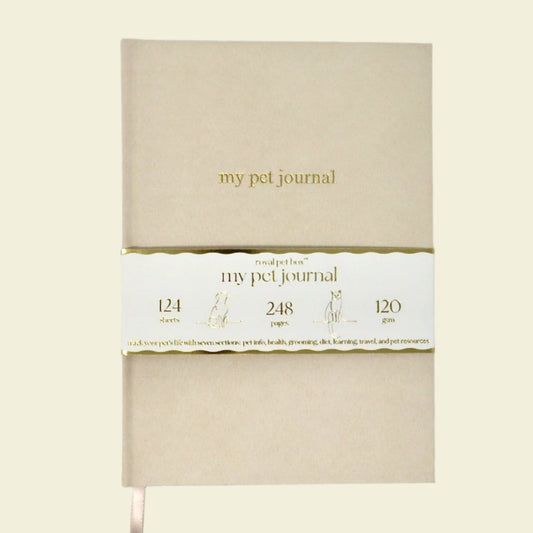
Ferrets need a lot of stimulation. Most exotic-pet vets recommend at least three to four hours of supervised out-of-cage play every day, ideally split into multiple sessions so they can sleep, eat, and dance their way through the day in their natural rhythm. Tunnels, crinkle balls, paper bags, and a rotating selection of "stealable" objects all keep that war-dance energy flowing. Keeping a written record of your ferret's play patterns and small daily quirks is one of the most useful habits a ferret owner can build — our My Pet Journal gives you 248 hardcover pages to log meals, vet visits, favorite toys, and the behavioral details that make each ferret an individual.
Over time, those notes turn into a portrait of what's normal for your pet, which makes it much easier to spot when something is off. Pair that with a consistent play schedule, varied enrichment, and plenty of safe space to dance, and you'll have a ferret that wiggles their way through life on full volume.
The ferret war dance is, at its heart, a celebration. It's a chaotic, dooking, gravity-defying reminder that your ferret is happy, healthy, and thoroughly enjoying their life with you. Lean in, laugh along, and consider it one of the great privileges of sharing your home with one of the most expressive small mammals in the pet world.
Check out our luxury pet products at reasonable prices. Visit our "Royal Pet Box Pet TV" Channel on both Roku and YouTube for fabulous pet-related education and entertainment.
Paris Deesing holds a degree in Biological Anthropology from UCLA and provides the editorial review behind each article, drawing on a long-held curiosity about the animals who share our lives.
This article was created using artificial intelligence with human editorial review and oversight.