Why Do Parakeets Bob Their Heads? What Your Budgie Is Trying to Tell You
Paris DeesingYou're sitting next to your parakeet's cage, and out of nowhere your little budgie launches into a tiny, bouncing head bob — up and down, up and down, like a feathered metronome. It's one of the most endearing things a parakeet does, and also one of the most quietly confusing for new bird owners.
Head bobbing in parakeets (also called budgies, short for budgerigars) is a rich form of communication, and it almost always means something positive. The exact meaning shifts with your bird's age, the situation, and the rest of its body language — but once you know what to look for, those bobs become a real window into how your budgie feels.
Most of the Time, It's Pure Excitement and Happiness
The most common reason a healthy parakeet bobs its head is that it's stimulated and content. Budgies bob when they hear your voice across the room, when music starts playing, when sunlight hits their cage in the morning, or when something simply catches their attention in a delightful way. You'll usually see this paired with bright eyes, soft chirping, lightly fluffed feathers, and an alert, springy posture.
There's real science behind some of it, too. Studies originally inspired by Snowball — the famous dancing cockatoo — found that several parrot species, including budgies, are genuinely capable of synchronizing their movements to a musical beat, a cognitive ability once thought to be uniquely human. So if you've ever turned on a song and watched your budgie bob along in rhythm, you weren't imagining it.
Head Bobbing as Courtship and Social Communication
In adult parakeets, head bobbing is also a primary courtship and bonding signal. Male budgies in particular are famous for an enthusiastic, rapid-fire head bob aimed at a mate, a mirror, a favorite toy, or even your hand. The display is often combined with chattery vocalizations, beak tapping against a perch, and regurgitating a small amount of food onto the chosen target.
It can look a little intense the first time you see it, but it's flattering — your bird has decided you (or a mirror, or a plastic bird) are a wonderful potential partner. Pair-bonded budgies bob and tap at each other constantly as part of normal pair maintenance.
Young Parakeets Bob to Beg for Food
In juvenile budgies, head bobbing has a much more practical job: feeding. Baby parakeets instinctively bob to encourage a parent (or another adult bird) to regurgitate food into their beak. Even after a young bird is fully weaned, you may see remnants of this begging bob for several weeks, especially when your budgie is excited, hungry, or trying to negotiate a treat from you.
This is normal and almost always fades on its own. A confident young parakeet that's eating well, gaining feathers, and active throughout the day is doing exactly what it should be doing — even if its bobs occasionally still look like begging.
When Head Bobbing Could Indicate a Problem
The vast majority of head bobbing is happy or social. But a few patterns are worth watching. Repetitive, "stuck" bobbing that doesn't stop — especially in a bird that looks dull-eyed, sits fluffed up for long stretches, or has lost interest in food and toys — can sometimes signal crop trouble, neurological issues, or other underlying illness. Birds are masters at masking sickness, so any sudden change from your budgie's baseline matters more than the bobbing itself.
Other red flags: head bobbing combined with vomiting (messier and more forceful than courtship regurgitation), tail bobbing with each breath, audible wheezing or clicking, balance problems, or sudden disinterest in the people, sounds, and toys your bird normally loves.
Every parakeet is a little different — if your budgie's head bobbing seems unusual, repetitive in a worried-looking way, or paired with any of the warning signs above, please loop in an avian veterinarian who can examine your bird and rule out anything that needs hands-on care.
Tracking Your Bird's Behavior Over Time

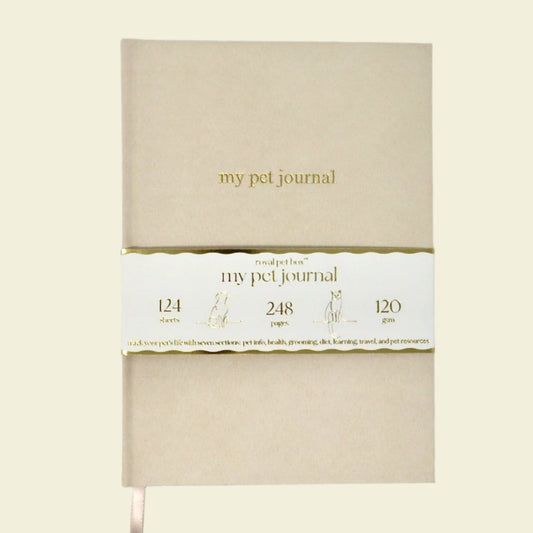
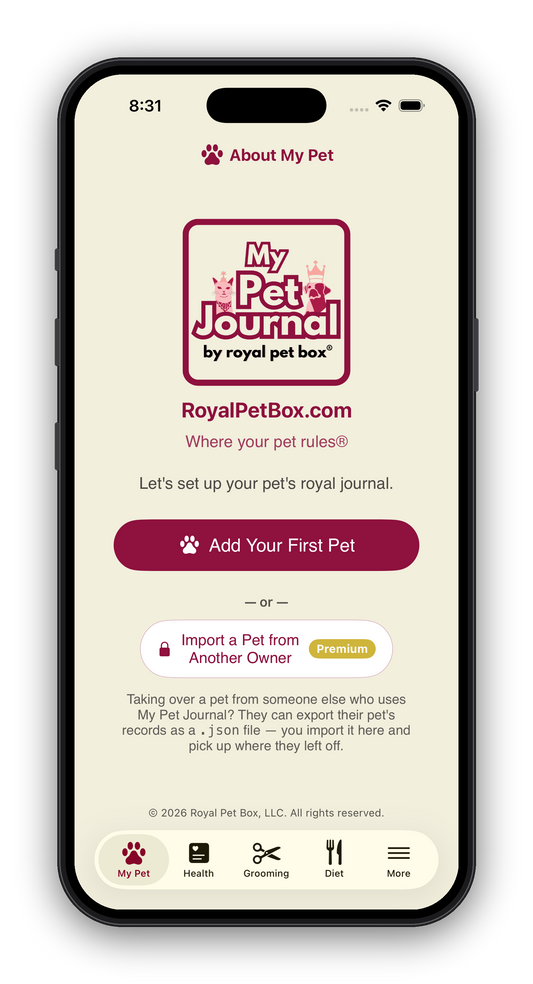
One of the kindest things you can do for a small bird is keep a quiet record of its day-to-day baseline — what's normal, what's new, when behaviors started, when feathers molted, when appetite shifted. Birds change quickly when something is off, and a written log makes subtle drifts much easier to spot. Our My Pet Journal gives you a single place to track your budgie's diet, weight, vet visits, and the small daily details that matter most in an avian vet's exam room a year from now.
The next time your budgie launches into a happy, bouncing little head bob, take a moment to enjoy it. You're watching one of nature's most social and expressive small animals tell you, in the most charming way it knows how, that life is good and you are a wonderful flockmate.
Check out our luxury pet products at reasonable prices. Visit our "Royal Pet Box Pet TV" Channel on both Roku and YouTube for fabulous pet-related education and entertainment.
Paris Deesing holds a degree in Biological Anthropology from UCLA and provides the editorial review behind each article, drawing on a long-held curiosity about the animals who share our lives.
This article was created using artificial intelligence with human editorial review and oversight.