Why Does My Cat Bring Me Dead Animals? Understanding This Hunter's "Gift"
Paris DeesingYou step onto the porch with your morning coffee and there it is: a tiny vole, a dazed lizard, or a feather-strewn mouse, laid on the doormat like a present. Your cat sits nearby, looking very pleased with herself. If you've ever asked, "Why on earth does my cat bring me dead animals?" — you are in extremely good company. This startling little ritual is one of the most universal feline behaviors, and it is rooted in instincts older than house cats themselves.
The Hunting Instinct Lives in Every Cat
Even the laziest indoor lap-warmer carries the wiring of a small, efficient predator. Domestic cats are descended from the African wildcat (Felis lybica), and they retain a nearly complete suite of solo hunting behaviors — stalking, pouncing, the killing bite, and the carry-home. Studies of free-roaming domestic cats consistently show they remain effective hunters of small mammals, birds, reptiles, and insects, and that the urge to hunt is largely independent of hunger. A cat with a full bowl of kibble at home will still chase, catch, and carry. The drive isn't about food. It's about being a cat.
Why Cats Share Their Catches With Us
The leading explanation — and the one most behaviorists lean on — is that cats see their human family as part of their social group, and bringing prey home is an extension of normal feline social life. In wild and feral cat colonies, mother cats carry catches back to the den, and bonded adult cats sometimes share food. When your cat drops a mouse at your feet, she may simply be doing what cats do for their inner circle: showing up with the day's catch. Some cats parade and "talk" while delivering. Others quietly leave the offering and walk away, watching to see what you'll do.
Are They Trying to Teach Me to Hunt? The Mother-Cat Theory
The most popular folk explanation — that your cat thinks you're a hopeless hunter and is patiently teaching you — comes from a real behavior. Mother cats progress kittens through stages of prey instruction: first carrying back fully-killed prey, then injured prey, then live prey for kittens to dispatch. Some behaviorists believe spayed females may extend a version of this maternal teaching to their humans, especially toward people they've bonded with. It's a charming idea, and it likely captures part of the truth — but it doesn't fit every cat (males do it too) and probably overlaps with the simpler "share with the group" explanation.

Channeling That Hunting Drive Indoors
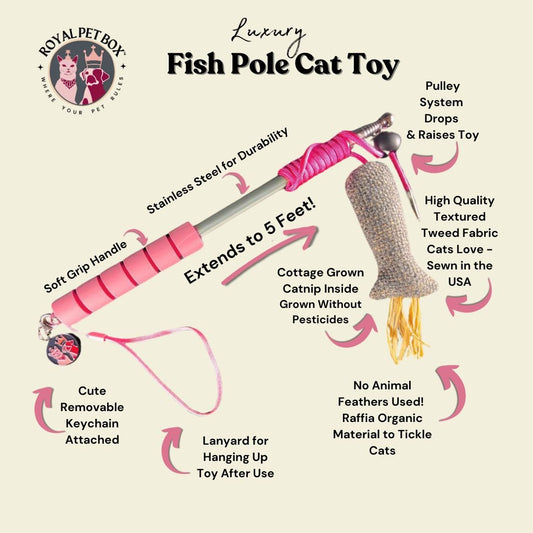
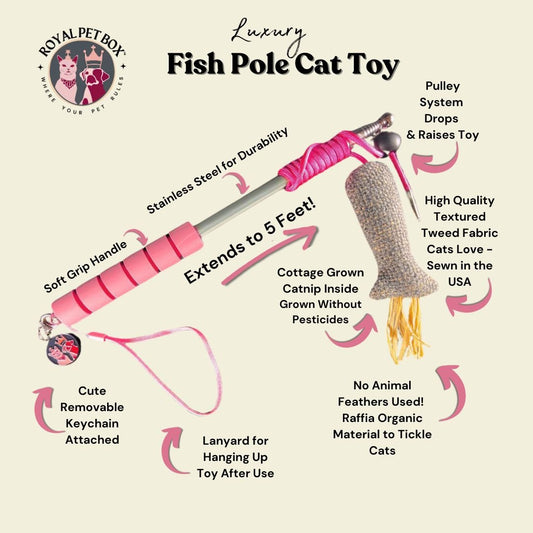
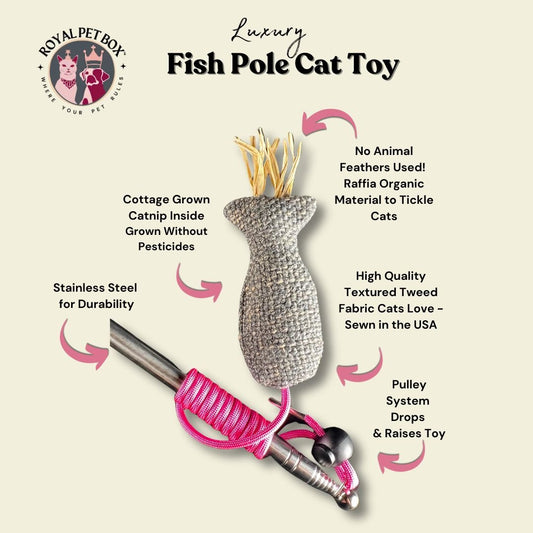
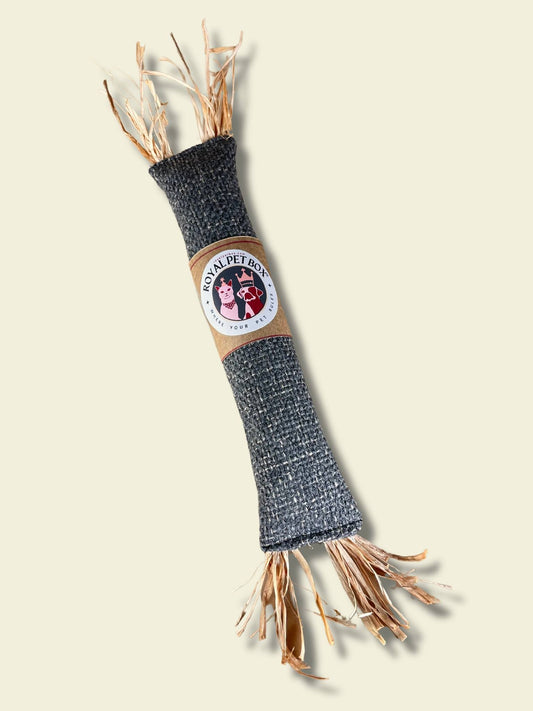
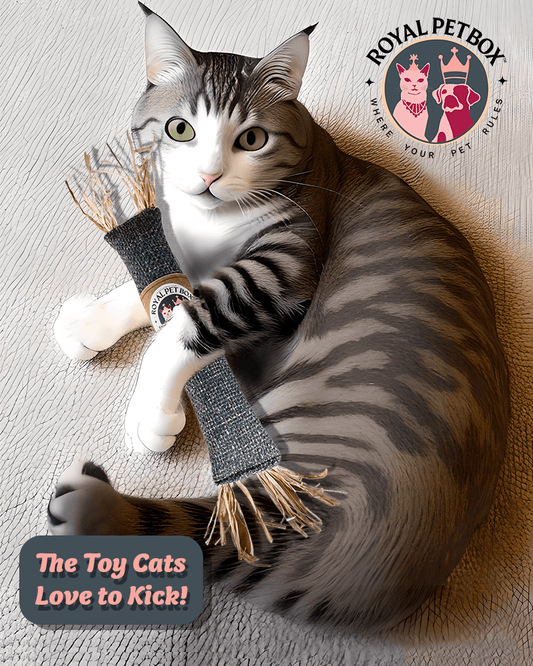
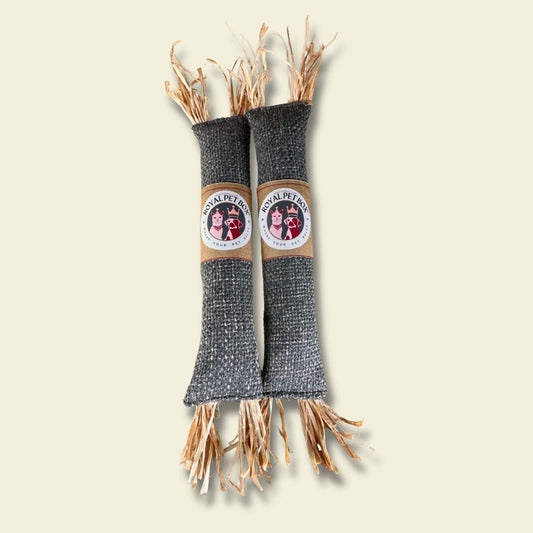
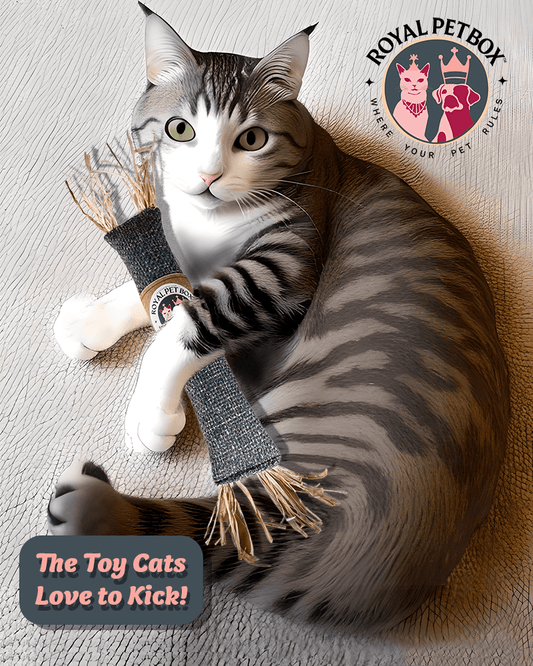
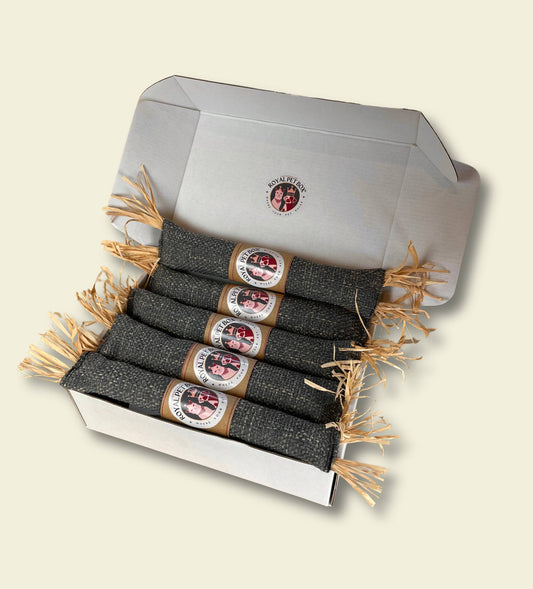
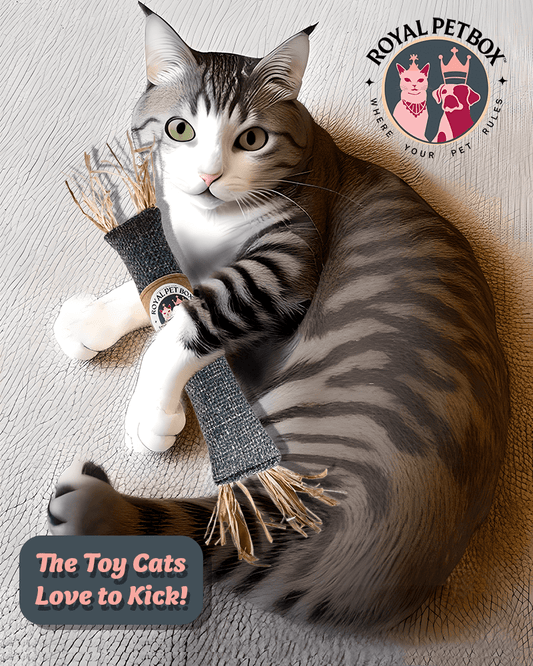
You can't — and shouldn't — erase the hunting instinct, but you can give it a richer indoor outlet so the urge finds its target inside, not outside. The most effective enrichment mimics the full hunting sequence — stalk, chase, pounce, bite, "kill" — rather than just dangling a toy for a few seconds. A weighted kicker toy your cat can wrestle and bunny-kick lets her finish that sequence the way she would on real prey. Our Two Luxury Cat Kicker Toys in Gray Tweed with Silver Vine & Catnip are a favorite for multi-cat households or for keeping one in the living room and one near a favorite napping spot — sized to be grappled, infused with silver vine and catnip, and built to take a beating. Pair short interactive play sessions (five to ten minutes, twice a day) with food puzzles and window perches, and many cats noticeably soften their outdoor hunting urgency.

How to Respond Without Bruising Their Pride
However startling the gift, try not to scold or react with disgust — your cat doesn't understand that response and may simply learn to bring offerings somewhere else (under the bed, into the laundry basket, onto your pillow). Calmly thank her, set the prey aside with gloves on, dispose of it, and redirect her into a play session. If you want to spot patterns over time — what she's catching, where she's catching it, how often, and any digestive aftermath — our My Pet Journal gives you a dedicated 248-page space to log outdoor activity, hunting frequency, vet visits, and behavioral notes all in one place. It's a quietly useful tool for filling in your vet on what your cat has been catching and potentially eating.
When the "Gifts" Are a Health Concern
Every cat is a little different — if your hunter starts vomiting, refusing food, losing weight, or showing tummy upset after a streak of catches, please loop in your veterinarian to rule out parasites, toxin exposure, or anything else that needs hands-on care.
Outdoor cats can pick up roundworms and tapeworms (especially from rodents), and toxoplasmosis from prey, and rodents that have eaten anticoagulant rat bait can pass that toxin up the food chain. Keep flea, tick, and dewormer protection current; consider GPS collars or a catio for cats that roam far from home; and never let your cat eat a bird or rodent you find dead — it may have been poisoned. Many wildlife groups also recommend a brightly-colored "Birdsbesafe"-style collar cover, which has been shown in field trials to dramatically reduce bird kills without bothering the cat. Most experts agree that keeping cats exclusively indoors is the safest way to protect both them and the wildlife outside.
Receive the Gift, Redirect the Hunter
The morning mouse on the doormat isn't your cat being weird, ungrateful, or twisted. It's a small, ancient gesture of belonging from an animal whose instincts pre-date your front door by thousands of years. Receive it, redirect it, and keep her hunting drive well-fed indoors — and you'll find that a cat with plenty of safe outlets for her predator brain is a calmer, happier housemate.
Check out our luxury pet products at reasonable prices. Visit our "Royal Pet Box Pet TV" Channel on both Roku and YouTube for fabulous pet-related education and entertainment.
Paris Deesing holds a degree in Biological Anthropology from UCLA and provides the editorial review behind each article, drawing on a long-held curiosity about the animals who share our lives.
This article was created using artificial intelligence with human editorial review and oversight.