Why Does My Cat Get the Zoomies? Understanding Feline FRAPs and How to Help
Paris DeesingOne minute your cat is sound asleep curled in a sunbeam — the next, she's tearing down the hallway at full speed, bouncing off the couch, and disappearing into another room like a tiny lightning bolt. If you have ever found yourself laughing at this scene at 11 p.m., you are not alone. The "cat zoomies" are one of the most beloved (and bewildering) feline behaviors, and there is real science behind why they happen.
What Are Cat Zoomies, Really?
Cat zoomies are formally known as Frenetic Random Activity Periods, or FRAPs — sudden, short-lived bursts of high-energy movement that seem to come out of nowhere. Veterinarians and feline behaviorists use the term to describe any episode where a cat sprints, leaps, twists, or pounces with no apparent provocation. FRAPs typically last anywhere from thirty seconds to a few minutes before your cat returns to her usual relaxed self.
The behavior is most common in young cats and kittens, but plenty of adult cats keep their zoomies well into their senior years. It is a healthy, natural expression of feline instinct — and in most cases, a sign that your cat feels safe enough at home to truly let loose.
The Most Common Triggers for Feline Zoomies
Pent-up energy. Domestic cats sleep twelve to sixteen hours a day, but their wild ancestors were crepuscular hunters who burst into action at dawn and dusk. When that hunting energy has nowhere to go, it builds up — and the zoomies are how your cat releases it.
Post-litter-box relief. Many cat owners notice their cat doing a victory lap right after the litter box. Theories vary: the vagus nerve may give a pleasurable jolt after elimination, cats may instinctively dash away from the scent to avoid attracting predators, or the relief itself may simply trigger a playful burst.
The hunt-and-pounce instinct. A flicker of light, a passing shadow, or a sudden noise can activate your cat's prey drive without giving her anything to actually catch. The energy still has to go somewhere — usually a sprint across the living room.

Channeling the Energy: Help Your Cat Burn Off the Zoomies
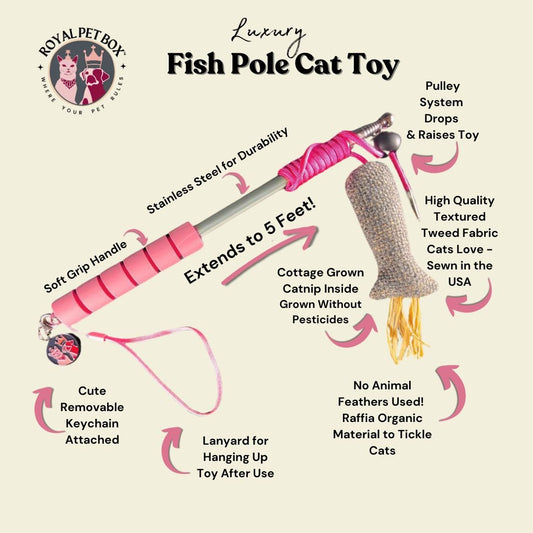
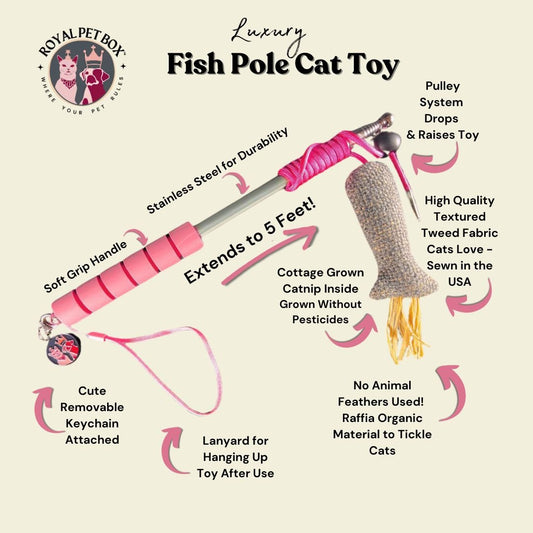
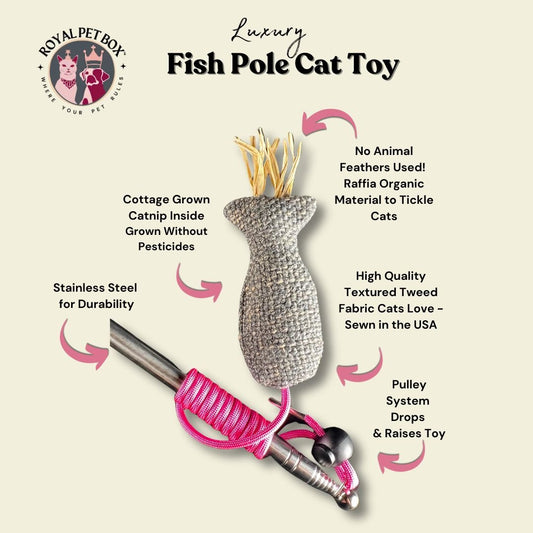
The cleanest way to take the edge off your cat's nightly zoomies is to give her a real outlet for that hunt-and-pounce energy before it builds up. Our Luxury Extendible Fish Pole Cat Toy With Catnip lets you mimic the darting, swooping motion of prey from across the room — ideal for working off pre-zoomies energy in the early evening before her internal alarm clock goes off.
A short ten-to-fifteen-minute interactive play session before bedtime can dramatically reduce middle-of-the-night zoomies. Aim for two sessions a day — once in the morning and once in the early evening, matching your cat's natural crepuscular rhythm. End each session with a "successful catch" so your cat feels the satisfaction of finishing the hunt, then offer a small meal or treat. This sequence — hunt, catch, eat, groom, sleep — mirrors the natural feline cycle and helps reset her energy clock.

Tracking the Pattern: When Do the Zoomies Happen?
Once you start paying attention to when your cat's zoomies kick in, patterns tend to emerge — and writing them down is the fastest way to adjust her routine. Our My Pet Journal — Track Your Pet's Life gives you a dedicated 248-page hardcover space to log play sessions, meal times, and those telltale 11 p.m. sprints in one place.
Most cats settle into a daily zoomies pattern within a week of observation. You might notice they happen right after the morning litter scoop, or always twenty minutes after dinner, or exactly when you are trying to fall asleep. Once you spot the trigger, shift play sessions to land thirty to sixty minutes before that peak — and you will often see the zoomies dial down considerably.
When Zoomies Might Mean Something More
For most cats, FRAPs are completely normal — a sign of a healthy, well-fed animal letting off steam. But a few situations deserve a closer look. If your older cat suddenly starts zooming more than usual, especially paired with weight loss, increased appetite, or excessive thirst, it can be an early sign of hyperthyroidism. Zooming combined with frantic scratching or biting at the body may point to fleas, allergies, or skin irritation. And cats who seem genuinely panicked rather than playful — vocalizing, tail puffed, pupils wide and tense — may be reacting to fear or pain rather than enjoying themselves.
If your cat's zoomies suddenly change in intensity, frequency, or character — or if she seems frightened rather than playful — please loop in your veterinarian to rule out fleas, hyperthyroidism, or any underlying issue that might be driving the change.
Embracing the Midnight Sprint
At the end of the day — often quite literally — the zoomies are a charming reminder that your cat is still a tiny predator at heart. A well-timed evening play session, a comfortable home she feels safe enough in to let loose, and a watchful eye for any sudden behavior changes are usually all it takes to keep her FRAPs in the "delightful" rather than "concerning" column. Lean into the joy of it. The midnight sprint is your cat's love letter to a life well-lived.
Check out our luxury pet products at reasonable prices. Visit our "Royal Pet Box Pet TV" Channel on both Roku and YouTube for fabulous pet-related education and entertainment.
Paris Deesing holds a degree in Biological Anthropology from UCLA and provides the editorial review behind each article, drawing on a long-held curiosity about the animals who share our lives.
This article was created using artificial intelligence with human editorial review and oversight.