Why Does My Cat Knock Things Off Tables? The Curious Science Behind a Classic Cat Habit
Paris DeesingYou hear that telltale tap-tap-tap from across the room, look up, and watch in slow motion as your cat extends one perfectly deliberate paw toward your favorite mug. A second later, it's on the floor — and your cat is staring at you with that look. If you've ever wondered whether your cat is being mischievous, attention-seeking, or somehow plotting revenge, the truth is far more interesting. Knocking things off tables is one of the most uniquely feline behaviors there is, and it's rooted in instincts that go back tens of thousands of years.

The Hunting Instinct: It's All About Prey Drive
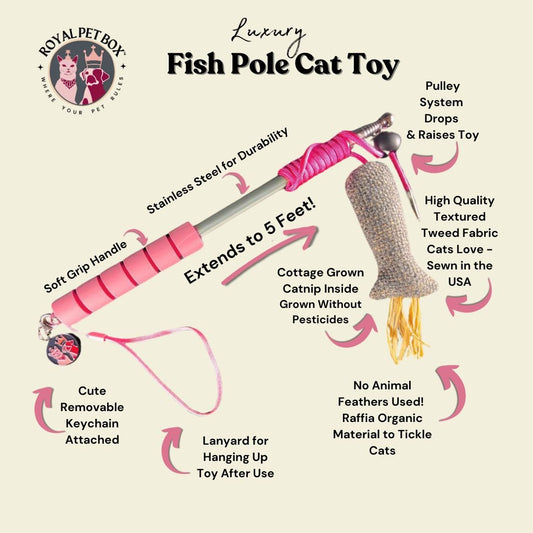
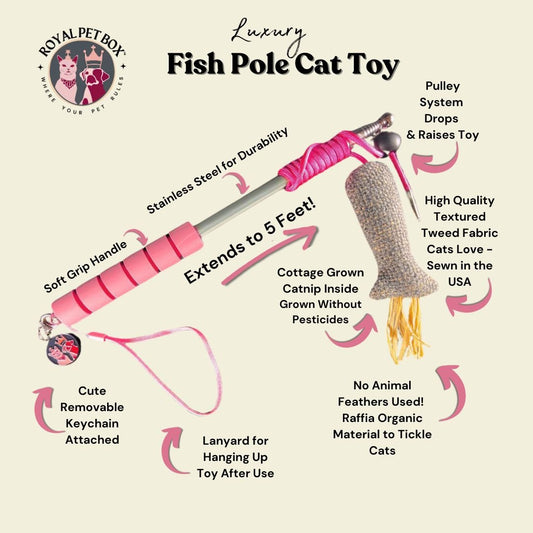
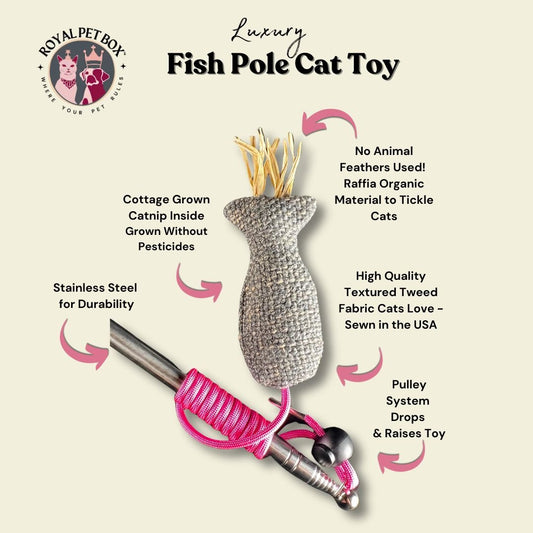
Cats are obligate carnivores and natural-born hunters, and even the most pampered house cat is wired to investigate small moving objects exactly the way their wild ancestors investigated potential prey. When your cat taps a pen, a coin, or a glass of water, they're running a quick test: does it move on its own? Does it react? Is it edible? That careful, exploratory paw is the same motion a wild cat would use to gauge whether something is alive, dangerous, or worth pouncing on. Tabletops just happen to be the perfect prey-testing platforms — flat, full of small objects, and at the perfect height for a curious feline to investigate. Redirecting that hunting drive toward a proper target is one of the most effective ways to cut back on countertop mischief. A wand toy like the Luxury Extendible Fish Pole Cat Toy With Catnip mimics the unpredictable movement of real prey, giving your cat a satisfying outlet for the same instincts that send their paw toward your coffee cup.

Curiosity, Cause, and Effect
Cats are tireless little scientists. They're studying their environment constantly, and one of the ways they learn about the world is by testing how objects behave. A pen rolls. A pebble skitters. A glass of water tips, splashes, and rolls in a satisfyingly chaotic way. From your cat's perspective, every object on your table is a small experiment in physics, and they're collecting data with each paw-tap. The first time your kitten knocks something off and watches it tumble, they file the outcome away as useful information about the world. If you'd like to track the patterns yourself — when the knocking happens, what triggers it, what works to redirect it — our My Pet Journal gives you a dedicated place to log behavior notes, play routines, and the little quirks that make your cat uniquely your cat.
Attention-Seeking: Yes, Your Cat Has Learned That Trick
Here's where things get a little personal. Cats are remarkable observers of human behavior, and most cats figure out very quickly that knocking something off a counter produces a dramatic, immediate, very loud reaction from their human. Even negative attention is attention, and a cat who is bored or under-stimulated will absolutely repeat a behavior that reliably gets you out of your chair. If your cat tends to knock things off when you're working, on a video call, or otherwise engaged with something that isn't them, attention-seeking is a very plausible explanation. The fix isn't to scold — your cat may interpret that as the reward they wanted — but to invest in proactive enrichment so they aren't bored enough to resort to dramatic stunts in the first place.

Energy, Boredom, and the Indoor Cat
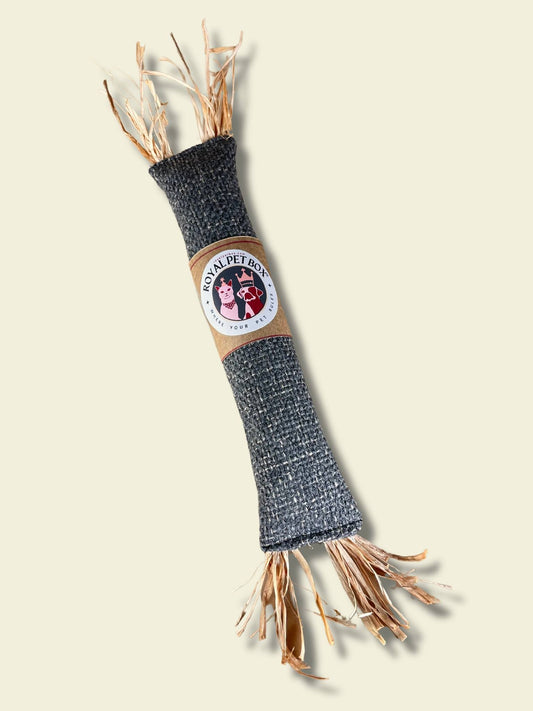
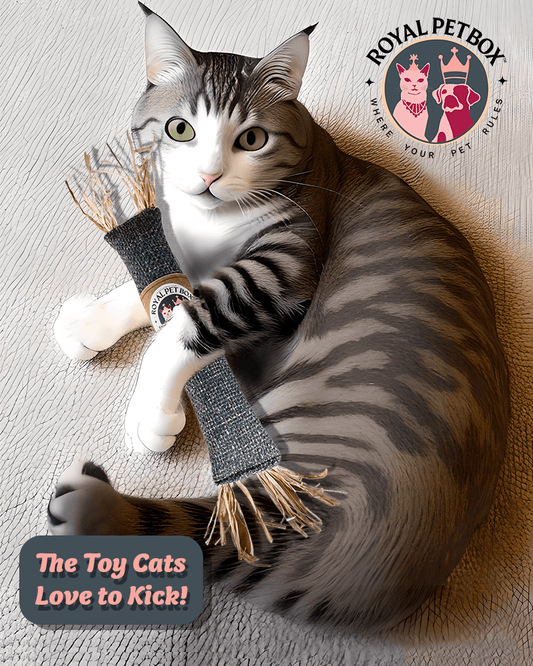
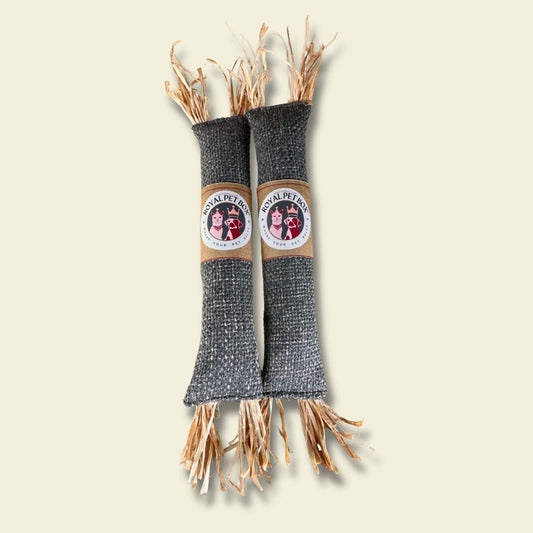
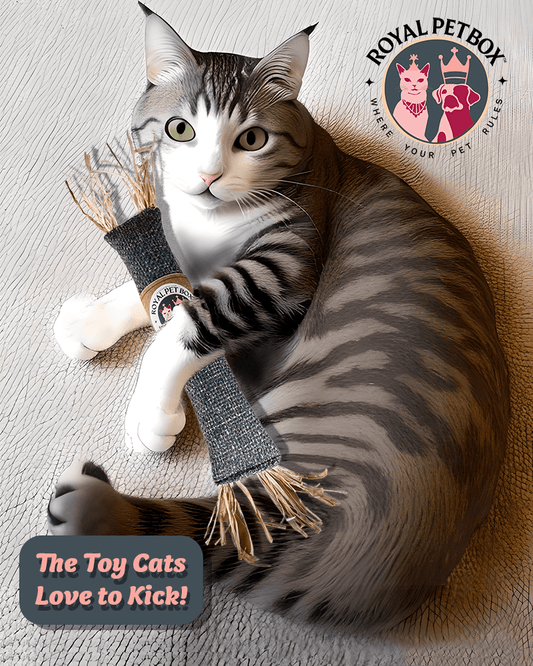
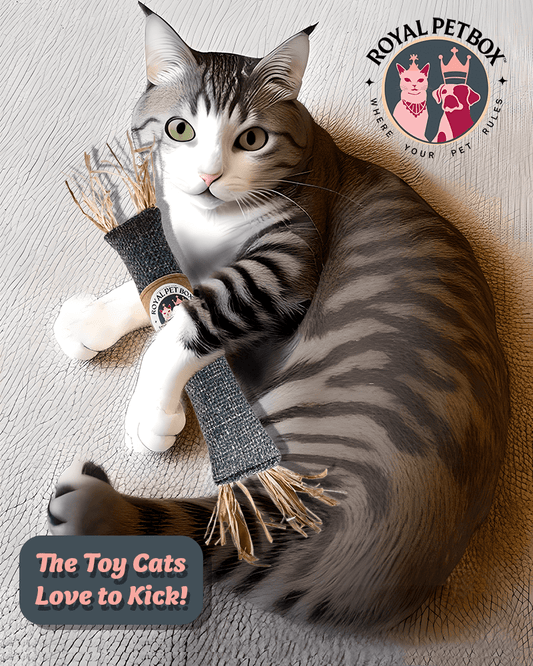
An adult cat in the wild would spend several hours a day stalking, chasing, and pouncing. An indoor cat with no outlet for those instincts has to find something to do with that energy, and the highest, flattest, most interesting surface in the house is often a tabletop or counter. Knocking things off is what energy without an outlet looks like. The cure is structured, predictable play — short, intense sessions that mimic a hunt with a clear beginning, middle, and "catch" at the end. A textured kicker toy like the Luxury Cat Kicker Toy in Gray Tweed with Silver Vine and Catnip gives your cat something they can grab, bunny-kick, and wrestle to a satisfying conclusion, which burns off the same rough-play energy that otherwise targets your decor.
How to Gently Redirect the Behavior
You probably won't train a cat to stop being a cat — the curiosity and prey drive are part of the package. But you can reduce the frequency of the table-clearing performances by working with your cat's instincts rather than against them. Schedule two short play sessions a day, ideally before meals, so your cat hunts, eats, and naps the way they would naturally. Move tempting, fragile objects off accessible surfaces for a while, give your cat a few "yes" surfaces of their own to explore (a tall cat tree near a window does wonders), and reward calm behavior with attention rather than reacting big to the dramatic stuff. Most cats settle considerably once their need to hunt, climb, and observe is being met somewhere more interesting than your nightstand.
When It Might Be More Than Mischief
Most table-clearing is normal cat behavior. But a sudden, dramatic change — a cat who never bothered things before and is suddenly knocking everything down, especially paired with increased vocalization, restlessness, or changes in appetite, litter box habits, or sleep — can occasionally be a sign of stress, an environmental change, hyperthyroidism in older cats, or other underlying issues worth ruling out. If the behavior feels new or out of character, it's worth checking in with your veterinarian to make sure nothing else is going on. For the everyday curious-paw-meets-coffee-cup variety, though, you can mostly relax and put the breakables behind glass. Your cat is being deeply, perfectly, instinctively themselves.
Knocking things off tables looks like chaos, but it's really a window into how cats think, hunt, and learn. With a little enrichment, some thoughtful tabletop curation, and a sense of humor, you can keep both your cat and your favorite ceramics happy.
Check out our luxury pet products at reasonable prices. Visit our "Royal Pet Box Pet TV" Channel on both Roku and YouTube for fabulous pet-related education and entertainment.
Paris Deesing holds a degree in Biological Anthropology from UCLA and provides the editorial review behind each article, drawing on a long-held curiosity about the animals who share our lives.
This article was created using artificial intelligence with human editorial review and oversight.