Why Does My Cat Sleep So Much? The Science Behind Your Cat's Napping Habits
Paris DeesingIf you've ever watched your cat curl up for what feels like the hundredth nap of the day, you've probably wondered: is something wrong with them? The answer, almost always, is no. Cats are champion sleepers — and there's a beautifully logical evolutionary reason for it.
How Much Do Cats Actually Sleep Each Day?

Most adult cats sleep between 12 and 16 hours per day. Senior cats and kittens often push closer to 18–20 hours. This isn't laziness — it's a biological design feature. If you want to track changes in your cat's sleep and energy levels over time, our My Pet Journal has dedicated sections for health and behavioral notes, making it easy to spot patterns at a glance.
Unlike humans, who consolidate most sleep into one long block, cats are polyphasic sleepers. They cycle through many shorter sleep periods throughout the day and night, mixing light dozing with deeper REM sleep.
Every cat has its own baseline — some naturally sleep more than others, and that's perfectly fine. But if your cat has suddenly become much more lethargic, is sleeping in unusual positions, or seems difficult to rouse, it's worth a call to your veterinarian to rule out pain, illness, or other underlying causes.
Why Do Cats Sleep So Much? The Evolutionary Science
Cats are obligate carnivores and natural ambush predators. In the wild, hunting requires short, explosive bursts of speed and strength — chasing, pouncing, and wrestling prey is energetically expensive. To fuel those intense efforts, cats evolved to conserve energy between hunts by sleeping. Even domestic cats who have never stalked anything more challenging than a toy mouse carry this wiring in their DNA.
Think of it this way: a cat's body is a high-performance engine that idles most of the day and then redlines in short, powerful sprints. Sleep is how that engine recharges.
Weather plays a role too. Many cat owners notice their pets sleep more on rainy, gray, or cold days — and science backs this up. Cats are sensitive to barometric pressure and temperature, and on low-energy days, they instinctively conserve.
Cat Sleep by Life Stage — What's Normal, What Isn't

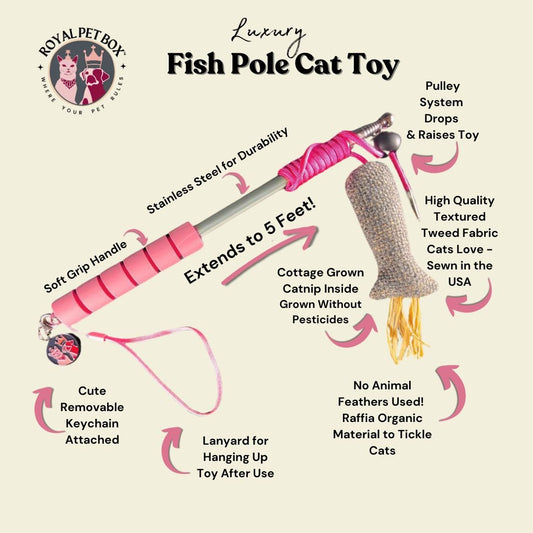
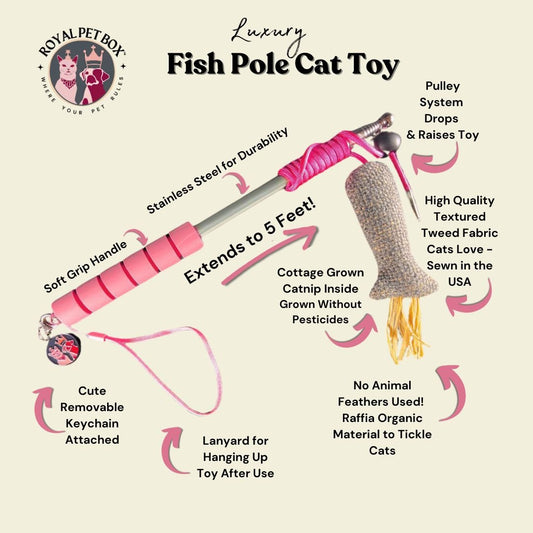
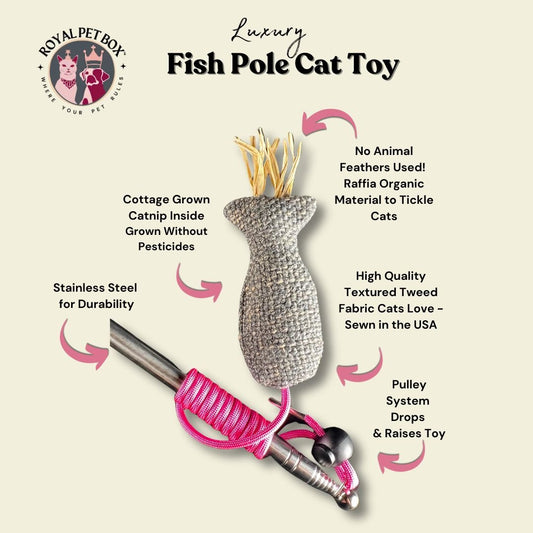
Healthy cat sleep has a natural rhythm. Your cat should be easy to wake with a gentle sound or touch, stretch and groom after rising, and show normal enthusiasm for food and play during their active windows. Our Luxury Fish Pole Cat Toy is perfect for those active bursts — a 10-minute wand session before the evening meal beautifully mimics the hunt-eat-groom-sleep cycle cats are built around.
Typical sleep ranges by life stage:
- Kittens (under 1 year): 16–20 hours — growth hormones and brain development demand it
- Adult cats (1–7 years): 12–16 hours
- Senior cats (7+ years): 14–18 hours — metabolism slows and joints may ache, so more rest is expected
Signs that extra sleep may be a symptom rather than simple rest: sleeping far more than usual with no weather or age explanation, difficulty being roused, hiding in atypical spots, or reduced appetite alongside the extra tiredness. These deserve a vet conversation sooner rather than later.
These ranges are a solid baseline, but your individual cat's normal matters more than any published average. A cat who routinely sleeps 13 hours suddenly clocking 18 is worth mentioning to your vet — even if 18 hours falls within the broad "normal" window on paper.
How to Support Great Sleep and Enriched Waking Hours

The best thing you can do for your cat's sleep quality is make sure their waking hours are genuinely engaging. A cat who is mentally and physically stimulated during active periods will sleep more deeply and contentedly. A bored, understimulated cat, on the other hand, may sleep out of sheer listlessness rather than true rest. Our Luxury Cat Kicker Toy — infused with silver vine and organic catnip — is ideal for those satisfying bunny-kick sessions that let cats fully express their hunting instincts before settling in for a well-earned snooze.
Simple habits that support a healthy sleep-wake rhythm:
- Schedule at least one interactive play session daily, ideally before the evening meal
- Provide window perches and outdoor views so waking hours stay interesting
- Keep meal times consistent — routine helps cats feel secure and settled
- Give senior cats warm, cushioned sleeping spots and easy access to their favorite resting places
Avoid disrupting sleep unnecessarily. Cats woken abruptly and repeatedly can become chronically stressed, which may surface as behavioral changes or immune issues over time.
Before adding any supplement aimed at relaxation, sleep support, or joint comfort — melatonin, CBD oil, calming chews, or similar — run it by your vet first. Even well-intentioned natural products can interact with existing conditions or medications, and appropriate doses for cats are very different from what works for humans or dogs.
Check out our luxury pet products at reasonable prices. Visit our "Royal Pet Box Pet TV" Channel on both Roku and YouTube for fabulous pet-related education and entertainment.
Paris Deesing holds a degree in Biological Anthropology from UCLA and provides the editorial review behind each article, drawing on a long-held curiosity about the animals who share our lives.
This article was created using artificial intelligence with human editorial review and oversight.