Why Does My Cat Slow Blink at Me? Decoding the Feline "I Love You"
Paris DeesingYou glance across the room and lock eyes with your cat. Instead of darting away or staring you down, they slowly close their eyes, hold for a beat, and reopen them just as softly. It looks lazy, almost sleepy — but you've just been the recipient of one of the highest compliments in feline communication. The slow blink is your cat's way of saying, in body language, that they feel completely safe with you.
What a Cat Slow Blink Actually Is

A slow blink isn't a regular eye-rest. It's a deliberate, soft, drawn-out closing and reopening of the eyes — sometimes paired with a half-squint that crinkles the area around the nose. In feline body language, slow eye movements signal calm intent. Fast, fixed, dilated stares mean the opposite: alertness, fear, or a warning. By contrast, the slow blink is the relaxed inverse — a quiet "I'm not a threat, and I don't think you are either." If you keep My Pet Journal by your reading chair, jotting down when and where your cat starts offering you slow blinks is a lovely way to track how their trust in you and in new visitors deepens over the weeks.
The Science Behind the "Cat Kiss"
Researchers have actually studied this. In a 2020 study published in Scientific Reports, scientists at the University of Sussex and University of Portsmouth found that cats were significantly more likely to slow-blink back at humans who slow-blinked at them — including total strangers. Cats also approached strangers faster when the strangers initiated a slow blink rather than a neutral expression. The takeaway: the slow blink isn't just folklore. It's a real, measurable form of positive communication that works between species, which is part of why people affectionately call it the "cat kiss."
From an evolutionary perspective, narrowing the eyes makes biological sense as a peace signal. Wide, fixed eyes prepare an animal to react. Half-closed eyes lower visual acuity for a moment — something a cat would only voluntarily do around something they don't perceive as a threat.
What Triggers a Slow Blink

Slow blinks tend to surface in moments of genuine contentment — when your cat is curled on the couch beside you, fresh from a meal, sun-warm by a window, or pleasantly buzzed after a roll in their favorite herb. A pinch of Organically Grown Catnip sprinkled on a blanket or scratcher is one of the most reliable ways to coax your cat into that loose-limbed, half-lidded state where slow blinks come easily. About two-thirds of adult cats inherit the gene that makes them sensitive to catnip, and in those cats it tends to produce a brief euphoria followed by a deeply relaxed afterglow — prime slow-blink territory.
Other common triggers include gentle grooming, a familiar voice talking quietly, and direct but soft eye contact from a trusted human. Cats also slow-blink at other cats they live peacefully with, which is how multi-cat households quietly negotiate "we're cool" across a room without anyone moving.
How to Slow Blink Back (and Why You Should)

Returning a slow blink is one of the easiest, most under-used tools you have for bonding with your cat. The trick is to do it slowly and softly: catch your cat's eye, narrow your own eyes into a relaxed half-smile, close them for one or two full seconds, then reopen them just as gently. Don't stare hard before or after — that undoes the effect. Many cats will slow-blink right back. Others take time to respond, especially shy or newly-adopted cats. That's fine; the message still lands.
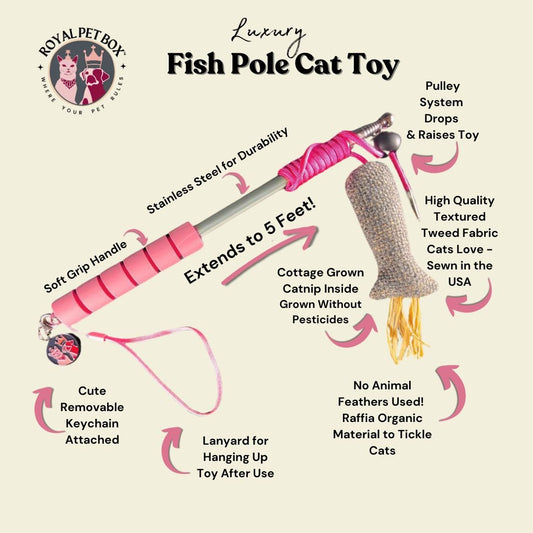
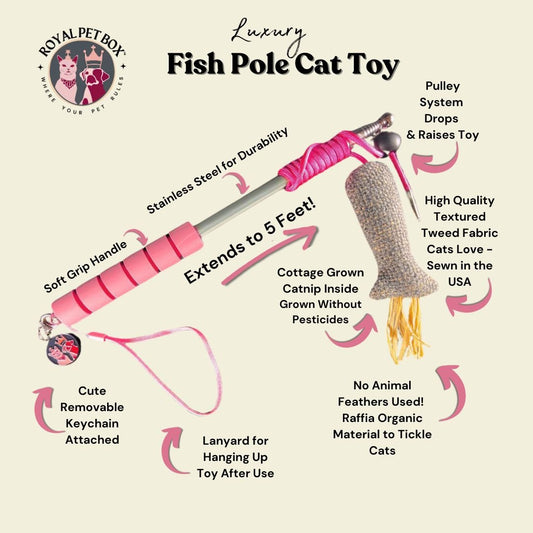
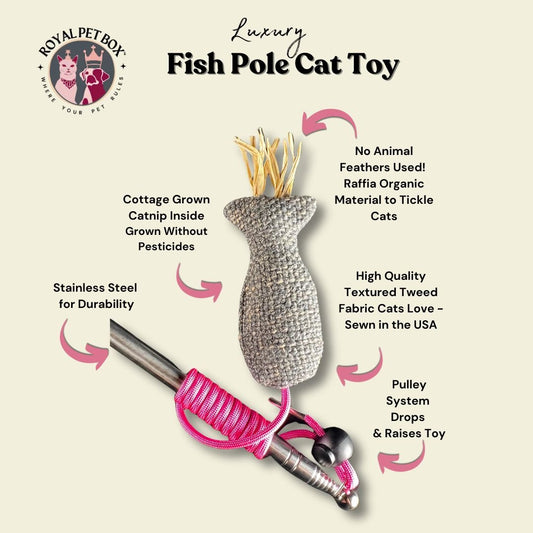
Pair slow blinks with low-pressure interactive play to deepen the trust loop. A wand-style toy like the Luxury Extendible Fish Pole Cat Toy lets you engage your cat's hunting instincts without crowding their personal space, which is exactly the kind of bonding play that produces a satisfied, slow-blinking cat once the toy is put away.
When Slow Blinking Looks Off
The relaxed slow blink should look soft, voluntary, and symmetrical. If you notice your cat squinting only one eye, blinking constantly, holding an eye closed, or producing extra discharge, that's not a "cat kiss" — that's eye discomfort and worth a vet check. The same goes for a cat who has suddenly stopped engaging at all and just keeps their eyes shut while hunched up; flat, withdrawn body language is very different from the loose, breezy slow blink.
Eyes are sensitive and conditions like conjunctivitis, corneal ulcers, and upper-respiratory infections can develop quickly in cats — if anything about your cat's blinking, squinting, or eye appearance feels new or one-sided, please loop in your veterinarian rather than waiting to see if it resolves on its own.
The Quiet Magic of Being Slow-Blinked At
It's easy to overlook the slow blink because it doesn't come with the showmanship of a purr or a head-butt. But when your cat catches your eye, holds it, and lets their eyelids drift shut for a heartbeat, they're telling you something real: in a world full of unpredictable sounds and looming shapes, you are one of the safe ones. Slow-blink back. That tiny, silent exchange — across two very different species — is one of the most genuinely affectionate moments you'll share with the animal sleeping at the foot of your bed.
Check out our luxury pet products at reasonable prices. Visit our "Royal Pet Box Pet TV" Channel on both Roku and YouTube for fabulous pet-related education and entertainment.
Paris Deesing holds a degree in Biological Anthropology from UCLA and provides the editorial review behind each article, drawing on a long-held curiosity about the animals who share our lives.
This article was created using artificial intelligence with human editorial review and oversight.