Why Does My Cockatiel Raise Its Crest? Decoding Your Bird's Most Expressive Feature
Paris DeesingFew features in the bird world are as expressive as a cockatiel's crest. Those slender, swept-back feathers on top of your bird's head are not just a decorative flourish — they're a real-time mood meter, broadcasting everything from sleepy contentment to wide-eyed alarm. If you've ever watched your cockatiel's crest snap upright when the doorbell rings, or relax into a soft sweep while you scratch behind their head, you've already been reading bird body language. This guide breaks down what each crest position actually means.
What the Cockatiel Crest Is — and Why It Matters

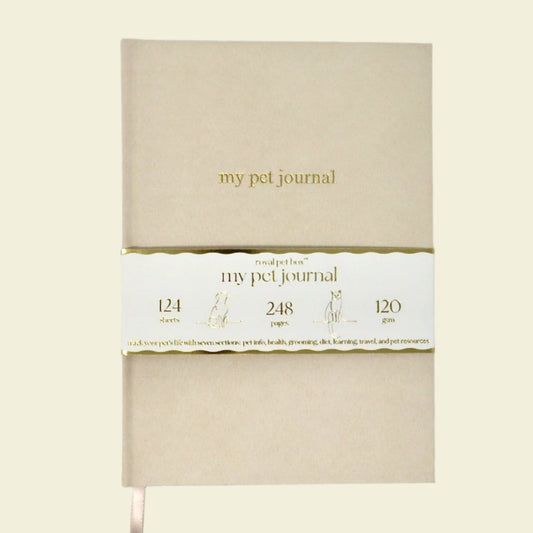
The cockatiel crest is made up of around six elongated feathers attached to muscles your bird controls voluntarily. Cockatiels are part of the cockatoo family, and that crest is essentially a smaller, more refined version of the dramatic plumage you'll see on a sulfur-crested cockatoo. Because the crest moves independently of the rest of the body, it gives you a fast, honest read on your bird's emotional state — often before any vocalization. Tracking those changes over weeks and months is one of the best ways to learn your individual cockatiel's baseline, and our My Pet Journal gives you a dedicated space to note moods, triggers, vet visits, and diet changes all in one place so patterns become easy to spot.
The Five Crest Positions and What They Mean
Most cockatiel keepers find their bird cycles through roughly five recognizable crest positions throughout the day. Learning these is a little like learning a new language — once it clicks, you can't unsee it.
Fully upright and rigid. A bolt-upright crest means surprise, alarm, or sudden alertness. Something just caught your bird's attention — a loud noise, an unfamiliar visitor, a passing shadow outside the window. If your cockatiel also crouches low, opens their wings slightly, or hisses, the crest is signaling genuine fear rather than playful curiosity.
Upright and angled forward. This is the curious, engaged position. Your bird has noticed something interesting and is actively investigating — a new toy, a piece of food, your phone screen, the family dog walking by. The crest is up but the body is relaxed and leaning in.
Held high but soft. A naturally raised crest with no other tension signals a happy, content, attentive bird. This is often the position you'll see during whistling, playing, or hopping around the cage exploring.
Slightly flattened and swept back. The "I am very comfortable" position. You'll see this when your cockatiel is being petted on the head, dozing on a favorite perch, or settled in for a long preen. This is the bird-equivalent of a deep, relaxed exhale.
Flat against the head. A crest pinned tight to the skull is a warning. It can mean fear, aggression, or feeling cornered. If you see this position when you approach the cage, slow down, lower your voice, and give your bird space — the crest is asking you to back off.
Common Triggers That Move the Crest
Cockatiels are remarkably sensitive to environmental change. New objects in the room, a rearranged cage, an unfamiliar visitor, a piece of unusual music, or even a different shirt color can all trigger a crest reaction. Mirrors and reflective surfaces frequently produce a fully erect crest because the bird genuinely believes another cockatiel has appeared. Loud household sounds — a blender, a vacuum, a slammed door — commonly cause that sharp upward snap as well. Most of these are harmless, momentary reactions, and the crest will settle within seconds once your bird decides the new stimulus isn't a threat.
Hormonal seasons also affect crest behavior. Bonded cockatiels in courtship mode often hold the crest in a softly raised, attentive position around their chosen partner (which may well be you).
When Crest Behavior Might Signal Something Else
While the crest is mostly an emotional indicator, persistent positions can occasionally hint at something physical. A crest that is flat against the head for hours at a time — especially paired with fluffed body feathers, reduced eating, tail-bobbing while breathing, hiding at the back of the cage, or unusual silence — isn't normal mood reading. Cockatiels are prey animals, and they instinctively mask illness, so a chronically pinned crest is one of those subtle clues that something may be off.
Cockatiels hide sickness exceptionally well, so any sudden change in baseline crest behavior that lasts more than a day or two — especially alongside other signs like fluffed feathers or weight loss — is worth a call to an avian veterinarian who can examine your bird in person.
On the flip side, a crest that is rigidly upright for long stretches, paired with constant pacing or vocalizing, can indicate ongoing stress from cage placement, lighting, a new household pet, or insufficient out-of-cage time. Small environmental adjustments often resolve these quickly.
Becoming Fluent in Crest Language
The best way to read your cockatiel's crest accurately is to spend time watching them when nothing dramatic is happening. Note where the crest sits when they're playing, sleepy, being scratched, or watching a stranger walk in. Within a few weeks, you'll have a personal dictionary specific to your bird — because while the broad patterns above hold true, every cockatiel has slightly different defaults. That tiny tuft of feathers turns out to be one of the most informative parts of living with a parrot, and once you can read it, you'll feel a real shift in how connected you are to the little dinosaur on your shoulder.
Check out our luxury pet products at reasonable prices. Visit our "Royal Pet Box Pet TV" Channel on both Roku and YouTube for fabulous pet-related education and entertainment.
Paris Deesing holds a degree in Biological Anthropology from UCLA and provides the editorial review behind each article, drawing on a long-held curiosity about the animals who share our lives.
This article was created using artificial intelligence with human editorial review and oversight.